, home
↑↓ move↵ openesc close

Key terms

154 terms · 22 philosophers · 77 links between them

Each philosopher's working vocabulary, in the original language: what the word means, where it is introduced, and which later thinkers reworked, translated or attacked it. Drafted from the primary texts; in review.

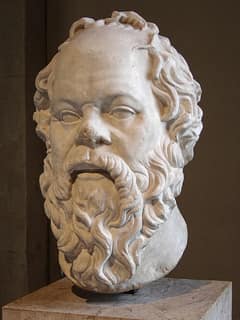
Portrait of Socrates

Socrates

c. 470–399 BCE

ἔλεγχοςelenchos

refutation · cross-examination

Testing someone's claim to know by questioning them until their answer clashes with other things they believe. It exposes ignorance rather than proving a thesis, and Socrates presents it as a service to the person examined.

Defined in Apology 21b–23bCertainty, doubt and the limits of knowledge

τί ἐστιti esti

What is it? · the definitional question

The question Socrates puts about a virtue: not examples of piety or courage, but the one character by which every instance is what it is. Aristotle credits him with seeking universal definitions without setting them apart from things.

“to tell the essential aspect, by which all holy acts are holy”

Defined in Euthyphro 6d–eUniversals

ἀρετήaretē

virtue · excellence

The excellence that makes a human life go well. Socrates argues that it is a kind of knowledge of good and bad, so that no one who knows the good does wrong willingly.

“knowledge is something noble and able to govern man”

Defined in Protagoras 352b–cVirtue and knowledgeThe highest goodFreedom and determinism

τὸ δαιμόνιονto daimonion

the divine sign

A voice Socrates says he has heard since childhood. It only ever holds him back from an action, never urges him on, and he gives it as the reason he kept out of politics.

“it is a sort of voice that comes to me”

Defined in Apology 31c–dGod and the fundamental

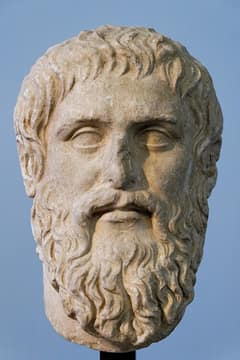
Portrait of Plato

Plato

c. 428–348 BCE

εἶδος / ἰδέαeidos / idea

Form · Idea

The unchanging, intelligible pattern a thing shares in to be what it is: the beautiful itself, as against the many beautiful things. Particulars are what they are by participation (methexis) in it.

“it is beautiful for no other reason than because it partakes of absolute beauty”

Defined in Phaedo 100b–101cUniversalsBeing and realitySources of knowledge

ἀνάμνησιςanamnēsis

recollection

Learning as the soul's recovery of what it knew before birth. Questioning or perception prompts it, as when an untaught slave works his way to a geometrical truth in the Meno.

“research and learning are wholly recollection”

Defined in Meno 81c–86bInnate knowledgeSources of knowledgeDeath and immortality

ἡ τοῦ ἀγαθοῦ ἰδέαhē tou agathou idea

the Form of the Good · the Good

The highest object of study, which gives the Forms their being and their knowability as the sun gives visible things light and growth. It is said to surpass being itself in rank and power.

“the good itself is not essence but still transcends essence in dignity and surpassing power”

Defined in Republic 505a–509cThe highest goodThe basis of moralityBeing and reality

διαλεκτικήdialektikē

dialectic

Reasoned question and answer that tests hypotheses and climbs to a first principle that rests on none, then comes down again through Forms alone. Later dialogues add collection and division.

“doing away with hypotheses, up to the first principle itself”

Defined in Republic 531d–534eCertainty, doubt and the limits of knowledge

δικαιοσύνηdikaiosynē

justice

In city and soul alike, each part doing its own work: reason ruling, spirit supporting it, appetite obeying. So understood, justice is the health of the soul and worth having for its own sake.

“to do one’s own business and not to be a busybody is justice”

Defined in Republic 433a–434cJusticeThe highest good

ὁμοίωσις θεῷhomoiōsis theōi

becoming like god · likeness to god

The aim the Theaetetus gives philosophy: to escape the evils of mortal life by becoming as like god as a human can, which means becoming just, holy and wise.

“to escape is to become like God, so far as this is possible”

Defined in Theaetetus 176a–bThe highest good

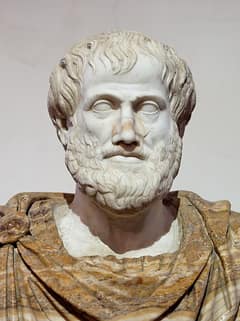
Portrait of Aristotle

Aristotle

384–322 BCE

οὐσίαousia

substance · being

What is in the primary sense; qualities, quantities, places and the rest are said to be by belonging to a substance. The Categories makes individual things primary substances; the Metaphysics asks whether form is substance most of all.

Defined in Categories 2a11–2b6Being and realityUniversals

ὕλη / μορφήhylē / morphē

matter · form

A natural thing is a compound of matter, what it is made of, and form (also eidos), what makes it the kind of thing it is. Form is in the thing, not apart from it; the soul is the form of the living body.

Defined in Metaphysics 1028b33–1029b12Being and realityUniversalsSoul and body

ἐνέργεια / δύναμιςenergeia / dynamis

actuality · activity · potentiality · capacity

A capacity to be or do something, as against its exercise or realisation: the builder asleep and the builder building. Actuality is prior to potentiality, and the first principle is actuality with no potentiality in it.

Defined in Metaphysics 1048a25–b9Being and realityGod and the fundamental

νοῦς ποιητικόςnous poiētikos

productive intellect · agent intellect

The intellect that makes all things intelligible, as light makes colours actual, beside the intellect that becomes all things. Only it is called separable, deathless and eternal.

Defined in On the Soul 430a10–25Sources of knowledgeDeath and immortality

τὸ πρῶτον κινοῦν ἀκίνητονto prōton kinoun akinēton

the unmoved mover · prime mover

The eternal first cause of motion, itself unmoved, which moves as an object of love and desire. It is pure actuality, and its life is thought thinking itself.

Defined in Metaphysics 1072a19–1073a13God and the fundamentalThe cosmos

εὐδαιμονίαeudaimonia

happiness · flourishing

The highest human good, chosen for itself and never for anything else. It is the human function done well: activity of the soul in accord with virtue over a complete life, and above all contemplation.

“the active exercise of the soul’s faculties in conformity with rational principle”

Defined in Nicomachean Ethics 1097b22–1098a20The highest good

ἠθικὴ ἀρετήēthikē aretē

virtue of character · moral virtue

A settled state (hexis) of choosing, formed by habituation, that lies in a mean relative to us, the mean being fixed by reason as the practically wise person would fix it.

“a settled disposition of the mind determining the choice of actions and emotions”

Defined in Nicomachean Ethics 1106b36–1107a2Virtue and knowledgeThe basis of morality

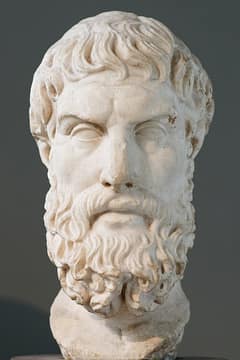
Portrait of Epicurus

Epicurus

341–270 BCE

ἡδονήhēdonē

pleasure

The first good, natural to every living thing and the starting point of every choice. Its limit is the removal of all pain, so the pleasure Epicurus praises is a settled state, not a round of indulgence.

“we call pleasure the alpha and omega of a blessed life”

Defined in Letter to Menoeceus 128–132The highest goodThe basis of morality

ἀταραξίαataraxia

tranquillity · freedom from disturbance

The untroubled mind that, with the body's freedom from pain (aponia), makes up the blessed life. It comes from clearing away false beliefs about the gods, death and desire.

“health of body and tranquillity of mind”

Defined in Letter to Menoeceus 128The highest good

τὸ παρ' ἡμᾶςto par' hēmas

what depends on us · our own agency

Some things happen by necessity, some by chance and some through us. Only what comes from us is open to praise and blame, which is why Epicurus rejects the fate of the natural philosophers.

“some things happen of necessity, others by chance, others through our own agency”

Defined in Letter to Menoeceus 133Freedom and determinism

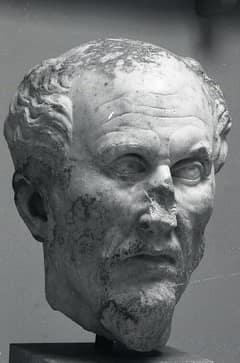
Portrait of Plotinus

Plotinus

c. 204–270

τὸ ἕνto hen

the One · the Good

The first principle, wholly simple and beyond being and thought, from which everything else derives without the One being lessened. It can be named only by what it is not, or as the Good.

Defined in Enneads VI.9.3–6Being and realityGod and the fundamental

νοῦςnous

Intellect · Mind

The second level of reality, which comes from the One and turns back to contemplate it. In Intellect thinking and what is thought are one: the Forms are its contents, not objects outside it.

Defined in Enneads V.9.5–8UniversalsTruthSources of knowledge

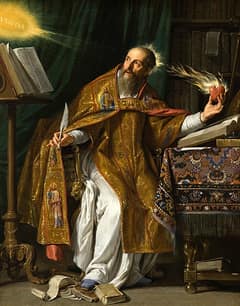
illuminatio

illumination

We know unchanging truths not by recalling them or by a teacher's words, but because God, the inner teacher, lights them up for the mind as the sun lights visible things.

Defined in On the Trinity XII.15.24Sources of knowledgeInnate knowledge

distentio animi

distension of the mind

Time is not the motion of bodies but a stretching of the mind itself, which holds the past in memory, the present in attention and the future in expectation.

Defined in Confessions XI.26.33The cosmos

Portrait of al-Farabi

al-Farabi

c. 872–950

المدينة الفاضلةal-madīna al-fāḍila

the virtuous city · the excellent city

The city whose members cooperate in the things by which true happiness is reached, its ranks ordered under a first ruler as the body's organs under the heart. Against it stand the ignorant, wicked and erring cities, which aim at lesser goods or mistake the good.

Defined in The Virtuous City Ch. 15The state and legitimacyThe highest good

العقل الفعّالal-ʿaql al-faʿʿāl

the Active Intellect · agent intellect

The last of the separate intellects, below the moon's sphere. It does for the human intellect what the sun does for sight, making the forms held in imagination actually intelligible, and union with it is the soul's happiness.

Defined in Letter on the Intellect whole treatiseSources of knowledgeThe highest good

العقل المستفادal-ʿaql al-mustafād

the acquired intellect

The human intellect when it has actualised all or nearly all the intelligibles and thinks itself; it stands next to the Active Intellect and is the stage at which the soul can subsist without matter.

Defined in Letter on the Intellect whole treatiseSources of knowledgeDeath and immortalitySoul and body

الفيضal-fayḍ

emanation · overflow

The way the existence of other things proceeds from the First's perfect existence, necessarily and without its seeking anything: intellect from intellect down to the Active Intellect, with a sphere at each step.

Defined in The Virtuous City Chs. 2–3The cosmosBeing and reality

السعادةal-saʿāda

happiness · felicity

The good sought for itself: the soul's perfection in existence to the point where it no longer needs matter, reached through the theoretical, deliberative and moral virtues and the practical arts, in a city and completed after death.

Defined in The Attainment of Happiness §1The highest goodDeath and immortality

المحاكاةal-muḥākāt

imitation · representation

Representing a thing by a likeness of it. Poetic statements imitate, and religion imitates in images, for those who cannot know them by demonstration, the principles that philosophy knows in themselves.

Defined in The Attainment of Happiness §55Beauty and art

Portrait of Ibn Sina (Avicenna)

Ibn Sina

980–1037

وجود / ماهيةwujūd / māhiyya

existence · essence · quiddity

What a thing is differs from that it is: one can grasp what a triangle is without knowing whether any exists. In everything but the necessary existent, existence comes to the essence from a cause.

Defined in The Book of Healing Metaphysics I.5Being and realityUniversals

واجب الوجودwājib al-wujūd

the necessary existent

A being that exists of itself, as against possible beings (mumkin al-wujūd), which need a cause to exist. Even taken as a whole, a chain of possible beings needs a cause outside it: one necessary existent, wholly simple.

Defined in The Book of Healing Metaphysics I.6–7God and the fundamentalBeing and reality

العقل الفعّالal-ʿaql al-faʿʿāl

the active intellect · agent intellect

A separate intellect, the last of the celestial intelligences, which gives forms to matter and intelligibles to minds prepared to receive them. Human understanding is the soul's contact with it.

Defined in The Book of Healing Psychology V.5Sources of knowledgeThe highest good

النفس الناطقةal-nafs al-nāṭiqa

the rational soul

The human soul is an immaterial substance that uses the body but does not depend on it. A person created in mid-air, with no sensation of his body, would still affirm that he exists.

Defined in The Book of Healing Psychology I.1Soul and bodyDeath and immortalityCertainty, doubt and the limits of knowledge

Portrait of al-Ghazali

al-Ghazali

1058–1111

الاقتران / العادةal-iqtirān / al-ʿāda

concomitance · connection; custom · habit

What we call cause and effect is only things occurring together, which God creates in a regular order by his custom. The connection is not necessary, so God can create one without the other, as in miracles.

Defined in The Incoherence of the Philosophers Seventeenth DiscussionBeing and realityFreedom and determinismCertainty, doubt and the limits of knowledge

الإرادة القديمةal-irāda al-qadīma

the eternal will

God's will, which from eternity decides that the world begin at the moment it does. To single out one of two equal possibilities is what will is, so an eternal will can produce a world that begins.

Defined in The Incoherence of the Philosophers First DiscussionThe cosmosGod and the fundamental

القلبal-qalb

the heart

In its inner sense, a subtle spiritual reality that is the true self: it knows, perceives and is addressed by God, and rules the body as a king his realm. Like a mirror, once polished it can receive the realities of things.

Defined in The Revival of the Religious Sciences Book 21Soul and bodySources of knowledge

Portrait of Ibn Rushd (Averroes)

Ibn Rushd

1126–1198

التأويلal-taʾwīl

interpretation · figurative interpretation

Taking a word of the Law from its literal to its figurative sense, by the usage of the Arabic language. Where demonstration conflicts with the outward sense, those able to demonstrate must interpret it; they should not publish their interpretations to the many.

Defined in The Decisive Treatise Ch. 2Truth

الاتصالal-ittiṣāl

conjunction · continuation

The joining of the human intellect with the agent intellect, when the intelligibles are fully actualised and the agent intellect becomes form for us; it is the ultimate human happiness.

Defined in Long Commentary on Aristotle's De Anima III, comm. 36The highest goodSources of knowledge

الحدوث الدائمal-ḥudūth al-dāʾim

perpetual origination · perpetual creation

The world is eternal yet made: it is always being brought about by the First, so it is originated without a first moment. Calling it eternal or originated is close to a dispute over names.

Defined in The Incoherence of the Incoherence First DiscussionThe cosmos

السببal-sabab

cause

Things act through natures God gave them, and their definitions state those natures; to know a thing is to know it through its causes, so whoever denies causes denies knowledge.

Defined in The Incoherence of the Incoherence Seventeenth DiscussionCertainty, doubt and the limits of knowledgeBeing and reality

Portrait of Suhrawardi

Suhrawardi

1154–1191

نور / ظلمةnūr / ẓulma

light · darkness

Light is what is manifest in itself and makes other things manifest; darkness is whatever is not. Every reality is a light or a darkness, either self-subsistent or a state of something else, and lights differ from one another only as more or less intense.

Defined in The Philosophy of Illumination Part II, Discourse 1Being and realitySources of knowledge

نور الأنوارnūr al-anwār

the Light of Lights

The light that depends on nothing: one, simple, aware of itself and the source of every other light. A series of dependent lights cannot go on without end, so it ends in this light.

Defined in The Philosophy of Illumination Part II, Discourse 1God and the fundamentalBeing and reality

إشراقishrāq

illumination · the rising of light

The shining of a higher light on a lower one, and the knowledge it gives the receiver, which in turn witnesses (mushāhada) the light above it. Suhrawardi names his philosophy after it and ties it to the wisdom of the ancient Persian and Greek sages.

Defined in The Philosophy of Illumination IntroductionSources of knowledge

العلم الحضوريal-ʿilm al-ḥuḍūrī

knowledge by presence

Knowing a thing by its own presence to the knower, with no form or concept between them. The self's awareness of itself is the model; sight and the soul's knowledge of the higher lights follow it.

Defined in The Intimations dream-vision of AristotleSources of knowledgeCertainty, doubt and the limits of knowledgeSoul and body

النور الإسفهبدal-nūr al-isfahbad

the commanding light · the human soul

The immaterial light that governs a human body, as a commander governs his troops (isfahbad is a Persian title). It is aware of itself, is tied to its body by love and governance, and longs for the lights above it.

Defined in The Philosophy of Illumination Part IISoul and bodyDeath and immortality

أرباب الأنواعarbāb al-anwāʿ

lords of the species · the Platonic Forms

Immaterial lights, each of which governs one natural species and holds its perfections. Suhrawardi identifies them with Plato's Forms; they are individual lights, not universals said of many.

Defined in The Philosophy of Illumination Part IIUniversalsBeing and reality

اعتبار عقليiʿtibār ʿaqlī

mental consideration · intellectual construct

A concept the mind forms about things that has no counterpart of its own in them, such as existence, unity, possibility and necessity. If existence were something in things it would need an existence of its own, without end.

Defined in The Philosophy of Illumination Part I, Discourse 3Being and realityUniversals

الواحد لا يصدر عنه إلا الواحدal-wāḥid lā yaṣdur ʿanhu illā l-wāḥid

from the one only one proceeds

A cause that is one and simple in every respect produces, as such, only one effect, since producing two would require two aspects in it. Tusi defends the rule against al-Razi and lets multiplicity enter through the aspects of the first effect.

Defined in Commentary on the Pointers and Reminders VCausationThe cosmos

العلم الحضوريal-ʿilm al-ḥuḍūrī

knowledge by presence

Knowing a thing by its presence to the knower, without a form of it. Tusi uses the soul's knowledge of itself and of its own forms as the model for the First's knowledge of what it causes.

Defined in Commentary on the Pointers and Reminders VIIGod and the fundamentalEpistemic justification

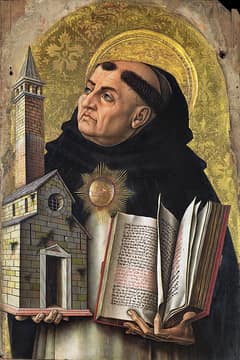
Portrait of Thomas Aquinas

Thomas Aquinas

c. 1225–1274

esse / essentia

act of being · essence

In every creature what it is (essence) differs from its act of being (esse), which it receives from another. Only in God are the two the same: God is subsistent being itself (ipsum esse subsistens).

Defined in On Being and Essence ch. 4Being and realityGod and the fundamental

intellectus agens

agent intellect

A power of each human soul that abstracts intelligible forms from sense images (phantasmata). Without it nothing material could be understood, since nothing in matter is actually intelligible.

Defined in Summa Theologiae I q.79 a.3–5Sources of knowledgeInnate knowledge

anima forma corporis

the soul · form of the body

The intellectual soul is the one substantial form of a human being, not a separate thing steering a body. Because it has an activity, understanding, in which the body has no part, it subsists and survives death.

Defined in Summa Theologiae I q.76 a.1Soul and bodyDeath and immortality

beatitudo

beatitude · perfect happiness

The last end of human life is the vision of God's essence, which no created good can supply. The happiness possible in this life is real but imperfect.

Defined in Summa Theologiae I-II q.3 a.8The highest good

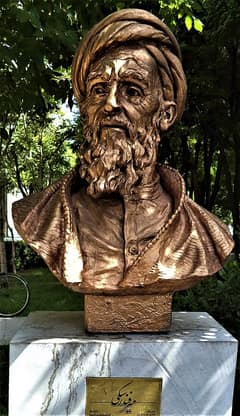
Portrait of Mir Findiriski

Mir Findiriski

c. 1562–1640

صناعةṣināʿa

craft · art · making

Anything human reason and practical skill make. The Treatise on the Crafts defines and divides the crafts and ranks them by their ends and uses, the noblest being the one whose end is in itself.

Defined in Treatise on the Crafts whole workBeauty and art

المثل الأفلاطونيةal-muthul al-aflāṭūniyya

the Platonic Forms

Separate archetypes of the species. The Treatise on Motion rejects them; the ode's forms above, of which things below are likenesses, have been read as a return to them.

Defined in Treatise on Motion whole workUniversals

Mulla Sadra

c. 1572–1640

أصالة الوجودaṣālat al-wujūd

the primacy of existence · existence as fundamentally real

Existence, not quiddity, is what is real in things and has effects; a quiddity is the outline the mind draws from the limits of a given existence. Sadra says he first held the opposite.

Defined in The Transcendent Philosophy of the Four Journeys of the Intellect Journey I (vol. 1)Being and realityUniversals

تشكيك الوجودtashkīk al-wujūd

the gradation of existence · modulation of existence

Existence is one reality that comes in degrees of intensity, priority and perfection, so that what distinguishes existents is what they share. The highest degree is God; the lowest is prime matter.

Defined in The Transcendent Philosophy of the Four Journeys of the Intellect Journey I (vol. 1)Being and realityGod and the fundamental

الحركة الجوهريةal-ḥaraka al-jawhariyya

substantial motion

Material things change continuously in their very substance, not only in their accidents, and time is the measure of this renewal. By it the natural world is new at every instant, and the soul rises from a bodily form to an immaterial intellect.

Defined in The Transcendent Philosophy of the Four Journeys of the Intellect Journey I (vol. 3)The cosmosSoul and body

اتحاد العاقل والمعقولittiḥād al-ʿāqil wa-l-maʿqūl

the union of the intellect and the intelligible

In knowing, the knower does not receive a form as a container receives a thing but becomes, in its existence, what it knows; the soul grows in being as it comes to know.

Defined in The Transcendent Philosophy of the Four Journeys of the Intellect Journey I (vol. 3)Sources of knowledgeSoul and body

جسمانية الحدوث وروحانية البقاءjismāniyyat al-ḥudūth wa-rūḥāniyyat al-baqāʾ

bodily in origination · spiritual in survival

The soul begins as the form of a body and, through substantial motion, becomes an immaterial substance that survives the body.

Defined in The Transcendent Philosophy of the Four Journeys of the Intellect Journey IV (vol. 8)Soul and bodyDeath and immortality

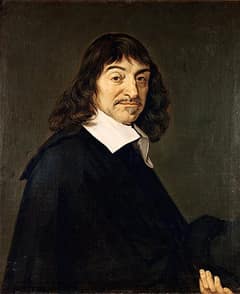
Portrait of René Descartes

René Descartes

1596–1650

cogito, ergo sum

I think · therefore I am

The one thing that survives the most radical doubt: while I think, I cannot fail to exist. The Meditations puts it as "I am, I exist", true whenever I think it.

Defined in Principles of Philosophy I.7Certainty, doubt and the limits of knowledge

res cogitans / res extensa

thinking thing · extended thing

Mind and body are two substances, each with its own principal attribute, thought and extension. Because each can be clearly understood without the other, God can make them exist apart.

Defined in Meditations on First Philosophy AT VII 78Soul and bodyBeing and reality

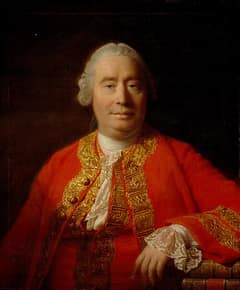
Portrait of David Hume

David Hume

1711–1776

relations of ideas and matters of fact

Objects of reasoning are either relations of ideas, known by thought alone and certain, as in mathematics, or matters of fact, whose contrary is always conceivable and which only experience can settle.

Defined in An Enquiry concerning Human Understanding 4.1Certainty, doubt and the limits of knowledgeTruthSources of knowledge

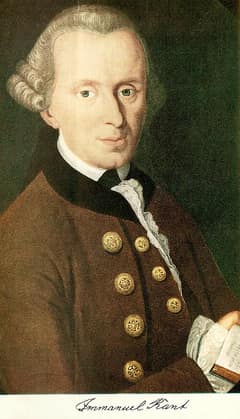
Portrait of Immanuel Kant

Immanuel Kant

1724–1804

a priori

prior to experience

Knowledge independent of all experience, marked by strict necessity and universality. Kant's question is how synthetic a priori judgments, which extend knowledge yet are not drawn from experience, are possible.

Defined in Critique of Pure Reason B1–19Sources of knowledgeInnate knowledgeCertainty, doubt and the limits of knowledge

Kategorien

categories · pure concepts of the understanding

Twelve a priori concepts, such as substance and cause, by which the understanding unifies intuitions into experience of objects. They hold for objects of possible experience and no further.

Defined in Critique of Pure Reason A79–83/B104–109Sources of knowledgeUniversals

Ich denke

I think · transcendental apperception

The "I think" that must be able to accompany all my representations: the unity of self-consciousness that makes them mine and makes experience of objects possible. It gives no knowledge of the soul as a substance.

Defined in Critique of Pure Reason B131–136Soul and bodySources of knowledge

kategorischer Imperativ

categorical imperative

The moral law as it binds a rational being unconditionally: act only on a maxim you can at the same time will as a universal law. Reason gives this law to itself, so morality is autonomy.

Defined in Groundwork of the Metaphysics of Morals AA 4:414–421The basis of moralityFreedom and determinism

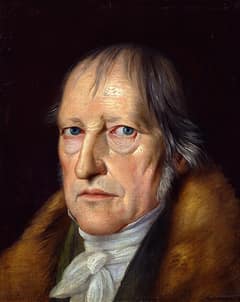
Portrait of G. W. F. Hegel

G. W. F. Hegel

1770–1831

Begriff

the Concept · the Notion

Not a general idea abstracted from cases but the self-developing unity of universal, particular and individual. As concrete universal it is the inner form of things, not only of thought.

Defined in Encyclopaedia of the Philosophical Sciences §§160–165UniversalsTruth

Aufhebung

sublation · supersession

Cancelling and preserving at once: a stage of thought or life is negated as one-sided but kept as a moment of what follows. The German verb carries both senses.

Defined in Phenomenology of Spirit §113

Sittlichkeit

ethical life

Freedom made actual in living institutions (family, civil society, state), as against Moralität, the individual conscience judging its own duty. Here duty has content because it belongs to a shared way of life.

Defined in Elements of the Philosophy of Right §§142–157The basis of moralityThe state and legitimacy

Gott ist tot

God is dead

Belief in the Christian God has become unbelievable, and the morality and meaning built on it begin to give way. The madman's announcement is a diagnosis whose consequences are not yet understood.

Defined in The Gay Science 125God and the fundamental

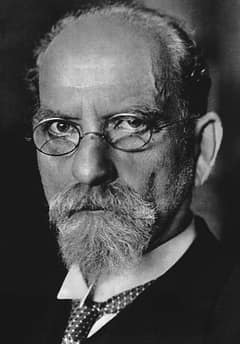
Portrait of Edmund Husserl

Edmund Husserl

1859–1938

Noesis / Noema

act of meaning · object as meant

Every experience has two correlated sides: the act of meaning (noesis) and what is meant, just as it is meant (noema). Phenomenology describes both and how they correspond.

Defined in Ideas I §§87–96Sources of knowledge

Wesensschau

intuition of essences

Seeing an essence (Eidos) by freely varying an example in imagination until what cannot vary stands out. Essences are given in intuition, not reached by induction.

Defined in Ideas I §§3–4UniversalsInnate knowledge

Leib / Körper

lived body · physical body

My body as I live it, the zero point from which things are oriented and the organ of my will, as against a body among bodies. It is constituted through touch, movement and feeling.

Defined in Ideas II §§35–42Soul and body

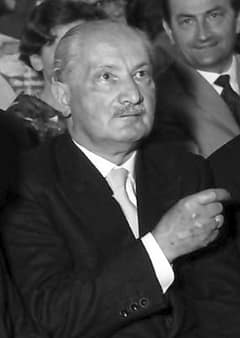
Portrait of Martin Heidegger

Martin Heidegger

1889–1976

Dasein

being-there · existence

Heidegger's word for the human being: the entity whose own being is an issue for it and which always has some understanding of being. Its essence lies in its existence.

Defined in Being and Time §4, SZ 11–13Soul and body

Sein / Seiendes

being · beings

Being is not itself a being: it is that on the basis of which beings are understood as beings. Heidegger later calls this the ontological difference and charges metaphysics with forgetting it.

Defined in Being and Time §2, SZ 5–8Being and reality

In-der-Welt-sein

being-in-the-world

Dasein's basic state is not a subject facing objects but one involvement with a world of things, others and tasks; "in" means dwelling and familiarity, not being inside a container.

Defined in Being and Time §12, SZ 52–59Soul and bodySources of knowledge

Unverborgenheit

unconcealment · aletheia

Truth at root is not the agreement of a statement with a thing but beings' coming out of concealment; statements can be correct only within such disclosure. Heidegger hears it in the Greek alētheia.

Defined in Being and Time §44, SZ 212–230Truth