In order of birth. Open a row for the reading, its confidence and the passages. * contested reading.
›Socratesc. 470–399 BCEDemonstrable by reason* (contested reading)
Xenophon has Socrates argue from the fitness of the human body and the world for human life to a wise and caring maker, the earliest surviving argument from design attributed to a Greek philosopher. Plato's Socrates is equally pious, says he believes in the gods more than his accusers do, and follows the god of Delphi and his divine sign, but offers no proof that gods exist. He doubts the poets' stories of gods at war with one another.
Another reading. On the evidence of Plato's early dialogues alone, Socrates' belief rests on the oracle, the divine sign and piety, not on argument, and whether reason can establish the divine is never raised; many doubt the design argument is Socratic rather than Xenophon's own.
Another reading. Sedley (2007, Creationism and Its Critics in Antiquity) takes Xenophon's report seriously and credits Socrates with pioneering the argument from design.
Contested readingXenophon, Memorabilia I.4 and IV.3; contrast Plato, early dialogues (Apology, Euthyphro)theos, daimonion, eusebeia, pronoiaDraft — not yet reviewed
The divine is plural in every layer (the gods, the god of Delphi, the daimonion), and Xenophon's argument is for the gods' providential care, not for a single first principle.
Reason can show that gods exist. Every motion traces back to a self-moving source, which is soul, so soul is prior to body, and the ordered motions of the heavens must be caused by a good soul or souls, which are gods. The Timaeus adds a good craftsman who ordered the cosmos after an eternal model, and the Laws treats disbelief as an intellectual error to be refuted, not merely an impiety.
Plato's divine is plural (gods, world-soul, craftsman), and how the craftsman relates to the Form of the Good is unresolved in the texts. "Demonstrable" also groups this proof from the priority of soul as self-mover with Aristotle's argument from eternal motion and Ibn Sina's from contingency, which work very differently.
Motion and time are eternal, so there must be an eternal, unmoved first mover. It must be pure actuality with no potentiality and no matter, otherwise motion could fail. It moves the heavens as an object of love and thought moves, and its life is thought thinking itself.
Stated in the textPhysics VIII; Metaphysics Λ.6–9proton kinoun akineton, energeia, nous, noesis noeseos, theosDraft — not yet reviewed
Aristotle's god is not a creator; it is a final cause of cosmic motion, not the God of the later monotheisms. On the usual reading of Λ.9 it thinks only itself and so does not know individuals, but that reading is contested. Λ.8 also posits 47 or 55 unmoved movers of the celestial spheres (1074a11–14), which complicates talk of a single first principle.
›Epicurus341–270 BCEGods exist but do not intervene
There are gods, and the common notion of them as immortal and blessed is evident. Because anger, favour and concern imply weakness and dependence, which do not fit blessedness, the gods neither govern the heavens nor intervene in human affairs. Impiety is not denying the popular gods but attributing to the gods what the many believe about them.
Another reading. Long and Sedley (1987, The Hellenistic Philosophers, §23) read the gods as thought-constructs, ideals formed from streams of images, not independently existing living beings; the more common realist reading takes them as real, everlasting living beings.
Stated in the textLetter to Menoeceus 123–124; Letter to Herodotus 76–77; Principal Doctrines 1theos, makarios, aphthartos, prolepsis, enargeiaDraft — not yet reviewed
Knowledge of the gods is said to be evident through preconception, not demonstrated. The bracketed note in Principal Doctrines 1 that the gods are "discernible by reason alone" is a later scholium.
There is a first principle, the One or the Good, but it is beyond being, thought and every predicate; we say what it is not, and reach it in union rather than in knowledge, so even "it exists" applies to it only improperly.
Stated in the textto hen, to agathon, epekeina, henosis, hoionDraft — not yet reviewed
Plotinus does argue that a simple first principle must precede all multiplicity (V.4.1), so reason establishes that the One is, while denying that it can say what it is.
›Augustine of Hippo354–430Demonstrable; revelation adds more
Reason can show that God exists, since there is an unchanging truth above our minds which must be God or lead to God; but the Word made flesh, the way to God, is known only from revelation, and we believe in order to understand.
Scholarly consensuscrede ut intellegas, veritas, Verbum caro factumDraft — not yet reviewed
Divine science proves that the beings which are not bodies exist and that they rise to one First, from which all else comes. Religion conveys the same truths in images; it adds nothing that demonstration cannot reach.
Scholarly consensusal-ʿilm al-ilāhī, al-awwal, burhānDraft — not yet reviewed
Reason proves the Necessary Existent from the bare fact that something exists: possible beings, singly or as a whole, need a cause outside them, which must be necessary in itself, one and simple.
Stated in the textwājib al-wujūd bi-dhātihi, burhān al-ṣiddīqīnDraft — not yet reviewed
Two proofs are involved: the Healing (Metaphysics VIII.1–3) shows that a chain of causes is finite, while the Pointers (IV) argue from the whole of possible beings, finite or infinite, and need no ban on infinite regress (Mayer, 2001).
›al-Ghazali1058–1111Demonstrable; revelation adds more
Reason proves that God exists: whatever comes to be has a cause, and the world came to be. What God is, and the details of the hereafter, are known through revelation, and the closest knowledge of him through the Sufi way.
Scholarly consensusModeration in Belief (own kalām); Incoherence (polemic)ḥudūth, muḥdith, ṣāniʿDraft — not yet reviewed
The Incoherence (Discussion 10) argues only that the philosophers, holding the world eternal, cannot prove that it has a maker; his own proof is the kalām argument from the world's coming to be.
The existence of the First is demonstrated in physics, from motion to an unmoved mover, and taken over by metaphysics. For the many, the Law offers sound arguments from providence and from invention: the world's fitness for human life and the coming to be of living things point to a maker.
He faults Ibn Sina's proof from possibility and necessity as not demonstrative and the theologians' proof from the world's coming to be as unsound. Revelation gives no truths that demonstration cannot reach; it gives them in forms suited to each audience.
Reason proves a first light: a dependent immaterial light cannot owe its being to darkness, and the series of lights that depend on others cannot go on without end, so it ends in a Light of Lights that depends on nothing and is one.
Scholarly consensusnūr al-anwār, ghanī, faqīrDraft — not yet reviewed
The Abstract proves God in a single step: if what exists is necessary, that is what was sought; if it is possible, it needs a cause, and since circular and infinite chains of causes are impossible, the chain ends in a necessary existent. In the Commentary he defends Ibn Sina's proof from existence itself, which needs no premise about motion or the world.
Stated in the textThe Abstract of Belief; the Commentary on the Pointerswājib al-wujūd, mumkin, dawr, tasalsul, burhān al-ṣiddīqīnDraft — not yet reviewed
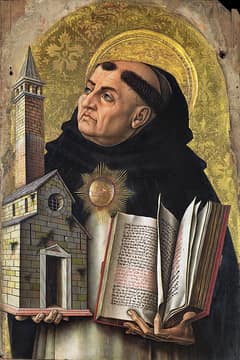
›Thomas Aquinasc. 1225–1274Demonstrable; revelation adds more
God's existence is not self-evident to us but can be demonstrated from his effects, as the five ways do; truths such as the Trinity exceed reason and are known only by revelation.
Stated in the textquinque viae, praeambula fidei, demonstratio quiaDraft — not yet reviewed
Every motion needs a mover other than the thing moved, and the movers cannot go on without end, so all motion goes back to a first mover that is not itself moved. He proves a first principle the way Aristotle's physics does, from motion.
Scholarly consensusḥaraka, muḥarrik, al-muḥarrik al-awwalDraft — not yet reviewed
God's existence is proved from existence itself, without reasoning from motion or contingency: existence is one graded reality, and a graded reality whose lower degrees are deficient and dependent requires a highest degree without limit or need, which is God. Sadra calls this the proof of the sincere.
Scholarly consensusburhān al-ṣiddīqīn, ṣirf al-wujūd, al-wājibDraft — not yet reviewed
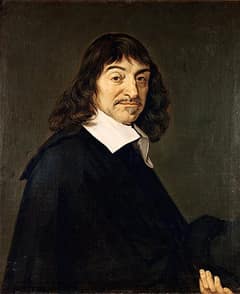
God's existence can be proved by natural reason, at least as certainly as any truth of geometry: from the idea of an infinite being that I could not have caused, and from the idea of a supremely perfect being, which includes existence.
Stated in the textidea Dei, realitas objectiva, ens summe perfectumDraft — not yet reviewed
He also accepts revealed truths beyond reason (Principles I.25) but sets them aside as theology, so `faith-and-reason` would describe his faith rather than his philosophy. The Fifth Meditation claims at least the certainty of geometry (AT VII 65–66); the dedicatory letter (AT VII 1–6) claims more.
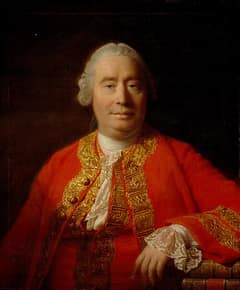
Experience cannot carry us from the world's order to an author with any definite attributes, and a priori proofs of a necessary being fail; at most the cause of order may bear some remote analogy to human intelligence.
Another reading. Philo's final concession is sincere: Hume accepts an "attenuated deism" (Gaskin, Hume's Philosophy of Religion), a probable but empty belief in an intelligent cause with no practical consequences.
Another reading. Hume's caution is prudential and his arguments leave belief in God without warrant, so his considered view is irreligious (Russell, The Riddle of Hume's Treatise, 2008).
The Dialogues speak through characters, and which of them, if any, voices Hume is itself disputed. The case against a priori proofs is put by Cleanthes (Dialogues IX); Hume's own voice says that the non-existence of any being is as clear an idea as its existence (EHU XII, Part 3).
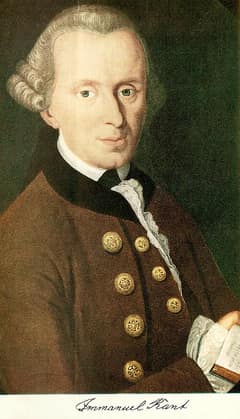
›Immanuel Kant1724–1804Postulate of practical reason
Every theoretical proof of God fails: the ontological proof treats existence as a real predicate, and the cosmological and physico-theological proofs depend on it. God's existence is instead a necessary postulate of practical reason, required to think the highest good possible.
Across the works. The pre-critical Only Possible Argument (1763) still offered a demonstration of God's existence as the ground of all possibility.
Stated in the textCritical period (1781–1788)Postulat, Sein ist kein reales Prädikat, VernunftglaubeDraft — not yet reviewed
The Critique of Judgment restates the moral argument (§87). The late Opus postumum notes treat God as an idea that reason itself produces rather than a being outside the subject (read by Förster, Kant's Final Synthesis, 2000); they are unpublished notes and are not coded.
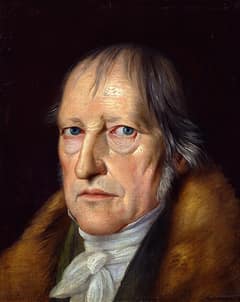
›G. W. F. Hegel1770–1831Demonstrable by reason* (contested reading)
Philosophy and religion have the same object, God as absolute spirit; religion represents in images what philosophy comprehends in concepts. Hegel defends the ontological proof against Kant and treats the traditional proofs as the elevation of thought to God.
Another reading. Left-Hegelian and humanist readings (Feuerbach, Kojève) take absolute spirit to be human spirit knowing itself, so that the God of religion is a representation of humanity.
"Demonstrable" undersells the claim: philosophy does not prove a being beyond the world but comprehends the content religion presents in pictures. Hegel rejects the charge of pantheism (Enc. §573). The Lectures on the Proofs of the Existence of God (1829) survive in Hegel's own manuscript and are the strongest layer for the stance.
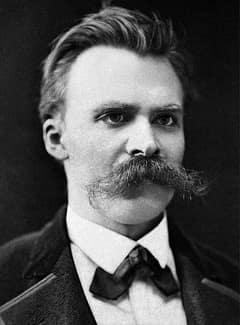
God is dead: belief in the Christian God has become unbelievable, and the values that rested on it are losing their authority. Nietzsche refutes the belief historically, by showing how it arose, rather than by disproof, and in his own voice rejects the Christian concept of God as hostile to life.
Stated in the textDaybreak (1881); Gay Science (1882/1887); The Antichrist (1888)Gott ist tot, Nihilismus, historische WiderlegungDraft — not yet reviewed
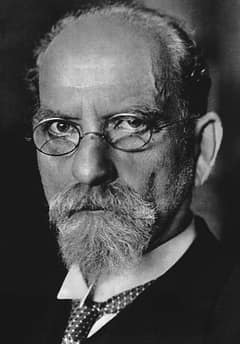
The transcendence of God is put out of action along with the world: whatever its role as ground of the rational order of consciousness, it is not a datum of pure phenomenology. Husserl, baptised a Lutheran in 1886, leaves the question to a later, non-phenomenological inquiry.
Across the works. Late research manuscripts (Hua XV; Grenzprobleme der Phänomenologie, Hua XLII) treat God as the telos or entelechy of a universal teleology of transcendental intersubjectivity. No option expresses this.
Stated in the textIdeas I (1913); late research manuscripts (1930s; Hua XV, Hua XLII) for the developmentAusschaltung, Transzendenz Gottes, TeleologieDraft — not yet reviewed
Fundamental ontology decides nothing for or against God's existence, and this is not indifference: the divine can be thought only after the truth of Being has been thought. In the early Freiburg period he holds that philosophy must be atheistic in its method.
Across the works. The later critique of onto-theology rejects the question's framing: metaphysics grounds beings in a highest being as causa sui, a god to whom one can neither pray nor sacrifice ("The Onto-theo-logical Constitution of Metaphysics", 1957, GA 11). Heidegger instead awaits a last god outside metaphysics (Contributions, GA 65, §§253–256), and in the 1966 Spiegel interview says only a god can save us.
Contested readingEarly Freiburg lecture course (1921–1922) and Natorp report (1922); Letter on Humanism (1946)das Heilige, Gottheit, Onto-Theo-LogieDraft — not yet reviewed
Hekmat. "What place do God or a fundamental principle of reality have in the system, if such a principle is accepted?." Draft, awaiting review; last updated 20 October 2026. https://hekmat.local/questions/ont-god/