The primary realities are substances, individual things or the forms that make them what they are; forms do not exist apart from them (except the divine).
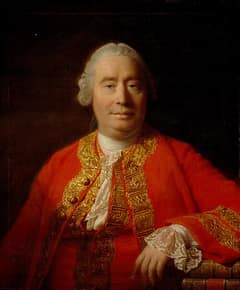
David Hume — We have no idea of substance beyond a collection of qualities, and no reasoning can show that our perceptions are caused by external objects, so what ultimately exists cannot be known.
In order of birth. Open a row for the reading, its confidence and the passages. * contested reading.
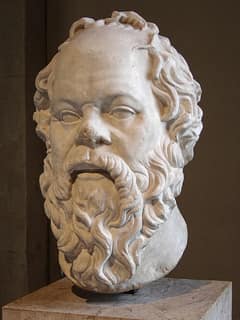
›Socratesc. 470–399 BCENot addressed
Not addressed. He turned away from inquiry into nature, and Aristotle reports that he did not separate the universals he sought; no account of what ultimately exists survives.
Plato's Socrates denies that he has anything to do with inquiry into the heavens and what lies beneath the earth, and Xenophon says he would not discuss the nature of the universe. Aristotle reports that he concerned himself with ethics and sought universal definitions there, but did not make universals exist apart. The Forms of the Phaedo and Republic are usually assigned to Plato.
Another reading. Unitarian readers take the Socrates of the middle dialogues as the same figure, and his account in the Phaedo of turning from natural science to the hypothesis of Forms (96a–100a) as his own path.
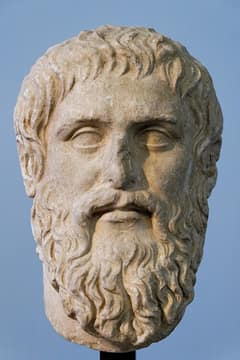
What truly is are the Forms: eternal, unchanging, intelligible natures such as the Just itself or the Equal itself, which sensible things participate in and are named after. Sensibles come to be and pass away and are never fully what they are called. Above the Forms stands the Good, the source of their being and intelligibility, which surpasses being in dignity and power.
Another reading. Aristotle reports that Plato made the One and the Great-and-Small (the Indefinite Dyad) the principles of the Forms themselves (Metaphysics A.6, 987b18–988a17). The Tübingen school (Krämer, Gaiser) reconstructs from such reports an unwritten doctrine in which the Good of the Republic is the One, the first principle from which the Forms derive.
Scholarly consensusmiddle dialogues (Phaedo, Republic; speaker Socrates); criticised in the late-middle Parmenides 130a–135c; retained in the late Timaeus (speaker Timaeus)eidos, idea, ousia, methexis, to agathon, epekeina tes ousiasDraft — not yet reviewed
Calling this "idealism" is a modern misnomer: the Forms are mind-independent realities, not ideas in a mind. How far the late dialogues revise the theory after the Parmenides is debated. The option `the-one` is defined in Plotinian terms; the alternative uses it only for a derivation of the Forms from a first principle.
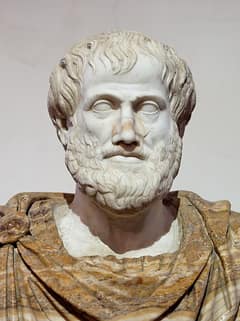
Being is said in many ways, but primarily of substance, and in the Categories the primary substances are individuals such as this man or this horse; everything else is said of them or exists in them. In the Metaphysics the question becomes what makes something a substance, and the answer is its form or essence, the cause of its being. The highest substance is the unmoved mover, eternal form without matter.
Scholarly consensusCategories 5; Metaphysics Z, H, Λousia, tode ti, hyle, morphe, eidos, to ti en einai, energeiaDraft — not yet reviewed
Whether the form that is primary substance in Metaphysics Z is particular, one per individual (Frede and Patzig 1988), or the species form shared by all members of a kind is disputed; either way the code holds, since the option covers forms that do not exist apart from their substances.
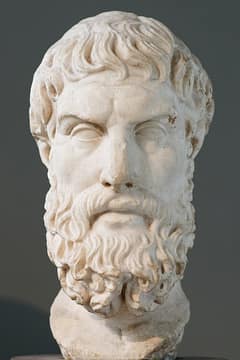
Nothing comes from nothing and nothing perishes into nothing, so the whole has always been as it is. It consists of bodies and empty space, and nothing else can be conceived as existing in its own right. Composite bodies are made of indivisible, unchangeable atoms, infinite in number, which move for ever through an infinite void.
Stated in the textLetter to Herodotus 38–44atomos, kenon, to pan, soma, apeironDraft — not yet reviewed
What truly is flows from the One, which is simple, beyond being and beyond thought; from it proceed Intellect, which is being and the Forms, and Soul, which orders the sensible world down to matter.
Stated in the textto hen, nous, psyche, epekeina tes ousias, proodosDraft — not yet reviewed
What truly is, is God, who alone is unchangeably and therefore supremely; everything else exists only because God gave it being, more to some things and less to others.
Scholarly consensusesse, essentia, ego sum qui sum, incommutabilisDraft — not yet reviewed
What most truly is, is the First: one, without matter or cause, an intellect that thinks itself, whose existence is the most perfect. Everything else receives its existence from it through a hierarchy of intellects, spheres and the sublunary world.
Scholarly consensusal-awwal, al-mawjūd al-awwal, fayḍ, al-thawānīDraft — not yet reviewed
The First is an existent and an intellect, not a principle beyond being, so `the-one` does not fit despite the emanation scheme. The developed distinction of essence and existence is Ibn Sina's; the Gems of Wisdom (Fuṣūṣ al-ḥikam), which states it, is generally no longer credited to al-Farabi.
What truly is, is the Necessary Existent, whose essence is nothing other than its existence; all else is possible in itself and exists only as necessitated by it, through a hierarchy of intellects emanating from it.
Stated in the textwājib al-wujūd, mumkin al-wujūd, māhiyya, wujūd, fayḍDraft — not yet reviewed
The other half of the thesis is that in every possible being essence is distinct from existence (Metaphysics I.5; V.1). Whether he made existence an accident of essence is disputed: Averroes charged him with it, and Rahman (1958) and Bertolacci (2012) assess the charge.
God alone exists in the full sense; all else exists only as he creates it from moment to moment and is, in itself, nothing. At the highest stage of affirming God's unity the knower sees no existent but God.
Scholarly consensusRevival, Book 35; Niche of Lightstawḥīd, al-Ḥaqq, khalq, fanāʾDraft — not yet reviewed
He does not adopt the philosophers' formula that God's essence is his existence: the Incoherence (Discussion 8) argues that they cannot demonstrate that the First is pure existence without quiddity. The code rests on his own claim that everything else receives existence from God.
The primary beings are substances, compounds of matter and form, above which stand the separate intellects that move the heavens and the First, an intellect thinking itself. Existence is not something added to a thing's essence.
Scholarly consensusjawhar, ṣūra, hayūlā, al-muḥarrik al-awwalDraft — not yet reviewed
He charges Ibn Sina with making existence and unity accidents added to essence and rejects the distinction as a confusion (Long Commentary on the Metaphysics, Book Γ; Incoherence of the Incoherence). `god-as-being` therefore does not fit.
What is real is light and darkness. Self-subsistent lights form a hierarchy that flows from the Light of Lights, one and simple, through the dominating lights, down to the managing lights that govern bodies; bodies are dark barriers. Lights differ only in intensity. Existence is not a further reality in things but a concept the mind adds.
`the-one` fits the emanation of a hierarchy from a single first principle, but the Light of Lights is not beyond thought: it is a light aware of itself. `god-as-being` does not fit, since he denies that existence is real in things. The Sadrian tradition reads him as holding the primacy of quiddity; the label is anachronistic, because his lights are graded by intensity, as Sadra later says existence is.
Tusi keeps Ibn Sina's division of the existent into the necessary in itself and the possible in itself. Existence is one concept said of everything in the same sense, and in every possible being it is other than what the thing is; only in the Necessary Existent is there no quiddity besides existence.
Scholarly consensusThe Abstract of Belief; the Commentary on the Pointerswujūd, māhiyya, wājib al-wujūd, mumkin al-wujūd, ishtirāk maʿnawīDraft — not yet reviewed
The Abstract opens with existence: that it is self-evident, univocal and added to quiddity in the mind. Later Shi'i philosophy, Mulla Sadra included, read these theses through its commentaries.
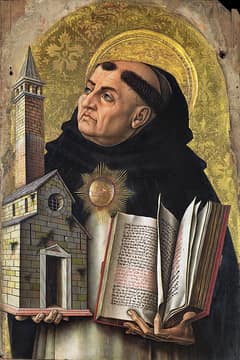
›Thomas Aquinasc. 1225–1274God as being itself · Substances
God is subsistent being itself, whose essence is his act of existing; every other thing is a substance whose essence receives existence from God, so created substances are real but not self-existent.
Stated in the textipsum esse subsistens, esse, essentia, actus essendiDraft — not yet reviewed
Not addressed. No surviving work gives an account of what being is or what is most real. The Treatise on Gradation denies, against the Illuminationists, that quiddities come in degrees, a thesis about essence within an ontology it does not state; the ode's claim that the lower is one with its origin is poetic and is coded under ont.cosmos.
Not coded; the surviving works touch the ontology of essence but state no view of being.
Scholarly consensusDraft — not yet reviewed
His teaching of Ibn Sina would suggest `god-as-being`; that would be inferred from his school, not read from his works.
Only existence is real; quiddities are the mind's outlines of its limits. Existence is one reality graded from God, pure existence without limit or quiddity, down to prime matter, and every other existent is a dependent degree of it, a relation to its cause rather than a thing that has a relation.
Stated in the textaṣālat al-wujūd, tashkīk al-wujūd, ṣirf al-wujūd, al-wujūd al-rābiṭDraft — not yet reviewed
Sadra says he first defended the primacy of quiddity and was then led to the primacy of existence. In his discussion of causality he goes further, saying that effects are only modes of the one existence; how this personal unity of existence relates to gradation is discussed by Rizvi (Mulla Sadra and Metaphysics: Modulation of Being, 2009).
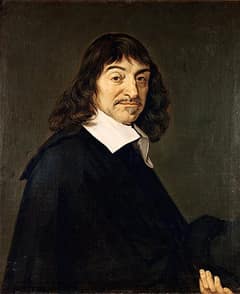
Created reality consists of two kinds of substance, thinking things whose whole nature is thought and bodies whose whole nature is extension; both depend for their existence at every moment on God, the only substance in the strict sense.
Stated in the textres cogitans, res extensa, substantia, attributum principaleDraft — not yet reviewed
God as infinite substance (Principles I.51), on whom finite substances depend for their continued existence (AT VII 48–49), stands above the two kinds.
Suspends judgment. We have no idea of substance beyond a collection of qualities, and no reasoning can show that our perceptions are caused by external objects, so what ultimately exists cannot be known.
Hume suspends judgment on what is ultimately real: all we are acquainted with are perceptions, and both substance and the continued, independent existence of bodies outrun experience.
Another reading. The "New Hume": Hume is a sceptical realist who takes bodies and causal powers to exist while denying we can know their nature (Wright, The Sceptical Realism of David Hume, 1983; Strawson, The Secret Connexion, 1989; Read and Richman, eds, The New Hume Debate, 2000). Winkler ("The New Hume", 1991) defends the traditional reading coded here.
Contested readingperceptions, substance, double existenceDraft — not yet reviewed
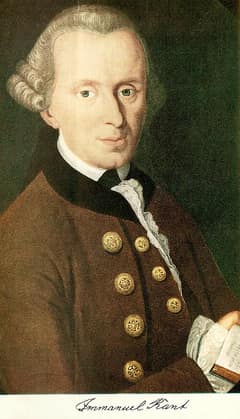
Space and time are forms of our sensibility, so what we know are appearances, not things as they are in themselves. Things in themselves can be thought but not known.
Stated in the textCritical periodErscheinung, Ding an sich, transzendentaler Idealismus, NoumenonDraft — not yet reviewed
The stance is Kant's own label. Whether appearances and things in themselves are two sets of objects (two-world reading) or one set considered in two ways (two-aspect reading, Allison) is disputed; the dispute concerns how to read the stance, not which stance he holds.
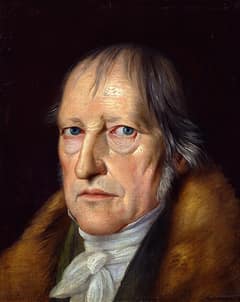
The true is to be grasped not only as substance but equally as subject: reality is the self-developing Idea, which comes to know itself through nature and finite spirit. Thought and being are not two realms; the finite has its truth in the whole.
Scholarly consensusPhenomenology of Spirit (1807); Encyclopaedia (1830)Geist, Idee, Substanz als Subjekt, das AbsoluteDraft — not yet reviewed
Hegel calls Kant's idealism merely subjective because it leaves an unknowable thing in itself (Enc. §§40–60), so the stance is not Kant's. What absolute idealism means is disputed: non-metaphysical readings (Pippin, Pinkard) take it as completing Kant's account of the self-legislating norms of thought, against metaphysical readings (e.g. Beiser; Houlgate's ontological reading of the Logic). The dispute concerns the reading, not the stance.
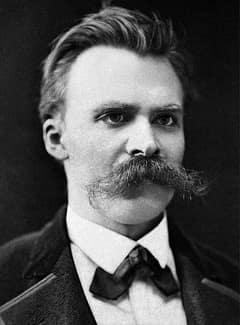
There is no true world of being behind the apparent one; being is an empty fiction and the senses lie only when reason turns their testimony of change into permanence. With the true world, the apparent world as its contrast is abolished too.
Stated in the textTwilight of the Idols (1889)Werden, wahre Welt, scheinbare Welt, Wille zur MachtDraft — not yet reviewed
Whether the will to power is a metaphysics of all reality depends heavily on the Nachlass; the published case (Beyond Good and Evil 36) is framed as a hypothesis. Heidegger reads it as the last metaphysics; Clark and Leiter deny that it is a cosmology.
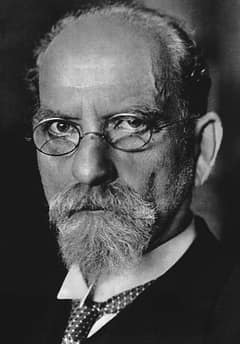
Transcendental consciousness is absolute being, and the world is its intentional correlate, with no sense of being outside the acts that constitute it. Unlike Kant, Husserl admits no unknowable things in themselves.
Across the works. The Logical Investigations (1900–1901) are metaphysically neutral descriptive psychology, and many early students (the Munich and Göttingen circles) refused the transcendental turn as a relapse into idealism.
Another reading. Deflationary or metaphysically neutral readings take constitution as a claim about sense only, not about what exists, so that Husserl holds no metaphysical stance.
Contested readingIdeas I (1913); Cartesian Meditations (1931)transzendentales Bewusstsein, Konstitution, Korrelat, WeltvernichtungDraft — not yet reviewed
Zahavi (Husserl's Legacy, 2017) argues against the neutrality reading and for transcendental idealism with metaphysical import. Realist critics (Ingarden; the Munich and Göttingen circles) agree that Husserl is an idealist and reject the position.
The being of beings is not itself a being, so the tradition goes astray when it answers the question of Being with a highest or most real being. The meaning of Being has to be worked out first through the being that understands Being, Dasein.
Stated in the textBeing and Time (1927); later writingsSein, Seiendes, ontologische Differenz, Seinsvergessenheit, EreignisDraft — not yet reviewed
The thesis is in Being and Time (SZ 4–6), but the phrase "ontological difference" first appears as such in the 1927 lecture course Basic Problems of Phenomenology (GA 24, §22) and in "On the Essence of Ground" (1929). After the turn Heidegger thinks Being as an epochal event of disclosure (Ereignis) rather than through Dasein's understanding, but keeps the difference between Being and beings.
Hekmat. "How are being and reality understood and explained?." Draft, awaiting review; last updated 20 October 2026. https://hekmat.local/questions/ont-ultimate/