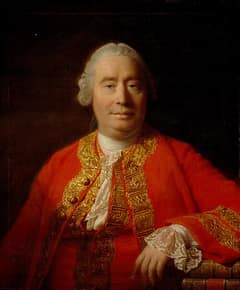
Plato argued that the changing world we perceive is an image of eternal, intelligible Forms, above all the Form of the Good. Knowledge is the soul's grasp of the Forms, and justice is the right order of the soul and the city.
Central question
How can there be stable knowledge and objective value in a world of constant change?
Method
Plato thinks in dialogue: his Socrates examines what others claim to know, and later speakers test hypotheses, divide kinds and tell myths, while Plato himself never speaks. How Plato works ↓
Wrote dialogues, never in his own voice. Early, middle and late periods differ; the Parmenides criticises the theory of Forms.
Scholarly consensus 12
Contested reading 8
12 arguments19 works, 18 readable here77 quotations checked word for word0 of 32 positions and arguments reviewed by an expert
Answers 20 of 20 questions
Metaphysics
›Being and realitySeparate Forms
What truly is are the Forms: eternal, unchanging, intelligible natures such as the Just itself or the Equal itself, which sensible things participate in and are named after. Sensibles come to be and pass away and are never fully what they are called. Above the Forms stands the Good, the source of their being and intelligibility, which surpasses being in dignity and power.
Another reading. Aristotle reports that Plato made the One and the Great-and-Small (the Indefinite Dyad) the principles of the Forms themselves (Metaphysics A.6, 987b18–988a17). The Tübingen school (Krämer, Gaiser) reconstructs from such reports an unwritten doctrine in which the Good of the Republic is the One, the first principle from which the Forms derive.
Scholarly consensusmiddle dialogues (Phaedo, Republic; speaker Socrates); criticised in the late-middle Parmenides 130a–135c; retained in the late Timaeus (speaker Timaeus)eidos, idea, ousia, methexis, to agathon, epekeina tes ousiasDraft — not yet reviewed
Calling this "idealism" is a modern misnomer: the Forms are mind-independent realities, not ideas in a mind. How far the late dialogues revise the theory after the Parmenides is debated. The option `the-one` is defined in Plotinian terms; the alternative uses it only for a derivation of the Forms from a first principle.
›UniversalsRealism before things
Wherever many things are called by one name there is one Form, which exists by itself, apart from the particulars and from our minds; particulars have their character by participating in it, as beautiful things are beautiful by the Beautiful. The Parmenides presses hard on how participation can work and rejects the suggestion that Forms are thoughts in minds (132b–c), yet concludes that without Forms thought and discourse would be impossible.
Scholarly consensusmiddle dialogues (speaker Socrates); tested in the late-middle Parmenides (Parmenides questioning the young Socrates)eidos, methexis, mimesis, paradeigma, auto kath' hautoDraft — not yet reviewed
Forms are not just universals: they are perfect paradigms that seem to be what they are in the highest degree (the Beautiful is beautiful), which is what invites the Third Man regress.
›God and the fundamentalDemonstrable by reason
Reason can show that gods exist. Every motion traces back to a self-moving source, which is soul, so soul is prior to body, and the ordered motions of the heavens must be caused by a good soul or souls, which are gods. The Timaeus adds a good craftsman who ordered the cosmos after an eternal model, and the Laws treats disbelief as an intellectual error to be refuted, not merely an impiety.
Plato's divine is plural (gods, world-soul, craftsman), and how the craftsman relates to the Form of the Good is unresolved in the texts. "Demonstrable" also groups this proof from the priority of soul as self-mover with Aristotle's argument from eternal motion and Ibn Sina's from contingency, which work very differently.
›Soul and bodySeparable soul
The soul is distinct from the body, rules it, and can exist apart from it; death is the separation of the two. The body troubles thought with its desires and confused perceptions, so the philosopher tries to free the soul from it. The soul is akin to the invisible, unchanging Forms, the body to the visible and perishable.
Scholarly consensusmiddle dialogues (Phaedo, Republic IV, Phaedrus); speaker Socratespsyche, soma, logistikon, thumoeides, epithumetikonDraft — not yet reviewed
Plato's psyche is a life principle and self-mover with three parts (reason, spirit, appetite), not a Cartesian thinking thing; "separable soul" captures separability but not this structure. The Timaeus (69c–d) calls the lower parts a mortal kind of soul.
›Death and immortalityThe soul is immortal
The individual soul existed before birth and survives death. The Phaedo argues this from opposites, from recollection, from the soul's affinity with the Forms and from its essential share in life; the Phaedrus argues from the soul's being a self-mover. The myths of judgement assume that the same soul carries its character into its next life.
Consensus attaches to the thesis, not the proofs: whether Plato thought the Phaedo's arguments sound is debated, and Socrates himself asks for their first assumptions to be examined further (107b). Phaedrus 245c psyche pasa can mean "every soul" (Fowler) or "all soul" taken collectively. Whether the whole tripartite soul is immortal or only reason is unclear: Republic 611b–612a hints that the true soul is simpler, and Timaeus 69c–d calls the lower parts mortal.
›The cosmosOrdered by a craftsman* (contested reading)
The cosmos is visible and bodily, so it has come into existence, and whatever comes into existence has a cause: a good craftsman brought a disorderly motion into order after the pattern of the eternal Forms, making time, a moving image of eternity, together with the heavens. Read at its word, the account gives the ordered world a beginning from pre-existing disorder, with no creation from nothing. Whether it is meant literally is the central dispute, and Timaeus himself calls it only a likely account (29c–d).
Another reading. Didactic reading: the account is a teaching device, like a geometer's construction; the world is everlasting and "generated" only in being caused and dependent. This was the view of the early Academy (Speusippus and Xenocrates, according to the ancient commentators), of most later Platonists including Plotinus and Proclus, and of Cornford (1937).
The main code follows the literal reading of Aristotle (De Caelo I.10, 279b32–280a11, rejecting the didactic defence), of the Middle Platonists Plutarch and Atticus, and of Vlastos (1939) among modern scholars.
›Freedom and determinismVoluntary action (determinism not posed)* (contested reading)
Plato does not set freedom against causal determinism. He holds people responsible for the lives they choose, placing the blame on the chooser and not on god, while also holding the Socratic thesis that no one does wrong willingly, since everyone wants what is truly good and errs only from ignorance. The Laws reconciles the two by treating injustice as an involuntary disease of the soul, which the law nonetheless punishes and tries to cure.
Another reading. Freedom in Plato is the condition of a soul ruled by reason, which does what it really wants, namely the good; the tyrant and the tyrannical soul do what seems best to them but not what they wish, and are enslaved (Gorgias 466d–468e; Republic 577d–e). Plotinus' account of freedom (Enneads VI.8) develops this line.
Contested readingProtagoras and Gorgias (early; Socrates); Republic X, the myth of Er (middle; Socrates); Laws IX (late; the Athenian Stranger)hekon, akon, aitia helomenou, hairesis, boulesisDraft — not yet reviewed
The Socratic paradox makes wrongdoing in a sense involuntary, so "voluntary action" here does not mean what it means for Aristotle: Plato grounds responsibility in choice, not in knowing what one does.
›CausationEnds govern explanation
Whatever comes to be has a cause, and the true cause of a thing is why it is best for it to be so; the bodily processes most people call causes are only conditions through which the cause works. Lacking such an account, the Phaedo's Socrates falls back on the Forms as the safest causes: beautiful things are beautiful by the beautiful. The Timaeus gives the full picture, a world made by reason persuading necessity, an errant cause that reason masters only for the most part.
Another reading. Vlastos ("Reasons and Causes in the Phaedo", 1969) argues that aitia here means an explanatory reason, so the Forms are logical-metaphysical explanations, not agents; the teleological code stands, but the Forms are not causes in the efficient sense.
Across the works. In the Phaedo teleological explanation is only hoped for and replaced by the Forms; the Timaeus carries it out for the whole cosmos, with necessity as a second, subordinate kind of cause (Sedley, Creationism and Its Critics in Antiquity, 2007).
Scholarly consensusmiddle dialogues (Phaedo, Republic VI; speaker Socrates) and late dialogues (Timaeus, speaker Timaeus; Philebus)aitia, to beltiston, synaitia, ananke, planomene aitia, nous, deuteros plousDraft — not yet reviewed
Two kinds of explanation sit together: the Forms (and the Good, Republic 509b) explain what a thing is, and reason working for the best explains why the world is ordered. Necessity in the Timaeus is a cause, not a law; it is what reason must persuade.
Epistemology
›Sources of knowledgeReason alone
The senses report things that change and that both are and are not what they are called, so they cannot supply stable knowledge. Knowledge is the soul's grasp of the Forms, which it recovers by recollection when perception reminds it; perception occasions the recovery but is not its source. A true belief becomes knowledge only when reason ties it down by working out the explanation (aitias logismos).
Scholarly consensusMeno (transitional) and middle dialogues (Phaedo, Republic VI); speaker Socratesanamnesis, episteme, doxa, noesis, aitias logismosDraft — not yet reviewed
"Reason alone" understates the role Plato gives to perception as the occasion of recollection (Phaedo 74a–75d), but he never treats perception as a source of knowledge.
›Certainty, doubt and the limits of knowledgeYes* (contested reading)
Plato's question is less whether certainty is possible than how knowledge differs from opinion. In Republic V knowledge is an infallible power set over what is, and opinion a fallible power set over what both is and is not; the dialectician who reaches the Good can give an account that survives every refutation. Fallibility belongs to opinion, not to knowledge as such, though the Socrates of the Republic disclaims having that knowledge of the Good himself (506b–e).
Across the works. In the early dialogues Socrates disclaims knowledge of the most important things and the discussions end in aporia (Apology 21b–23b); the confident epistemology of the Republic is a later development.
Another reading. The sceptical Academy, from Arcesilaus to Carneades, read Plato himself as an aporetic inquirer who asserts nothing, pointing to the dialogue form and to the Theaetetus, which ends without a definition of knowledge.
Contested readingRepublic V–VII (middle; speaker Socrates); contrast the early dialogues and the late-middle Theaetetusepisteme, doxa, logos, dialektikeDraft — not yet reviewed
The summary follows the traditional "objects" (two-worlds) reading of Republic V. On the veridical reading (Fine 1978), knowledge and opinion differ in whether their contents are guaranteed true, not in having different objects; the stance is unchanged, but the argument for it is different.
›Innate knowledgeInnate knowledge
Learning is recollection. Questioned step by step, an untaught slave recovers geometrical truths from within himself, and we judge sensible equals deficient only because we already know Equality itself. The soul therefore has knowledge that it did not get from perception in this life; experience only prompts it to recover what it has.
Scholarly consensusMeno, Phaedo, Phaedrus (transitional and middle); speaker Socratesanamnesis, psyche, eidosDraft — not yet reviewed
The two main texts differ on how the soul came to have this knowledge. The Meno leaves open whether it was acquired or always possessed and concludes that the truth is always in the soul (85d–86b); the Phaedo says it was acquired before birth and lost at birth (75c–76c). Neither is innateness in the early-modern sense of ideas built into the mind.
›TruthTruth as a feature of being · Correspondence* (contested reading)
Truth belongs first to what fully is: the Form of the Good gives the objects of knowledge their truth and the knower the power to know, and what is more real is more true. Where Plato analyses speech, a true statement says of things that are that they are as they are, and a false one says what is other than what is. The two senses sit side by side; he never unifies them into a single theory.
Another reading. A common analytic reading takes the Republic's "true" and "truly" to mean genuine or real, a sense applied to things, not an account of what makes thoughts true; Plato's only theory of truth is then the correspondence account of the Cratylus and Sophist.
Another reading. Heidegger ("Plato's Doctrine of Truth", 1942) reads the Cave (Republic 514a–517a) as the moment truth shifts from unconcealment to correctness of seeing, so Plato stands at the turn between the two.
Contested readingRepublic VI (middle; speaker Socrates); Cratylus (middle; Socrates) and Sophist (late; the Eleatic Stranger)aletheia, to on, ontos on, idea tou agathou, logos alethesDraft — not yet reviewed
›Epistemic justificationAn account of why* (contested reading)
True opinion can guide as well as knowledge, but it does not stay; it becomes knowledge, and stable, when it is tied down by reasoning out its cause. One who knows can give an account of what he knows, and in the Republic the dialectician gives an account of each thing's essence and does away with hypotheses until he reaches an unhypothetical first principle, the Good, where the whole chain is confirmed. The Theaetetus tests "true opinion with an account" in three senses and rejects each, ending without a definition.
Across the works. The Theaetetus examines "true opinion with an account" (201c–210b) and finds every version of the account either insufficient or circular, so the dialogue that asks the question directly leaves it open; whether this withdraws the Meno's answer or only shows that knowledge cannot be built from belief plus something is disputed.
Another reading. Fine ("Knowledge and Logos in the Theaetetus", 1979) reads Platonic knowledge as the ability to interrelate the items of a field, so that an account is justified by its place among others, a model closer to coherence than to foundations.
The Republic adds a foundational element the option does not show: hypotheses are confirmed only when they are traced to the unhypothetical principle (511b, 533c–d). "Justification" is a modern word; Plato's question is what turns true opinion into knowledge, and the answer is an account of the cause, not a reason that makes a belief probable. Speakers are recorded in `period`; the coding is never `textual`.
Axiology
›The highest goodFlourishing through virtue* (contested reading)
Happiness lies in a just soul, in which reason rules spirit and appetite with their agreement. Virtue is the soul's health and injustice its disease, so the just person is happier than the unjust whatever else befalls him, and justice is good both in itself and for what comes of it.
Another reading. The highest life is contemplative: becoming like god as far as possible (Theaetetus 176a–b), the philosopher's vision of the Good (Republic VII) and the ascent to Beauty itself (Symposium 210a–212a), which practical virtue serves.
Contested readingGorgias (early); Republic II–IV, IX (middle); Theaetetus (late-middle); speaker Socrateseudaimonia, dikaiosyne, arete, harmonia, homoiosis theoiDraft — not yet reviewed
Whether virtue suffices for happiness, as the Gorgias suggests, or is only its dominant constituent is debated for Plato's Socrates (Vlastos 1984); the option does not separate the two.
›The basis of moralityKnowledge of the good · Virtue* (contested reading)
An action is right when it comes from, and preserves, a soul ordered by reason, and that order depends on knowledge of the Good, the greatest study, which makes just things and everything else useful. Plato thus reverses the usual order of explanation: just actions are defined by the condition of soul they produce and preserve, not the just soul by its actions.
Across the works. In the early Protagoras, Socrates argues that knowledge of good and bad is sufficient for right action and that wrongdoing is ignorance, without the Republic's trained character and non-rational parts of the soul.
Another reading. Rightness is grounded in the soul's order rather than in knowledge, since in the Republic most citizens act rightly from trained character and correct belief, not from knowledge of the Good. Sachs (1963) objected that justice so defined need not issue in ordinary just conduct.
Contested readingProtagoras (early) and Republic IV, VI (middle); speaker Socratesidea tou agathou, megiston mathema, dikaiosyne, phronesisDraft — not yet reviewed
The Euthyphro (10a–11b) shows that the pious is not pious because the gods love it, so rightness is not grounded in divine approval; but it is an early, Socratic dialogue. Plato's positive grounding is metaphysical (the Good), which neither option names exactly.
›Virtue and knowledgeKnowledge plus habituation* (contested reading)
In the Republic the soul has parts that can conflict, so knowing what is best does not by itself ensure acting on it: appetite can drag a person against his reasoning, and spirit and appetite must be trained by music, gymnastics and habit to follow reason. Virtue is reason's wisdom together with the agreement of the trained lower parts.
Across the works. In the early Protagoras Socrates argues that knowledge rules whoever has it and that acting against one's knowledge of the best is impossible (352b–358d).
Contested readingRepublic IV (middle; speaker Socrates); contrast Protagoras (early)arete, episteme, logistikon, thumoeides, paideia, akrasiaDraft — not yet reviewed
The trap here is attributing the Socratic thesis to Plato wholesale. Even in the Republic it is unclear whether someone with full knowledge, not mere belief, could act against it.
›The state and legitimacyRule by the wise
Cities will have no rest from evils until philosophers rule or rulers become philosophers, because only those who know the Good can order the city for the good of all. Justice in the city, as in the soul, is each class doing its own work: rulers ruling, auxiliaries guarding, producers producing.
Across the works. The late Laws designs a second-best city ruled by law rather than by philosophers, whose constitution must mix monarchy and democracy (693d–e, 739a–e).
Scholarly consensusRepublic (middle; speaker Socrates); Laws III–V (late; the Athenian Stranger)philosophos basileus, dikaiosyne, kallipolis, ta hautou pratteinDraft — not yet reviewed
Coded for the best city simply, as the codebook asks. The Laws still names the Republic's community of property as the first-best model (739b–e).
›Beauty and artSuspect imitation · Beauty as ascent
Imitative poetry and painting copy sensible things, which are themselves copies of Forms, so they stand at a third remove from the truth, and poetry feeds the passions it should help to dry up; the ideal city admits only hymns to the gods and praises of good men. Beauty is another matter: love of beautiful bodies, rightly led, rises step by step to the Beautiful itself, the highest object of contemplation.
Scholarly consensusRepublic II–III, X (middle; speaker Socrates); Symposium (middle; Diotima, reported by Socrates); Phaedrus (middle; Socrates)mimesis, mimetes, eidolon, phantasma, mania, to kalonDraft — not yet reviewed
"Art" here is imitative poetry and painting, not the modern fine arts; techne covers any craft. The Phaedrus praises inspired poetic madness (245a) even as the Republic banishes imitative poetry.
›JusticeOrder of the soul · Justice by nature
Against the view that justice is a compact the weak make because they cannot do wrong with impunity, the Republic finds justice in each part doing its own work: in the city each class keeps to its task, and in the soul reason rules with spirit as its ally over appetite. Justice in the true sense is this inner order, a health of the soul set by nature; just actions are those that produce and preserve it. Late in life Plato states political justice as proportional equality, the judgment of Zeus that gives more to the greater and less to the lesser according to nature.
Across the works. The Laws states political justice as proportional equality, distributing honours by worth and education (757b–d), and tempers it with the equality of the lot to keep peace; the Republic's account in terms of the parts of the soul does not return there as the definition of justice.
Scholarly consensusRepublic II–IV (middle; speaker Socrates, answering Glaucon and Adeimantus); Laws IV, VI and X (late; the Athenian Stranger)dikaiosyne, ta hautou prattein, oikeiopragia, kata physin, isotesDraft — not yet reviewed
`natural-law` records that justice is by nature and measures enacted law (Republic 444d; Laws 714b–715b, 889e–890d), not a doctrine of natural law in the later sense. The Republic grounds justice finally in the Forms and the Good; Glaucon's compact (358e–359b) is a view Socrates is asked to refute, not Plato's.
›The nature of valueThe Good beyond being
The Form of the Good is the greatest study: by it just things and everything else become useful and beneficial, and, like the sun, it gives the objects of knowledge their being while itself lying beyond being. People may settle for seeming just, but no one is content with a merely apparent good. Against the Protagoreans, the just and the advantageous are not whatever a city takes them to be: god, not man, is the measure. The Philebus catches the good through measure, beauty and truth.
Across the works. The Republic places the Good beyond being; the Philebus approaches it through measure, proportion, beauty and truth in a mixed life, without the image of the sun.
Scholarly consensusMiddle and late dialogues (Republic, Theaetetus, Philebus, Laws)hē tou agathou idea, epekeina tēs ousias, metron, to sumpheron, summetriaDraft — not yet reviewed
Whether "beyond ousia" puts the Good outside being or only above the other Forms in rank and power is disputed; on either reading the Good's goodness does not depend on anyone's judgment. Theaetetus 172a–b states the Protagorean view of the just and holy in order to examine it, not as Plato's own.
* contested reading · open a row for the explanation and its sources
Method روش و شیوه اندیشهورزی فلسفی
Plato thinks in dialogue: his Socrates examines what others claim to know, and later speakers test hypotheses, divide kinds and tell myths, while Plato himself never speaks. The method is shown in the conversations more than stated, and it changes from the early dialogues to the late ones.
Posing questions
A dialogue usually starts from a "What is it?" question (what piety, courage or virtue is) put to someone who claims to know. Socrates asks for the one aspect by which every case is what it is, not a list of examples, and holds that we cannot know what a thing is like before we know what it is. The question is often raised by a practical occasion, such as a prosecution, a trial or the education of a son, so that the answer bears on how the speaker lives.
In the early dialogues the elenchus draws premises from the interlocutor and shows that they contradict his proposed definition, often ending in perplexity (aporia). From the Meno and Phaedo on, Socrates reasons from a hypothesis, as geometers do: he lays down the strongest account he can find and tests what agrees with it. The Republic ranks dialectic above mathematics because it treats hypotheses as steps toward an unhypothetical first principle and then comes down through what follows from it. The Phaedrus, Sophist and Statesman add collection and division: gathering scattered cases under one form, then cutting it into kinds at their natural joints.
Rival views are examined from inside: the opponent's thesis and his own admissions supply the premises, so the refutation is one he must accept. Against Protagoras' claim that man is the measure, the Theaetetus turns the thesis on itself, since it must grant the truth of the view that denies it. Rhetoric and sophistry are judged by whether they are arts that know their object and aim at the good or knacks that aim at pleasure, and poetry by what it does to the soul, within what the Republic calls an old quarrel with philosophy. The dialogues also turn this examination on the views of Plato's own Socrates, most sharply in the Parmenides' objections to the Forms.
Reason is the power that reaches what is: the divided line puts thinking that rests on hypotheses below understanding that reaches the first principle, and the Phaedo asks the soul to withdraw from the senses as far as it can. Learning is presented as recollection, drawn out by questions rather than put in from outside. The dialogues also give a place to wonder as the beginning of philosophy, to the lover's ascent toward beauty itself in the Symposium, and to a god-sent madness in the Phaedrus that surpasses human good sense. In Plato's terms these do not compete with reason; they are ways in which the soul is turned toward the Forms.
Plato writes dialogues in which he never speaks; the Phaedo even records that he was absent from Socrates' death. Views belong to characters (Socrates, Diotima, Timaeus, the Eleatic Stranger, the Athenian) and are tested against other characters, so no statement can be read as Plato's doctrine without the drama around it. Where argument gives out he tells myths of judgement, of the soul and of the cosmos, and marks them as a likely account or as something worth the risk of believing, not as proof. The Phaedrus gives a reason for the form: written words cannot answer a question, while live conversation can defend itself.
Apology, Euthyphro, Crito, Protagoras, GorgiasEarly dialogues: Socrates examines one interlocutor's definition or claim by question and answer. Most end without an agreed answer; the Gorgias closes with a myth of judgement.Euthyphro 15c–16a
Meno, Phaedo, Symposium, Republic, Phaedrus, CratylusMiddle dialogues: Socrates argues from hypotheses, for recollection and for the Forms, and describes dialectic as an ascent to a first principle. Images and myths (the cave, the charioteer) carry what argument cannot, and the Phaedrus first sets out collection and division.Republic 514a–517a
Parmenides, TheaetetusCritical dialogues: the Parmenides puts hard objections to the Forms in the mouth of an older philosopher and prescribes training in dialectical exercises; the Theaetetus returns to the aporetic manner, with Socrates as a midwife who tests others' offspring.Parmenides 135c–136c · Theaetetus 150b–d
Sophist, Statesman, Philebus, Timaeus, LawsLate dialogues: Socrates recedes or falls silent. The Eleatic Stranger divides kinds methodically, Timaeus gives a likely account of the cosmos in continuous speech, and the Athenian of the Laws writes persuasive preludes to laws.Statesman 262a–263b · Laws 722d–723b
›The argument from recollectionWe acquired knowledge of the Forms before birth and recover it by recollection when perception reminds us; so the soul existed, with intelligence, before it entered the body.
1We know what Equality itself is, since we judge sensible equal things by it.
2Sensible equals, such as equal sticks and stones, always fall short of Equality itself, and we recognise that they do.
3To judge that something falls short of a standard, we must already know the standard.
4We have been perceiving sensible equals since birth, so we cannot have gained knowledge of Equality itself from perception during this life.
∴We acquired knowledge of the Forms before birth and recover it by recollection when perception reminds us; so the soul existed, with intelligence, before it entered the body.
Aristotle objects. It is absurd to suppose we possess the most precise knowledge of first principles without noticing it. We acquire it through perception, memory, experience and induction, and the intellect starts like an unwritten tablet.
Plato objects. Simmias and Cebes, in the dialogue itself, grant that recollection proves pre-existence but not survival after death, which is why further arguments are needed.
›The affinity argument for the soul's immortalityThe soul is most like the divine, deathless and unchanging, and the body like the mortal and dissoluble; so the soul is altogether indissoluble, or nearly so.
1There are two kinds of things, the invisible, uncomposed and unchanging, and the visible, composite and changing.
2Only what is composite is liable to be dispersed and destroyed.
3The soul is invisible and, when it reasons by itself, is drawn to and resembles the unchanging Forms, whereas the body is visible and changing.
4It is natural for the soul to rule and the body to serve, as the divine rules and the mortal serves.
∴The soul is most like the divine, deathless and unchanging, and the body like the mortal and dissoluble; so the soul is altogether indissoluble, or nearly so.
Aristotle objects. The soul is the form of the body, not a separate thing resembling the Forms; like the shape of the wax, it is not separable from the body, except perhaps for intellect.
Epicurus objects. The soul is a body of fine atoms spread through the whole frame; when the containing body is destroyed its atoms disperse, so the soul has no perception after death.
Plato objects. Simmias, in the dialogue itself: the soul may be an attunement of the body's elements, like the attunement of a lyre, which is invisible and divine-seeming yet perishes before the wood and strings; affinity with the invisible does not show that the soul outlasts the body.
Plato objects. Cebes, in the dialogue itself: grant that the soul is stronger and longer-lasting than the body, as a weaver outlasts many cloaks; it may still wear out over many bodies and perish in the end, so durability is not immortality.
Immanuel Kant objects. Aimed at Mendelssohn's proof from the soul's simplicity (Phädon, 1767), and so only indirectly at the Phaedo: even a simple soul could cease to exist by a gradual loss of intensity rather than by being split into parts, so simplicity does not prove permanence.
›Knowledge and opinion have different objectsThe sensible many are objects of opinion; only the Forms, which are always the same, are objects of knowledge. (This is the "objects" or two-worlds reconstruction. On the veridical reading, Fine 1978, "set over what is" means set over what is true: knowledge entails truth and opinion does not, the two may share objects, and the argument does not by itself require Forms.)
1Knowledge is set over what is, ignorance over what is not.
2Knowledge and opinion are different powers, since knowledge is infallible and opinion is not, and different powers are set over different objects.
3So opinion is set over something between what is and what is not.
4The many beautiful things also appear ugly, the many just things unjust, the many doubles halves; each sensible both is and is not what it is called.
∴The sensible many are objects of opinion; only the Forms, which are always the same, are objects of knowledge. (This is the "objects" or two-worlds reconstruction. On the veridical reading, Fine 1978, "set over what is" means set over what is true: knowledge entails truth and opinion does not, the two may share objects, and the argument does not by itself require Forms.)
Aristotle objects. Socrates was right to seek universal definitions but did not separate them; Plato made the Forms separate because he accepted the Heraclitean flux of sensibles. Knowledge is of universals, but universals exist in sensible things, so separation is unnecessary.
›One over manyFor each plurality called by one name there is one Form, existing by itself, in which the many participate.
1Whenever many things are called by the same name, there is some one character they share (Republic 596a).
2That one character is not identical with any one of the many things, nor with all of them together.
3What the many share must exist in its own right for them to share in it; a craftsman makes beds by looking to the Form of bed, but makes no Form (596b).
4A separate argument, from compresence (Republic 479a–c), adds that each sensible F also appears not-F, so no sensible can be what F itself is.
∴For each plurality called by one name there is one Form, existing by itself, in which the many participate.
Plato objects. The Parmenides turns the argument on itself: if large things share one Form of Largeness, then the Form and the large things, viewed together, share a further Largeness, and so on without end.
Aristotle objects. The one-over-many argument proves at most that there are universals, not separate Forms, and taken strictly it yields the Third Man and Forms of things Platonists deny have Forms.
›The argument for the parts of the soulThe soul has three distinct parts: reason, spirit and appetite; justice is their right order, with reason ruling.
1The same thing cannot do or undergo opposites in the same respect, in relation to the same thing, at the same time.
2A thirsty person can at the same time desire to drink and refuse to drink.
3The refusal comes from reasoning and the desire from appetite.
4Anger can side with reason against appetite (as when Leontius rages at his own desire to look at corpses) yet differs from reason, since children and animals have it without reason.
∴The soul has three distinct parts: reason, spirit and appetite; justice is their right order, with reason ruling.
Aristotle objects. Dividing the soul into reason, spirit and appetite is arbitrary; by the same logic one could posit indefinitely many parts, and desire would be split across them. The soul's capacities should be distinguished by their functions.
David Hume objects. Reason alone cannot oppose a passion; it only informs desire about means and matters of fact. What looks like reason resisting appetite is a calm passion, mistaken for reason because it produces little felt emotion, prevailing over a violent one.
›Meno's paradox and the answer from recollectionInquiry is possible because the knower is in a middle state: the truth is in the soul but must be recovered by questioning, so one can seek what one does not now consciously know and recognise it when found. Socrates himself will vouch only for the practical conclusion, that believing in inquiry makes us better and braver than believing it impossible; the doctrine of recollection is offered with less confidence. The Phaedo uses recollection to prove pre-existence (plato-recollection).
1The paradox: one cannot inquire into what one knows, since one has no need to, nor into what one does not know, since one would not know what to look for or recognise it when found.
2The answer: the soul is immortal, has been born many times and has learned all things, so what is called learning is recollection.
3The demonstration: Meno's slave, untaught in geometry, is led by questions alone from false answers through perplexity to the true answer, that the square on the diagonal is double the original square.
4The true opinions he reaches are his own, not supplied by Socrates, and repeated questioning would turn them into knowledge.
5He did not acquire them in this life, so he must have had them before he was a human being.
∴Inquiry is possible because the knower is in a middle state: the truth is in the soul but must be recovered by questioning, so one can seek what one does not now consciously know and recognise it when found. Socrates himself will vouch only for the practical conclusion, that believing in inquiry makes us better and braver than believing it impossible; the doctrine of recollection is offered with less confidence. The Phaedo uses recollection to prove pre-existence (plato-recollection).
Aristotle objects. Aristotle names the puzzle in the Meno and dissolves it without recollection: one may know a conclusion universally (that every triangle has angles equal to two right angles) without knowing it of this particular figure, so learning is passing from a qualified to an unqualified knowledge. First principles are reached through perception, memory, experience and induction.
David Hume objects. Every idea is copied from an earlier impression of sense or reflection; a person without a sense lacks its ideas. So there is no stock of knowledge carried in from a previous existence, and what the slave displays is his ability to compare ideas he already has from experience.
Plato objects. In the dialogue itself Socrates declines to vouch for most of the argument, standing firm only on the claim that we should inquire. What the demonstration shows for certain is that questioning can bring someone to recognise a truth he was not told; that the knowledge was had before birth is a further step.
›The cyclical argument (Phaedo)The living come from the dead as the dead from the living, so the souls of the dead exist somewhere, from which they return to life. Cebes at once asks for more, that the soul keeps its intelligence, which the recollection argument is brought in to supply.
1Whatever has an opposite comes to be from its opposite and only from it, as the larger from the smaller and the waking from the sleeping.
2Between each pair of opposites there are two processes, one in each direction, such as falling asleep and waking up.
3Living and being dead are opposites, and dying, the process from living to dead, is plain to see.
4Nature is not lame on one side, so there must also be the reverse process, coming back to life from the dead.
5If generation went in a straight line and never came round again, everything would end up dead and nothing would be alive.
∴The living come from the dead as the dead from the living, so the souls of the dead exist somewhere, from which they return to life. Cebes at once asks for more, that the soul keeps its intelligence, which the recollection argument is brought in to supply.
Epicurus objects. Grant that matter is never lost and is endlessly recombined: what returns is atoms, not souls. The soul is a body of fine atoms that disperses when its containing body is destroyed, so it no longer has its powers or its sensation, and nothing personal comes back.
David Hume objects. Arguments of this metaphysical kind prove too much: what is incorruptible must also be ingenerable, so an immortal soul existed before birth, and if that earlier existence did not concern us, neither will a later one. Analogy from nature points the other way, since whatever we observe comes to be and passes away.
›Socrates' replies to Simmias' attunement theoryThe soul is not an attunement of the body; it rules the body and is more divine than any attunement. The replies dispose of Simmias' model but not of the wider worry that the soul depends on the body, which Cebes presses next and the final argument answers.
1Simmias' objection: the soul is an attunement (harmonia) of the body's elements, as the tuning of a lyre is of its strings, and so perishes with them or before them.
2First reply: an attunement cannot exist before the elements it is composed of, but Simmias accepts recollection, which shows the soul existed before the body.
3Second reply: one attunement can be more or less tuned than another, but no soul is more or less a soul than another. If virtue were attunement and vice discord, no soul could be vicious, and all souls would be equally good.
4Third reply: an attunement follows its components and cannot oppose them, but the soul leads and opposes the body's desires, as when Odysseus rebukes his own heart.
∴The soul is not an attunement of the body; it rules the body and is more divine than any attunement. The replies dispose of Simmias' model but not of the wider worry that the soul depends on the body, which Cebes presses next and the final argument answers.
Aristotle objects. Aristotle also rejects the attunement theory, but not in favour of Socrates' alternative. The soul is the form and first actuality of a living body, not a separate thing that rules it, so showing that the soul is no attunement does not show that it can exist apart from the body.
David Hume objects. Everything we observe suggests Simmias' dependence: the weakness of body and mind in infancy, their vigour in maturity, their common disorder in sickness and gradual decay in old age are proportioned, so the mind will most likely share the body's dissolution.
›The final argument from the soul as bringer of life (Phaedo)When death approaches a person, the mortal part dies, but the soul withdraws unharmed and undestroyed; the soul is immortal and imperishable and will exist in another world. The step from deathless (never being dead) to imperishable (never ceasing to exist) rests on an appeal to general agreement, and Socrates himself says the first assumptions need further examination.
1An opposite itself, such as the large in us, never admits its opposite; when the opposite approaches it either withdraws or perishes.
2Some things that are not opposites always bring an opposite with them and so also exclude its contrary, as three always brings oddness and never admits the even, and fire brings heat and never admits cold.
3Whatever the soul occupies it always brings life to, so the soul never admits death, the opposite of life, and is deathless.
4What is deathless is also imperishable, since if the deathless and everlasting could perish nothing at all would escape destruction.
∴When death approaches a person, the mortal part dies, but the soul withdraws unharmed and undestroyed; the soul is immortal and imperishable and will exist in another world. The step from deathless (never being dead) to imperishable (never ceasing to exist) rests on an appeal to general agreement, and Socrates himself says the first assumptions need further examination.
Plato objects. In the dialogue itself Socrates names the gap: the odd never becomes even, yet it might perish and give way to the even, so being deathless (never being dead) yields imperishability only if the deathless is granted to be imperishable. Simmias keeps a doubt, and Socrates agrees that the first assumptions must be examined further.
Epicurus objects. Death is not something the soul could admit or flee, since it is simply the end of sensation: when the body is dissolved its soul-atoms scatter and nothing remains that feels.
David Hume objects. No argument from the nature of the soul can establish immortality, since we have no idea of substance from which such conclusions could follow; the analogy of nature, in which nothing is perpetual and every form is changing, tells against it.
›Glaucon's challenge and the ring of GygesSocrates must show that justice is good in itself, apart from its rewards and reputation, and that the just person is happier than the unjust even in the extreme case; this is the task of the rest of the Republic, answered first in Book IV (plato-tripartite-soul) and then in Book IX (plato-justice-happiest). Glaucon states the view without holding it.
1Goods are of three kinds, those welcomed for their own sake, those for their own sake and their results, and those welcomed only for their results; most people put justice in the third.
2By nature doing injustice is good and suffering it bad, and since the evil of suffering exceeds the good of doing, the weak agree not to do or suffer injustice; justice is that compact, a compromise between the best and the worst.
3Give the just and the unjust man the ring of Gyges, which makes its wearer invisible, and both will behave the same way, so no one is just willingly but only from constraint.
4Compare the perfectly unjust man who seems just and enjoys every reward of reputation with the perfectly just man who seems unjust and is tortured and killed; most people judge the first happier.
∴Socrates must show that justice is good in itself, apart from its rewards and reputation, and that the just person is happier than the unjust even in the extreme case; this is the task of the rest of the Republic, answered first in Book IV (plato-tripartite-soul) and then in Book IX (plato-justice-happiest). Glaucon states the view without holding it.
Epicurus objects. Epicurus accepts the compact account of justice but denies that the ring is a real option: no one who breaks the compact in secret can be confident of remaining undiscovered, so the unjust life carries a lifelong fear that destroys tranquillity (epicurus-justice-as-contract).
David Hume objects. Hume's sensible knave is a Gyges who sees that an occasional undetected injustice would profit him. Hume concedes that if such a man thinks the reasoning needs an answer it will be hard to find one that satisfies him, and rests on the inward peace and integrity the knave gives up.
›The Book IX proofs that the just life is happiestJustice pays: the just person is happier than the unjust, whether or not gods and men know his character, and this is the final answer to Glaucon's challenge after the Book IV argument that justice is the health of the soul. Whether it meets the challenge on its own terms is disputed: Sachs (1963) argues that Plato shows the well-ordered soul is happy, not that it refrains from what is ordinarily called injustice.
1First proof, from political analogy: the soul of the tyrannical man mirrors the city ruled by a tyrant, with its best parts enslaved to the worst; it is full of fear, want and regret, so the tyrant is the most wretched and the kingly, just man the happiest.
2Second proof, from the judge: each part of the soul has its own pleasure, of learning, of honour and of gain. Only the philosopher has experienced all three and has intelligence and argument, the instruments of judgement, so his verdict that his own pleasure is best is authoritative.
3Third proof, from true pleasure: what most people call pleasure is often only relief from pain, which seems pleasant by contrast. Filling the soul with what more truly is gives truer and purer pleasure than filling the body.
4The image of the soul as a many-headed beast, a lion and a man shows that injustice feeds the beast and starves the man, so it profits no one to enslave the best part of himself even for gold.
∴Justice pays: the just person is happier than the unjust, whether or not gods and men know his character, and this is the final answer to Glaucon's challenge after the Book IV argument that justice is the health of the soul. Whether it meets the challenge on its own terms is disputed: Sachs (1963) argues that Plato shows the well-ordered soul is happy, not that it refrains from what is ordinarily called injustice.
Aristotle objects. Virtue is not sufficient for happiness. A person may have virtue and yet suffer the greatest misfortunes, and no one would call such a person happy except to defend a thesis; those who say the good man on the rack is happy are talking nonsense.
Epicurus objects. The third proof rests on denying that the calm state free of pain is pleasure. For Epicurus the removal of all pain is the limit of pleasure, so the philosopher's alleged truer pleasures have no special standing, and justice is chosen for the security it brings.
Friedrich Nietzsche objects. The Socratic equation of reason, virtue and happiness is a symptom of decline: a remedy of those who had to make reason a tyrant over the instincts, not a discovery about the good life.
›Why the guardians must live under restrictionsAn ideally just city must censor poetry, deny its rulers property and private families, and found itself on a myth that each citizen's class reflects his nature. The aim is unity and rule by the best, not the happiness of any one class.
1The greatest good for a city is what binds it into one, and the greatest evil what splits it into many; a city is best ordered when its citizens say "mine" and "not mine" of the same things.
2Character is formed in youth by the stories children hear, so the city must supervise the makers of stories and admit only those that show gods and heroes as good.
3Guardians who own land, houses and money become householders, then masters and enemies of the other citizens; so they must hold no private property and live and eat in common.
4Private families divide loyalties, so among the guardians wives and children are to be held in common.
5Citizens will accept their stations more readily if they believe a "noble lie" that all were born from the earth, with gold, silver or bronze and iron mixed into their souls.
∴An ideally just city must censor poetry, deny its rulers property and private families, and found itself on a myth that each citizen's class reflects his nature. The aim is unity and rule by the best, not the happiness of any one class.
Aristotle objects. The city Plato designs aims at too much unity: pushed further it becomes a household and then a single person. What is common to the greatest number receives the least care, so common wives, children and property weaken affection and responsibility; better that property be private and its use made common by friendship and virtue.
Form · IdeaThe unchanging, intelligible pattern a thing shares in to be what it is: the beautiful itself, as against the many beautiful things. Particulars are what they are by participation (methexis) in it.7 links to other thinkers →
recollectionLearning as the soul's recovery of what it knew before birth. Questioning or perception prompts it, as when an untaught slave works his way to a geometrical truth in the Meno.1 link to other thinkers →
knowledge · opinion · beliefKnowledge is set over what fully is and cannot err; opinion is set over what changes and can be true or false. A true opinion becomes knowledge only when it is tied down by an account of its reason.
the Form of the Good · the GoodThe highest object of study, which gives the Forms their being and their knowability as the sun gives visible things light and growth. It is said to surpass being itself in rank and power.4 links to other thinkers →
dialecticReasoned question and answer that tests hypotheses and climbs to a first principle that rests on none, then comes down again through Forms alone. Later dialogues add collection and division.2 links to other thinkers →
justiceIn city and soul alike, each part doing its own work: reason ruling, spirit supporting it, appetite obeying. So understood, justice is the health of the soul and worth having for its own sake.1 link to other thinkers →
craftsman · DemiurgeThe divine maker of the Timaeus, who shapes the visible cosmos by looking to an eternal model and makes it as good as its material allows. He brings disorderly motion into order rather than making the world from nothing.
becoming like god · likeness to godThe aim the Theaetetus gives philosophy: to escape the evils of mortal life by becoming as like god as a human can, which means becoming just, holy and wise.1 link to other thinkers →
Thinkers named, not addressed, in the texts Hekmat holds. Naming someone is not evidence of influence.
Names in their works
›Socrates206 passages · 13 works
Apology 18b… childhood, and accused me without any truth, saying, “There is a certain Socrates, a wise man, a ponderer over the things in the air and one who has …
Cratylus 383a… Here is Socrates; shall we take him as a partner in our discussion? …
Crito 53c… and justice and lawful things and the laws are the most precious things to men? And do you not think that the conduct of Socrates would seem most disgraceful? …
Cratylus 385e… let us see. Do you think this is true of the real things, that their reality is a separate one for each person, as Protagoras said with his doctrine …
Meno 91d… For my part I cannot bring myself to believe you; for I know of one man, Protagoras, who amassed more money by his craft than Pheidias—so famous for the noble …
Phaedrus 267c… Were there not some similar inventions of Protagoras, Socrates? …
Parmenides 126c… which Socrates, Zeno, and Parmenides once had together, and that he remembers it.” “That is true,” said he. “Well,” I said, “we should like to hear it.” “There …
Sophist 216a… as we were bound to do, and we bring also this man with us; he is a stranger from Elea, one of the followers of Parmenides and Zeno, and a real philosopher. …
Symposium 178b… also agrees with Hesiod, saying that after Chaos were born these two, Earth and Love. Parmenides says of Birth that she “invented Love before all other gods.” …
Apology 19c… Something of that sort it is. For you yourselves saw these things in Aristophanes’ comedy, a Socrates being carried about there, proclaiming that he was …
Symposium 176b… of drinking would suit us best.” On this Aristophanes observed: “Now that, Pausanias, is a good suggestion of yours, that we make a point of consulting our …
Symposium 177e… but love-matters; nor could Agathon and Pausanias either, nor yet Aristophanes, who divides his time between Dionysus and Aphrodite; nor could any other …
Cratylus 383a… Cratylus, whom you see here, Socrates, says that everything has a right name of its own, which comes by nature, and that a name is not whatever people call a …
Cratylus 383b… both Greeks and barbarians. So I ask him whether his name is in truth Cratylus, and he agrees that it is. “And what is Socrates’ name?” I said. “Socrates,” said …
Cratylus 384a… out clearly, make me agree entirely with him. Now if you could interpret Cratylus’s oracular speech, I should like to hear you; or rather, I should like …
Cratylus 401d… Those on the other hand, who say ὠσία would agree, well enough with Heracleitus that all things move and nothing remains still. So they would say the …
Symposium 187a… to any the least curious observer, is in the same sort of case: perhaps Heracleitus intends as much by those perplexing words, “The One at variance with …
Theaetetus 152e… except Parmenides, may be marshalled in one line—Protagoras and Heracleitus and Empedocles—and the chief poets in the two kinds of poetry, Epicharmus, …
Apology 34a… Adimantus, son of Aristo, whose brother is Plato here; and Aeantodorus, whose brother Apollodorus is present. And I can mention to you many others, some one of …
Phaedo 59b… and Epiganes and Aeschines and Antisthenes; and Ctesippus the Paeanian was there too, and Menexenus and some other Athenians. But Plato, I think, was ill. …
Apology 38b… pay. I might perhaps pay a mina of silver. So I propose that penalty; but Plato here, men of Athens, and Crito and Critobulus, and Aristobulus tell me to …
›Philolaus2 passages
Phaedo 61d… the dying?” “How is this, Cebes? Have you and Simmias, who are pupils of Philolaus, not heard about such things?” “Nothing definite, Socrates.” “I myself …
Phaedo 61e… do they say that it is not permitted to kill oneself, Socrates? I heard Philolaus, when he was living in our city, say the same thing you just said, and I …
›Thales2 passages · 2 works
Protagoras 343a… such remarks is to be ascribed to his perfect education. Such men were Thales of Miletus, Pittacus of Mytilene, Bias of Priene, Solon of our city, …
Theaetetus 174a… Why, take the case of Thales, Theodorus. While he was studying the stars and looking upwards, he fell into a pit, and a neat, witty Thracian servant girl …
Named by
›Friedrich Nietzsche55 passages · 9 works
The Antichrist 23… one a sage in the Orient: the Brahmins understood it thus, so did Plato, and so does every disciple of esoteric wisdom. If for example it give anyone …
Beyond Good and Evil P… the most dangerous of errors hitherto has been a dogmatist error—namely, Plato’s invention of Pure Spirit and the Good in Itself. But now when it has been …
The Birth of Tragedy Attempt.4… tragic and were pessimists? What if it was madness itself, to use a word of Plato's, which brought the greatest blessings upon Hellas? And what if, on the …
An Enquiry concerning Human Understanding 5.2.17n9… aut scriptum aliquod legamus? Velut ego nunc moveor. Venit enim mihi Plato in mentem, quera accepimus primum hic disputare solitum: cuius etiam illi …
A Treatise of Human Nature 1.3.8.5n21… written? This is just what is happening to me now; for I am reminded of Plato who, we are told, was the first to make a practice of holding discussions …
Nicomachean Ethics 1095a… and those that lead to first principles. It was a good practice of Plato to raise this question, and to enquire whether the true procedure is to start …
Nicomachean Ethics 1104b… pain cause us to abstain from doing noble actions. Hence the importance, as Plato points out, of having been definitely trained from childhood to like and …
Nicomachean Ethics 1172b… other good than in isolation. In fact, a similar argument is employed by Plato to refute the view that pleasure is the Good: the life of pleasure, he urges, …