Medieval Islamic · 10th c.
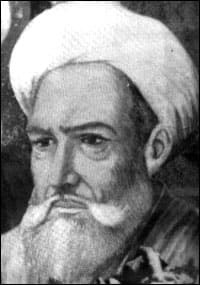
al-Farabi
فارابیc. 872–950Islamic Peripatetics (Mashshāʾī)
Al-Farabi, later called the Second Teacher after Aristotle, ordered the sciences and built the first Arabic philosophical system. From the First proceeds a hierarchy of intellects down to the Active Intellect, which actualises human thought. Happiness is the intellect's perfection, reached in a virtuous city ruled by one who is philosopher, lawgiver and prophet; religion gives the many in images what philosophy knows by demonstration.
- Central question
- How can philosophy, recovered from Plato and Aristotle, found a city whose citizens reach happiness, and what place does religion have in it?
- Method
- Al-Farabi orders the sciences and the arts of reasoning: demonstration gives certainty to the few, while dialectic, rhetoric and poetics persuade or move others, and religion presents in images what philosophy knows by proof. How al-Farabi works
al-madīna al-fāḍila the virtuous cityal-raʾīs al-awwal the first ruleral-ʿaql al-faʿʿāl the Active Intellectal-ʿaql al-mustafād the acquired intellectal-fayḍ emanation
Wrote in Arabic in his own voice; some works survive only in part or in Hebrew and Latin, and his commentary on the Nicomachean Ethics is lost and known through later reports. The Harmonization of the Two Sages and the Gems of Wisdom (Fuṣūṣ al-ḥikam) are of disputed authorship.
- Scholarly consensus 15
- Contested reading 5
Answers 20 of 20 questions
Epistemology
Sources of knowledgeExperience, completed by intellect · Illumination from a higher intellect
The material intellect begins as a disposition to receive the forms of things, which reach it from sensation through imagination. It becomes actual only when the Active Intellect acts on it, as light makes colours actually visible and the eye actually seeing; the first intelligibles, common to all, arise in it this way.
Letter on the Intellect whole treatise · The Virtuous City Ch. 13
Both codes describe one account: the content comes from sensible forms, and the separate Active Intellect makes them intelligible. In human knowing, al-Farabi's Active Intellect acts chiefly as a light on what imagination holds, where Ibn Sina's emanates the intelligibles themselves (Davidson, 1992).
Certainty, doubt and the limits of knowledgeYes
Certainty is attainable: demonstration from necessary first premises yields certain knowledge, the highest of the kinds of assent, which dialectic, rhetoric and poetics only approach.
The Conditions of Certainty whole treatise · Enumeration of the Sciences Ch. 2
Innate knowledgeNo innate contents
The human intellect starts as a mere disposition. The first intelligibles, such as that the whole is greater than the part, come to it from the Active Intellect without study and without our knowing how, but they are not present from birth.
The Virtuous City Ch. 13 · Letter on the Intellect whole treatise
That the first principles come unlearned borders on innateness, but the code follows his claim that the intellect is at first only potential.
TruthCorrespondence · Truth as a feature of being
A judgment is true when what is in the soul is as the thing is outside it; "existent" is said in one sense of what is true. Truth is also said of things according to their existence, and most of all of the First, whose existence is the most perfect.
Epistemic justificationDemonstration from first principles
Assent (taṣdīq) comes in grades, and only certainty is knowledge in the full sense: believing that something is so, that it cannot be otherwise, and that this belief cannot be otherwise. Necessary certainty comes from demonstration whose premises go back to first intelligibles that the mind has without learning. Dialectic, rhetoric and poetics produce lesser assent, suited to those who cannot follow demonstration.
The Conditions of Certainty whole treatise · Enumeration of the Sciences Ch. 2 · The Attainment of Happiness whole work
The conditions of certainty are analysed in Black ("Knowledge (ʿilm) and Certitude (yaqīn) in al-Fārābī's Epistemology", 2006). The graded logic of assent, shared by Ibn Sina and Ibn Rushd, is a theory of what each kind of argument warrants; `demonstrative` records only its top grade.
Axiology
The highest goodContemplation (contested reading)
Happiness is the soul's perfection in existence to the point where it needs no matter, joining the separate substances; it is the good sought for itself. Begun in this life through the theoretical, deliberative and moral virtues and the practical arts, it is completed after death.
Across the works. The lost Ethics commentary, as Ibn Rushd reports it, made political happiness in this life the only happiness, which is flourishing through virtue in a city.
The basis of moralityVirtue
Good actions are those in the mean, as determined by the practically wise; the virtues are settled states acquired by repeating such actions, and the ruler and the law habituate citizens to them.
Selected Aphorisms whole work · The Attainment of Happiness §1
Virtue and knowledgeKnowledge plus habituation
Theoretical virtues are produced by instruction, but moral virtues and practical arts by habituation; the ruler forms citizens by both, persuading some and compelling others.
The state and legitimacyRule by the wise
The virtuous city is ruled by a first ruler who has perfected his intellect to the point of conjunction with the Active Intellect and receives revelation through his imagination, so that he is philosopher, lawgiver and prophet at once; its parts are ordered under him as the body's organs under the heart.
The Virtuous City Ch. 15 · The Attainment of Happiness §§57–58
The best practicable order is rule by a successor who keeps the first ruler's law, or by a group who together have his qualities. The lawgiver is a prophet as well as a philosopher, which reworks Plato's philosopher-king.
Beauty and artValuable imitation
Poetry is one of the logical arts: its statements imitate things and move the soul by imaginative representation rather than by assent. Imitation also makes truths available to those who cannot grasp them by demonstration, which is what religion does.
Enumeration of the Sciences Ch. 2 · The Virtuous City Ch. 17
As for Ibn Sina, poetics belongs to logic. Al-Farabi also wrote a large treatise on music (Kitāb al-mūsīqā al-kabīr) that is not coded here.
JusticeProportional and corrective equality
Justice lies first in dividing the goods the citizens share, such as security, wealth and honour, among them according to their worth, and then in preserving that division, restoring to each what is taken without right. Justice is also said more generally of any virtue exercised towards another. He reports and rejects the view of the ignorant cities that justice by nature is conquest, or that it is only a pact the weak keep out of fear.
Selected Aphorisms whole work · The Virtuous City Ch. 18
The account follows Nicomachean Ethics V, adapted to the virtuous city, where the ruler's law sets the division; whether al-Farabi also holds a justice by nature is left open here.
The nature of valueGood convertible with being
The First is the most perfect existence and is good in itself; each being below it has the perfection and good its rank in the order of existence allows. The human good is happiness, the soul's perfection in existence, which is the good sought for itself; other things are good or bad for a human being as they lead toward it or away from it.
The Virtuous City Ch. 1 · The Virtuous City Ch. 13 · The Attainment of Happiness §1
Coded on good (khayr) and perfection (kamāl); al-Farabi does not ask whether goodness depends on human judgment as such. # check: where in Virtuous City Ch. 1 the First is called good.
contested reading · open a row for the explanation and its sources
Method روش و شیوه اندیشهورزی فلسفی
Al-Farabi orders the sciences and the arts of reasoning: demonstration gives certainty to the few, while dialectic, rhetoric and poetics persuade or move others, and religion presents in images what philosophy knows by proof. He presents philosophy as recovered from Plato and Aristotle, whose works he expounds, summarises and comments on.
- Posing questions
Al-Farabi first asks what a science is about and where it stands among the others; the Enumeration of the Sciences sets out language, logic, mathematics, physics, metaphysics, political science, jurisprudence and theology in order. Questions are then posed within the science they belong to and at the level of certainty it allows. Behind the order stands a practical question: how the knowledge that brings happiness can be found and then passed on to a whole community.
Enumeration of the Sciences Chs. 2–5 · The Attainment of Happiness §1 · The Virtuous City Ch. 15
- Arguing and justifying
Logic is the instrument, and it has five arts of reasoning: demonstrative, dialectical, sophistical, rhetorical and poetic. Demonstration gives certain knowledge from certain premises, and the Conditions of Certainty states what certainty requires; dialectic tests opinions and trains the mind, rhetoric persuades and poetics produces imitations that move the imagination. The Book of Letters gives these arts a history: in a nation, rhetoric and poetry come first, then dialectic and sophistry, and only last demonstration.
Enumeration of the Sciences Ch. 2 · The Conditions of Certainty whole treatise · The Book of Letters Part II
- Criticising rival views
Views are judged by the art of reasoning they rest on: arguments that are only dialectical or rhetorical are not demonstration, whatever their authority. In the Book of Letters he ranks theology (kalām) and jurisprudence below philosophy, since they defend received opinions by dialectic and rhetoric. His accounts of Plato and Aristotle reconstruct each as one inquiry with a single aim, and he treats their differences as differences of approach rather than of doctrine.
The Book of Letters Part II · Enumeration of the Sciences Ch. 5 · The Philosophy of Plato whole treatise · The Philosophy of Aristotle whole treatise
- Reason, experience and other ways of knowing
Intellect is the highest power, and the Letter on the Intellect distinguishes its senses, from the potential intellect to the Active Intellect from which knowledge flows. Imagination matters for method as well as for psychology: it receives images of what intellect knows, so a prophet with a perfect imagination can give the whole community symbols of truths that the philosopher grasps by proof. Most people grasp the principles of beings only through such likenesses, which is why religion is needed alongside philosophy.
Letter on the Intellect whole treatise · The Virtuous City Ch. 14 · The Virtuous City Ch. 17 · The Attainment of Happiness §55
- Language and style
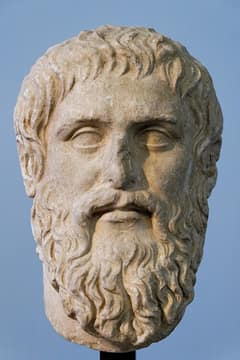
Al-Farabi writes systematic treatises, summaries of the philosophy of Plato and of Aristotle, short aphorisms, and commentaries on Aristotle's logic, which earned him the title of "Second Teacher". The Virtuous City is set out as the opinions the citizens of a good city should hold, not as a demonstration. He holds that Plato wrote with deliberate concealment, so that his summaries read Plato's dialogues for the whole they serve rather than as doctrine stated outright.
The Virtuous City Chs. 1–3 · The Philosophy of Plato whole treatise · Selected Aphorisms whole work
- Across the works
- Enumeration of the Sciences, The Conditions of Certainty, The Book of LettersLogical and classificatory works: they set out the sciences and the arts of reasoning, the conditions of certainty, and the history of terms and arts in a nation.Enumeration of the Sciences Ch. 2
- The Attainment of Happiness, The Philosophy of Plato, The Philosophy of AristotleThe trilogy usually known as the Philosophy of Plato and Aristotle: the first part says how the sciences that bring happiness are found and taught, the other two reconstruct Plato's and Aristotle's inquiries as a single philosophy.The Attainment of Happiness §§57–58
- The Virtuous City, Selected Aphorisms, Letter on the IntellectPolitical and psychological works that present the order of beings and the soul as the basis for the virtuous city, mostly by exposition rather than full demonstration.The Virtuous City Ch. 15
burhān, jadal, khiṭāba, shiʿr, mughālaṭa, yaqīn, takhayyul, muḥākāt, ʿilm madanī, al-muʿallim al-thānī
Arguments
The first ruler of the virtuous cityThe first ruler of the virtuous city is a philosopher-prophet and lawgiver, the one through whom the Active Intellect's gifts reach the city. When no such person exists, a successor keeps his laws, or several people who together have his qualities rule jointly.
- 1Human beings reach the perfection for which they exist, happiness, only in a community, and the most complete community that aims at happiness is the virtuous city.
- 2A city is like a healthy body, whose organs are ranked under one ruling organ, the heart; so the virtuous city's parts must be ranked under one ruler who is not ruled by anyone.
- 3The ruler must know happiness and everything that leads to it, so his intellect must be fully actualised, reaching the acquired intellect, and joined to the Active Intellect.
- 4He must also be able to lead others to it, which needs an imagination strong enough to receive what the Active Intellect gives in images, as revelation, and to persuade and to legislate.
- 5One so endowed is a philosopher by his intellect and a prophet by his imagination, and has the natural qualities that suit rule.
- ∴The first ruler of the virtuous city is a philosopher-prophet and lawgiver, the one through whom the Active Intellect's gifts reach the city. When no such person exists, a successor keeps his laws, or several people who together have his qualities rule jointly.
deductive · The Virtuous City Ch. 15 · The Attainment of Happiness §§57–58
Draft — not yet reviewed
Religion imitates philosophyReligion is an imitation of philosophy and comes after it in rank and in time; the philosopher-lawgiver is its author.
- 1The principles of beings and the end of human life can be known in two ways, by intellect through demonstration, or by imagination through images that imitate them.
- 2Few have the nature and training to know by demonstration; most can know only through images and be persuaded only by rhetoric.
- 3The lawgiver, who knows the truths by demonstration, gives each nation images suited to it and persuades them by rhetorical and poetic means.
- 4What results is religion; so religion presents in images what philosophy knows in itself, and different nations may have different images of the same truths.
- ∴Religion is an imitation of philosophy and comes after it in rank and in time; the philosopher-lawgiver is its author.
al-Ghazali objects. Prophecy is not imagination imitating what the intellect knows. It is a stage beyond the intellect, in which an eye opens on things the intellect cannot reach, as the intellect sees what the senses cannot; the Sufis' tasting confirms that such a stage exists.
deductive · The Attainment of Happiness §55 · The Book of Letters Part II · The Virtuous City Ch. 17
Draft — not yet reviewed
Key terms
All key terms →- المدينة الفاضلةal-madīna al-fāḍila
- the virtuous city · the excellent cityThe city whose members cooperate in the things by which true happiness is reached, its ranks ordered under a first ruler as the body's organs under the heart. Against it stand the ignorant, wicked and erring cities, which aim at lesser goods or mistake the good.2 links to other thinkers →
- الرئيس الأولal-raʾīs al-awwal
- the first ruler · the supreme rulerThe ruler who is ruled by no one: his intellect is joined to the Active Intellect and his imagination receives its gifts as revelation, so he is philosopher, lawgiver, prophet and imam in one.
- العقل الفعّالal-ʿaql al-faʿʿāl
- the Active Intellect · agent intellectThe last of the separate intellects, below the moon's sphere. It does for the human intellect what the sun does for sight, making the forms held in imagination actually intelligible, and union with it is the soul's happiness.1 link to other thinkers →
- العقل المستفادal-ʿaql al-mustafād
- the acquired intellectThe human intellect when it has actualised all or nearly all the intelligibles and thinks itself; it stands next to the Active Intellect and is the stage at which the soul can subsist without matter.1 link to other thinkers →
- الفيضal-fayḍ
- emanation · overflowThe way the existence of other things proceeds from the First's perfect existence, necessarily and without its seeking anything: intellect from intellect down to the Active Intellect, with a sphere at each step.2 links to other thinkers →
- السعادةal-saʿāda
- happiness · felicityThe good sought for itself: the soul's perfection in existence to the point where it no longer needs matter, reached through the theoretical, deliberative and moral virtues and the practical arts, in a city and completed after death.1 link to other thinkers →
- المحاكاةal-muḥākāt
- imitation · representationRepresenting a thing by a likeness of it. Poetic statements imitate, and religion imitates in images, for those who cannot know them by demonstration, the principles that philosophy knows in themselves.1 link to other thinkers →
Entries
Relations
Open in the network →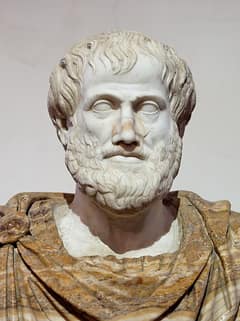
Works
- Enumeration of the SciencesOnline · 1Ihsa al-ulum
- The Virtuous CityOnline · 3Mabadi ara ahl al-madina al-fadila
- The Philosophy of AristotleFalsafat Aristutalis
- Long Commentary on Aristotle's De InterpretationeSharh li-kitab Aristutalis fi l-Ibara
- The Attainment of HappinessTahsil al-saada
- The Philosophy of PlatoFalsafat Aflatun
- Letter on the IntellectRisala fi l-aql
- The Book of LettersKitab al-huruf
- The Conditions of CertaintySharait al-yaqin
- Selected AphorismsFusul muntazaa
How to cite
Hekmat. "al-Farabi." Draft, awaiting review; last updated 20 October 2026. https://hekmat.local/thinkers/al-farabi/