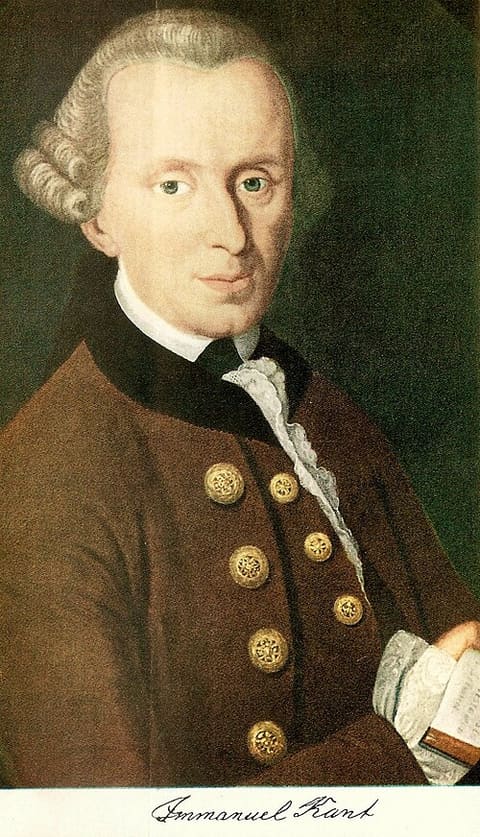
Kant held that the mind contributes space, time and the categories to experience. We know appearances, not things in themselves, and morality rests on the categorical imperative of a free rational will.
Central question
What are the conditions and limits of knowledge, and what grounds morality?
Method
Kant's method is critique: before metaphysics may claim knowledge, reason must examine its own sources, scope and limits, as a court that judges its own claims. How Immanuel Kant works ↓
Space and time are forms of our sensibility, so what we know are appearances, not things as they are in themselves. Things in themselves can be thought but not known.
Stated in the textCritical periodErscheinung, Ding an sich, transzendentaler Idealismus, NoumenonDraft — not yet reviewed
The stance is Kant's own label. Whether appearances and things in themselves are two sets of objects (two-world reading) or one set considered in two ways (two-aspect reading, Allison) is disputed; the dispute concerns how to read the stance, not which stance he holds.
›UniversalsConceptualism* (contested reading)
A concept is a general representation that refers to objects through marks that many things can share, and it exists only in thought. Kant does not pose the realism question directly; the pure concepts are rules of synthesis whose claim to objects is settled by the deduction, not by a theory of universals.
Another reading. Kant replaces the old question of where universals exist with the question how a priori concepts can apply to objects at all (A84–92/B116–124); on this reading none of the traditional stances applies.
Contested readingCritical periodBegriff, conceptus, Merkmal, KategorieDraft — not yet reviewed
›God and the fundamentalPostulate of practical reason
Every theoretical proof of God fails: the ontological proof treats existence as a real predicate, and the cosmological and physico-theological proofs depend on it. God's existence is instead a necessary postulate of practical reason, required to think the highest good possible.
Across the works. The pre-critical Only Possible Argument (1763) still offered a demonstration of God's existence as the ground of all possibility.
Stated in the textCritical period (1781–1788)Postulat, Sein ist kein reales Prädikat, VernunftglaubeDraft — not yet reviewed
The Critique of Judgment restates the moral argument (§87). The late Opus postumum notes treat God as an idea that reason itself produces rather than a being outside the subject (read by Förster, Kant's Final Synthesis, 2000); they are unpublished notes and are not coded.
›Soul and bodySuspends judgment
Suspends judgment. Kant suspends judgment on the soul's nature: the Paralogisms show that rational psychology cannot know whether the thinking subject is a simple, immaterial substance, so neither spiritualism nor materialism can be established. On the interaction problem he goes further and denies its presupposition, since it arises only from an illusion (A384–393); the mode records the first half.
The "I think" accompanies all representations but is not an intuition of a substance, so arguments from it to a simple, immaterial and persisting soul are fallacies. The question of how soul and body interact arises only when appearances of inner and outer sense are taken for things in themselves.
Stated in the textCritical periodParalogismus, Ich denke, Gemeinschaft der Seele mit dem KörperDraft — not yet reviewed
In the first-edition Fourth Paralogism Kant calls the transcendental idealist an empirical realist and, in that sense, a dualist (A370): matter and thinking are two kinds of appearance, not two substances.
›Death and immortalityPostulated, not known
Immortality cannot be proved: the Paralogisms refute the rational proofs, including Mendelssohn's argument from the soul's simplicity. It is postulated because the complete fitness of the will to the moral law can be approached only in an endless progress.
Stated in the textCritical periodPostulat, Heiligkeit, unendlicher ProgressusDraft — not yet reviewed
Reason proves both that the world has a beginning in time and that it has none; the first antinomy arises because the world is treated as a whole given in itself. Since the world as a whole is never given in experience, both theses are false of it, and the regress of conditions is only a task.
Stated in the textCritical periodAntinomie, Weltganzes, regressus in indefinitumDraft — not yet reviewed
Kant's answer is stronger than inconclusiveness: the dispute rests on an illusion, which the option's definition covers.
›Freedom and determinismTwo standpoints
As appearances in time, our actions are wholly determined by natural causes; as rational beings who act under the idea of freedom, we must regard ourselves as belonging to an intelligible order and as free. Kant dismisses compatibilism as a mere evasion of the problem (AA 5:96).
Across the works. Groundwork III (AA 4:446–455) tries to establish the moral law from the presupposition of freedom. The Critique of Practical Reason reverses the order: the moral law is a "fact of reason" and the ground by which we know freedom, while freedom is the ground of the law's being (AA 5:4 note; 5:29–31). The stance is unchanged.
Stated in the textCritical periodKausalität aus Freiheit, intelligibler Charakter, Idee der FreiheitDraft — not yet reviewed
How to read the stance is disputed: two-world readings take the intelligible and empirical orders as distinct realms, against two-standpoint or two-aspect readings (Allison, Kant's Theory of Freedom, 1990; Korsgaard, "Morality as Freedom", 1989). The dispute concerns the reading, not the stance.
›CausationNecessity from the mind
Experience shows that one thing follows another, never that it must; the concept of cause is a pure concept of the understanding, and that every event follows something by a rule is a condition of experiencing objective succession at all. So causal necessity holds strictly of all appearances, because the understanding gives nature its laws, but not of things in themselves, which leaves room for a causality of freedom. Possibility, actuality and necessity add nothing to a concept; they relate its object to our cognition, and purposes in nature are a guide for judgment, not a constitutive principle.
Stated in the textCritique of Pure Reason (1781/1787); Prolegomena (1783); Critique of the Power of Judgment (1790)Kausalität, Kategorie, Analogien der Erfahrung, Postulate des empirischen Denkens, Kausalität aus Freiheit, regulatives Prinzip, NaturzweckDraft — not yet reviewed
Shared answer, different reasons (rule 6): against Hume the necessity is a priori and objectively valid of every possible object of experience. What the Second Analogy proves is disputed: that every event has a cause, or also that there are particular causal laws (Strawson, The Bounds of Sense, 1966; Guyer, Kant and the Claims of Knowledge, 1987).
Epistemology
›Sources of knowledgeExperience structured by the mind
All knowledge begins with experience, but not all of it arises from experience: the senses supply the matter, while space, time and the categories are forms the knowing subject brings to it. Intuitions without concepts are blind and concepts without intuitions are empty, so knowledge needs both.
Stated in the textCritical period (Critique of Pure Reason, 1781/1787)a priori, Sinnlichkeit, Verstand, Anschauung, BegriffDraft — not yet reviewed
›Certainty, doubt and the limits of knowledgeYes, within limits
Mathematics, the principles of natural science and the a priori conditions of experience are known with apodictic certainty, but only for objects of possible experience. When reason tries to know what lies beyond experience (the soul, the world as a whole, God) it falls into illusion.
Stated in the textCritical periodapodiktisch, mögliche Erfahrung, transzendentaler ScheinDraft — not yet reviewed
›Innate knowledgeA priori structures, not contents
The forms of intuition and the pure concepts of the understanding lie ready in the mind before any experience, but they give knowledge of no particular object until sensation supplies a content. Kant calls them "originally acquired" rather than innate, and rejects implanted ideas.
Stated in the textCritical period; reply to Eberhard (1790)ursprünglich erworben, a priori, Form der AnschauungDraft — not yet reviewed
Kant grants the nominal definition of truth as the agreement of cognition with its object, and asks instead for a criterion. Empirical truth is possible because the a priori conditions of experience are also the conditions of its objects ("transcendental truth").
Scholarly consensusCritical periodÜbereinstimmung der Erkenntnis mit ihrem Gegenstande, transzendentale WahrheitDraft — not yet reviewed
Kant takes the correspondence definition as given rather than defending it; some readers argue that, since objects are appearances, his working criterion is closer to coherence within possible experience.
›Epistemic justificationOwn position
Own position. Holding-to-be-true is knowing when its grounds are sufficient both objectively, valid for every rational being, and subjectively; the a priori principles that make such grounds possible are justified by a transcendental deduction showing them to be conditions of any possible experience.
Kant distinguishes opining, believing and knowing as grades of holding-to-be-true: opinion is insufficient both subjectively and objectively, belief is subjectively sufficient only, knowledge both. A conviction differs from a mere persuasion by resting on grounds valid for everyone, and its outward touchstone is that it can be communicated and found valid by every human reason. For the a priori concepts and principles themselves the question is one of right (quid juris), answered by a deduction that shows experience is possible only through them.
Stated in the textCritique of Pure Reason (1781/1787)Fürwahrhalten, Meinen, Glauben, Wissen, Überzeugung, Überredung, quid juris, transzendentale DeduktionDraft — not yet reviewed
No shared option fits: Kant's justification of principles is neither demonstration from self-evident premises nor evidence of what is given, but proof that they are conditions of possible experience. Practical belief (Glaube) in God and immortality is subjectively sufficient only, which is a warranted holding that is not knowledge.
Axiology
›The highest goodVirtue crowned by happiness
The only thing good without qualification is a good will, the supreme good. The complete good is virtue together with happiness in proportion to it, which a rational being must hope for but cannot bring about by its own powers.
Stated in the textCritical periodhöchstes Gut, guter Wille, GlückswürdigkeitDraft — not yet reviewed
Whether the highest good adds anything to the moral law is disputed: Beck (Commentary on Kant's Critique of Practical Reason, 1960) says it does not; Reath ("Two Conceptions of the Highest Good in Kant", 1988) traces a shift from a theological to a secular, this-worldly conception.
›The basis of moralityDuty
An action has moral worth only if done from duty, and it is right if its maxim could be willed as a universal law. The categorical imperative is a law reason gives itself, not one derived from happiness, feeling or the divine will.
Stated in the textCritical periodPflicht, kategorischer Imperativ, Maxime, AutonomieDraft — not yet reviewed
Virtue is the strength of a person's maxims in fulfilling duty, a strength of will against inclination, not a kind of knowledge and not a mere habit. Ordinary moral cognition already knows what duty demands; failure comes from frailty or a corrupted will, not from ignorance.
Scholarly consensusMetaphysics of Morals (1797)Tugend, Stärke, GesinnungDraft — not yet reviewed
The legitimate constitution is a republic: laws that free and equal citizens could give themselves, separation of powers and representation. Its authority rests on right, the condition under which each person's freedom can coexist with everyone's, and it points to a federation of free states.
Stated in the textToward Perpetual Peace (1795); Doctrine of Right (1797)Republik, Recht, ursprünglicher VertragDraft — not yet reviewed
Kant's republic is not a democracy, which he calls necessarily despotic (AA 8:352).
›Beauty and artJudgment of taste
A judgment of beauty is based on a disinterested feeling of pleasure in the free play of imagination and understanding, yet claims everyone's agreement without a concept. Beauty is a symbol of morality, and fine art is the art of genius, which presents aesthetic ideas.
Stated in the textCritique of Judgment (1790)Geschmacksurteil, interesseloses Wohlgefallen, Genie, ästhetische IdeeDraft — not yet reviewed
Right is the sum of conditions under which the choice of each can be united with the choice of everyone under a universal law of freedom. An action is right if it can coexist with everyone's freedom under such a law, so coercion that hinders a hindrance to freedom is just. The only innate right is freedom; a rightful condition, in which public justice protects, regulates exchange and distributes by law, is one we are obliged to enter.
Stated in the textDoctrine of Right (Metaphysics of Morals, 1797)Recht, allgemeines Prinzip des Rechts, Zwang, angeborenes Recht, öffentliche Gerechtigkeit, StrafgerechtigkeitDraft — not yet reviewed
Right concerns only external freedom and is kept apart from ethics; Kant's justice in punishment is retributive (the right of retaliation, 6:332), which the option does not record.
›The nature of valueRational will
Only a good will is good without limitation. Ends we set from inclination have only relative worth, a price, while rational nature exists as an end in itself and has dignity, which admits no equivalent. The concept of the good is not settled before the moral law but determined by it, so value has its source in the law that reason gives itself.
Another reading. Realist reading: rational nature has an objective value that grounds the moral law (Wood, Kant's Ethical Thought, 1999).
Another reading. Constructivist reading: value is conferred by rational choice and constituted by the procedure of the categorical imperative (Korsgaard, The Sources of Normativity, 1996).
Scholarly consensusWert, Würde, Preis, Zweck an sich selbst, Autonomie, das GuteDraft — not yet reviewed
The stance holds on both readings; they differ on whether rational nature is found to be valuable or makes things valuable by willing, which is the second half of this question.
* contested reading · open a row for the explanation and its sources
Method روش و شیوه اندیشهورزی فلسفی
Kant's method is critique: before metaphysics may claim knowledge, reason must examine its own sources, scope and limits, as a court that judges its own claims. Its central argument is transcendental, asking what must hold a priori for experience to be possible, and its results are to be built into a system following an architectonic plan.
Posing questions
Kant poses the question of metaphysics as a question about reason itself: why it falls into disputes it cannot settle, and whether it can know anything beyond experience. He narrows this to one question, how synthetic judgements a priori are possible, and divides it by science: how pure mathematics, pure natural science and metaphysics are possible. The same pattern recurs in practical philosophy, which asks for the supreme principle of morality, and in aesthetics and teleology, which ask how judgements that claim universal validity without concepts are possible.
A transcendental argument shows that certain concepts or principles are conditions of the possibility of experience and therefore hold for all its objects: the deduction of the categories answers the question of right (quid juris), by what title concepts not drawn from experience apply to it. The "Copernican" hypothesis that objects must conform to our cognition is tested like an experiment, by whether it removes the contradictions the old assumption produced. The Critique proceeds synthetically, from the sources of cognition to their products, while the Prolegomena and the Groundwork proceed analytically, from what is granted to its conditions.
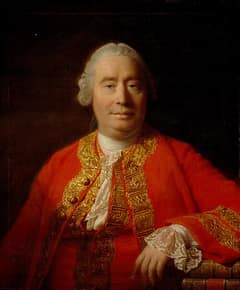
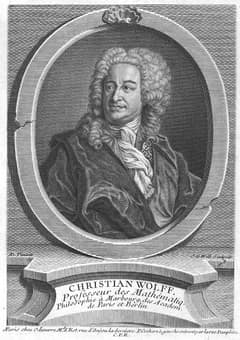
Kant distinguishes three ways in metaphysics: the dogmatic, which proceeds from principles without first examining reason's capacity (Wolff); the sceptical, which undermines all claims (Hume); and the critical, which alone is left. In the antinomies he lets reason argue both sides of a question with equal force and uses the stand-off, a "sceptical method" rather than scepticism, to expose a shared false assumption. He opposes dogmatism, not the dogmatic procedure, and praises Wolff's rigour while faulting his starting point. Hume's doubt about causation is what roused him from dogmatic slumber.
Knowledge needs both sensibility, which gives intuitions, and understanding, which thinks them through concepts; neither alone yields cognition, and humans have no intellectual intuition. Reason seeks the unconditioned and, used beyond experience, produces illusion, but it has a legitimate regulative use in guiding inquiry and a practical use in morality. The power of judgement subsumes particulars under given universals or, when it is reflective, seeks a universal for a given particular, which grounds the Critique of Judgment.
The critical writings are scholastic in their divisions (elements and method, analytic and dialectic, deductions and antinomies), a structure Kant justifies by the idea of a system in which every part has its place. He admits that the first Critique sacrificed popular clarity for thoroughness and wrote the Prolegomena as a shorter, analytic guide. His popular essays and the Groundwork address a wider public, and the Critique closes with a Doctrine of Method on the discipline, canon, architectonic and history of pure reason.
Kritik, transzendental, Gerichtshof der Vernunft, quid juris, Deduktion, Architektonik, skeptische Methode, dogmatisch, synthetische Urteile a priori
Arguments
›The transcendental deduction of the categories (B edition, in outline)The categories apply with necessity to every object of possible experience, and to nothing beyond it: the understanding prescribes laws to nature as appearance, but gives no knowledge of things in themselves.
1It must be possible for the "I think" to accompany all my representations; otherwise something would be represented in me that could not be thought, and so would be nothing to me (B131–132).
2Combination of a manifold is never given through the senses; it is an act of the understanding, and the unity of apperception is the highest condition of all such combination (B129–130, B133–135).
3The logical functions of judgment are the ways in which a given manifold is brought under the one apperception (§20, B143).
4The categories are just these functions of judgment, insofar as the manifold of an intuition is determined with regard to them (B143; cf. the table of judgments, A70/B95–A80/B106).
5Every manifold given in our space and time, and so everything we can perceive, must be combined in one consciousness through such synthesis (§26, B159–161).
∴The categories apply with necessity to every object of possible experience, and to nothing beyond it: the understanding prescribes laws to nature as appearance, but gives no knowledge of things in themselves.
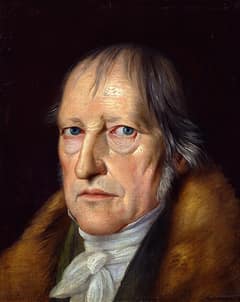
G. W. F. Hegel objects. Kant takes the categories over from the table of judgments in formal logic instead of deriving them from thought's own development, and the whole critical project, which examines the faculty of knowledge before knowing, is like wanting to swim before going into the water.
Martin Heidegger objects. The first-edition deduction points to the transcendental imagination as the common root of sensibility and understanding; in the second edition Kant shrank back from this ground and subordinated imagination to the understanding.
›The categorical imperative and the universalisability testLying promises are strictly forbidden and beneficence is a duty; in general, an action is permissible only if its maxim passes the test of universal law, a test reason applies to itself independently of any desired end.
1Nothing is good without qualification except a good will, and a will is good not through what it achieves but through its willing (AA 4:393–394).
2An action has moral worth only if done from duty, and its worth lies in the maxim on which it is done, not in its purpose (AA 4:397–400).
3Duty is the necessity of an action from respect for law (AA 4:400).
4If every incentive arising from an object of desire is removed, nothing remains to determine the will but the conformity of its maxim to universal law as such (AA 4:402).
5So the supreme principle is to act only on that maxim through which one can at the same time will that it become a universal law (AA 4:421).
6A maxim of making a false promise to escape a difficulty cannot even be thought as a universal law without contradiction, since promising would then be impossible (AA 4:422).
7A maxim of never helping others can be thought as a law of nature but cannot be willed as one, since a will that did so would conflict with itself (AA 4:423).
∴Lying promises are strictly forbidden and beneficence is a duty; in general, an action is permissible only if its maxim passes the test of universal law, a test reason applies to itself independently of any desired end.
G. W. F. Hegel objects. The test is an empty formalism: non-contradiction can only check consistency with content already presupposed. That there should be no property at all is no more contradictory than that there should be no deposits; the contradiction arises only if property is assumed.
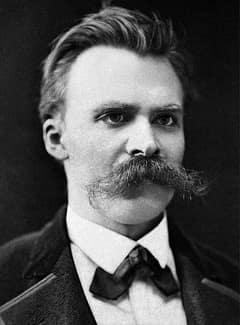
Friedrich Nietzsche objects. Duty in general, impersonal and universal, is a danger to life: a virtue must be one's own invention and need, and the categorical imperative is a symptom of declining life.
prior to experienceKnowledge independent of all experience, marked by strict necessity and universality. Kant's question is how synthetic a priori judgments, which extend knowledge yet are not drawn from experience, are possible.1 link to other thinkers →
transcendentalConcerned not with objects but with our way of knowing objects, so far as that is possible a priori. Transcendental philosophy asks what makes experience possible at all.
intuitionThe immediate, singular way knowledge relates to objects, for us always sensible. Space and time are its pure forms, supplied by the mind; without concepts, intuitions are blind.
categories · pure concepts of the understandingTwelve a priori concepts, such as substance and cause, by which the understanding unifies intuitions into experience of objects. They hold for objects of possible experience and no further.2 links to other thinkers →
thing in itselfA thing as it is apart from how it appears to us. We can think it but not know it, since knowledge reaches only appearances; as noumenon it marks the limit of knowledge.
I think · transcendental apperceptionThe "I think" that must be able to accompany all my representations: the unity of self-consciousness that makes them mine and makes experience of objects possible. It gives no knowledge of the soul as a substance.1 link to other thinkers →
categorical imperativeThe moral law as it binds a rational being unconditionally: act only on a maxim you can at the same time will as a universal law. Reason gives this law to itself, so morality is autonomy.1 link to other thinkers →
the highest goodVirtue joined with happiness in proportion to it. Since we cannot bring this about ourselves, practical reason postulates the immortality of the soul and the existence of God.1 link to other thinkers →
Thinkers named, not addressed, in the texts Hekmat holds. Naming someone is not evidence of influence.
Names in their works
None in the texts held here.
Named by
›Friedrich Nietzsche43 passages · 9 works
The Antichrist 10… innocently.... Whence came all the rejoicing with which the appearance of Kant was greeted by the scholastic world of Germany, three-quarters of which …
Beyond Good and Evil 5… confidence and self-ridicule. The spectacle of the Tartuffery of old Kant, equally stiff and decent, with which he entices us into the dialectic byways …
The Birth of Tragedy Attempt.6… strange and new valuations, which ran fundamentally counter to the spirit of Kant and Schopenhauer, as well as to their taste! What, forsooth, were …