Hegel argued that reality is the self-development of spirit. Consciousness, history and the state are stages in which reason comes to recognise itself.
Central question
How does reason come to know itself as the whole of reality through history?
Method
Hegel holds that the method of philosophy is not a tool applied from outside but the self-movement of its content: each determination, thought through, shows its own one-sidedness and passes into a richer one. How G. W. F. Hegel works ↓
The true is to be grasped not only as substance but equally as subject: reality is the self-developing Idea, which comes to know itself through nature and finite spirit. Thought and being are not two realms; the finite has its truth in the whole.
Scholarly consensusPhenomenology of Spirit (1807); Encyclopaedia (1830)Geist, Idee, Substanz als Subjekt, das AbsoluteDraft — not yet reviewed
Hegel calls Kant's idealism merely subjective because it leaves an unknowable thing in itself (Enc. §§40–60), so the stance is not Kant's. What absolute idealism means is disputed: non-metaphysical readings (Pippin, Pinkard) take it as completing Kant's account of the self-legislating norms of thought, against metaphysical readings (e.g. Beiser; Houlgate's ontological reading of the Logic). The dispute concerns the reading, not the stance.
›UniversalsModerate realism* (contested reading)
The universal is not a common mark abstracted by the mind but the concept that particularises itself and is the essence of the individual thing: the genus is in the individual, not beside it. This "concrete universal" is objective, not merely conceived.
Another reading. The concrete universal fits none of the stances: unlike moderate realism it is not universal only as conceived, and unlike Platonic realism it is not apart from its instances.
Contested readingEncyclopaedia (1830)konkretes Allgemeines, Begriff, GattungDraft — not yet reviewed
The option's clause "universal only as conceived by the mind" does not fit; the shared ground is that universals are real and do not exist apart from particulars. The realist reading is Stern's (Hegelian Metaphysics, 2009), who takes the concrete universal as a substance-universal.
›God and the fundamentalDemonstrable by reason* (contested reading)
Philosophy and religion have the same object, God as absolute spirit; religion represents in images what philosophy comprehends in concepts. Hegel defends the ontological proof against Kant and treats the traditional proofs as the elevation of thought to God.
Another reading. Left-Hegelian and humanist readings (Feuerbach, Kojève) take absolute spirit to be human spirit knowing itself, so that the God of religion is a representation of humanity.
"Demonstrable" undersells the claim: philosophy does not prove a being beyond the world but comprehends the content religion presents in pictures. Hegel rejects the charge of pantheism (Enc. §573). The Lectures on the Proofs of the Existence of God (1829) survive in Hegel's own manuscript and are the strongest layer for the stance.
›Soul and bodyHylomorphism* (contested reading)
The soul is not a thing beside the body but the body's ideality, nature's immateriality in general. Hegel praises Aristotle's De Anima as still the best work on the subject (Enc. §378). The old question of how two independent things, soul and matter, communicate arises only when both are taken as fixed.
Another reading. Hegel rejects the question's framing: soul and body are moments of spirit's self-development, and the communion problem is an artefact of the understanding.
Contested readingEncyclopaedia, Philosophy of Spirit (1830)Seele, Idealität, LeiblichkeitDraft — not yet reviewed
›Death and immortalityThe soul is immortal* (contested reading)
In the lectures on religion, immortality is treated as a present quality of spirit: the soul as thinking and free is of infinite worth and eternal now, not only after death. Whether this affirms personal survival was disputed by Hegel's first readers.
Another reading. Feuerbach, whose Thoughts on Death and Immortality (1830) founds the Left reading, and the Left Hegelians after him read Hegel's eternal life as the present life of spirit and his system as excluding personal survival.
Contested readingLectures on the Philosophy of Religion, 1827 lectures (lecture course; transcripts, ed. Jaeschke)Unsterblichkeit, unendlicher Wert, ewiges LebenDraft — not yet reviewed
The primary reading is the Right Hegelians', e.g. Göschel (1835), who defended personal immortality on Hegelian grounds. The published system says little; the death of the individual living thing (Enc. §§375–376) marks the passage from nature to spirit. The lecture texts are compiled from transcripts.
›The cosmosRejects the question* (contested reading)
Rejects the question. The alternative of a first moment or an infinite past is an antinomy of the understanding, which fixes finite and infinite apart; creation is the Idea's eternal self-determination, not an event in time.
Kant was right that reason meets antinomies, but they are found in every concept, not only four, and are resolved by grasping the unity of their opposed determinations. Nature is the Idea in the form of otherness, and the world is created eternally rather than at a moment.
Another reading. Hegel's eternal creation can be coded as a world without a first moment that eternally depends on the Idea.
Contested readingEncyclopaedia (1830)Antinomie, Verstand, Idee in ihrem AndersseinDraft — not yet reviewed
›Freedom and determinismFreedom as rational self-determination
Freedom is not the arbitrary choice between given options, which is only formal, but the will that wills itself, being at home with itself in its other. It is realised in rational institutions that the will can recognise as its own.
Stated in the textPhilosophy of Right (1820)Willkür, in diesem Anderen bei sich selbst, der freie Wille, der den freien Willen willDraft — not yet reviewed
Possibility, contingency, necessity, substance, cause and reciprocal action are stages in the logic of actuality. Cause and effect are finite: each passes into the other, an endless chain that is resolved in reciprocal action, and the truth of necessity is freedom, the concept. Causal relation therefore cannot explain life or spirit, and contingency has its place, in nature above all.
Scholarly consensusEncyclopaedia Logic (1830), Doctrine of Essence; Science of Logic (1813)Wirklichkeit, Möglichkeit, Zufälligkeit, Notwendigkeit, Kausalitätsverhältnis, Wechselwirkung, Begriff, FreiheitDraft — not yet reviewed
The domain is not a region of things but a level of thought: causality is true of the finite, and the concept is its truth. Whether Hegel is a necessitarian is disputed; Henrich ("Hegels Theorie über den Zufall", 1958) argues that he makes contingency itself necessary.
Epistemology
›Sources of knowledgeRejects the question
Rejects the question. The question assumes that knowledge has a source or instrument that could be examined before knowing; Hegel holds that knowing can only prove itself in its own development, so truth is a result, not an origin.
To examine the faculty of knowledge before using it treats cognition as an instrument or medium that distorts what it grasps, and is like wanting to swim before going into the water. Consciousness tests itself as it goes, and knowledge is the outcome of that self-correcting movement, which begins with sensuous immediacy but is not founded on it.
Scholarly consensusPhenomenology of Spirit (1807); Encyclopaedia (1830)Werkzeug, Medium, Erfahrung des Bewusstseins, ResultatDraft — not yet reviewed
Hegel accepts that philosophy owes its development to experience (Enc. §12) and that nothing is in thought that was not in sense, and the converse (Enc. §8); he denies that either is a foundation.
›Certainty, doubt and the limits of knowledgeYes* (contested reading)
Certainty that has not been tested is not yet truth; the Phenomenology is a scepticism that carries itself through to the end, in which each form of consciousness discovers that its certainty does not match its truth. At its end, absolute knowing, certainty and truth coincide.
Another reading. Pragmatist readings (Brandom, A Spirit of Trust, 2019) take absolute knowing as the recognition that every determinate claim stays open to revision within an ongoing practice of reasons, not as a final and unrevisable result.
Contested readingPhenomenology of Spirit (1807)Gewissheit, Wahrheit, sich vollbringender Skeptizismus, absolutes WissenDraft — not yet reviewed
Rejects the question. The contrast between innate and acquired knowledge rests on separating immediacy from mediation; Hegel argues that what seems immediately present in the mind is itself the result of mediation.
Knowledge that appears immediate, such as the faith of the immediate-knowing school or the old innate ideas, depends on education and development; immediacy and mediation are inseparable moments. So the question whether knowledge is inborn or acquired is wrongly posed.
The true is the whole: truth is the agreement of an object with its concept, reached only in the developed system, where each part has its place. A single statement can be correct, agreeing with its object, without being true in this sense.
Stated in the textPhenomenology of Spirit (1807); Encyclopaedia (1830)das Wahre ist das Ganze, Begriff, Idee, RichtigkeitDraft — not yet reviewed
The option was written around Hegel. Correctness (Richtigkeit) of statements is the correspondence sense, which he keeps as a subordinate notion (Enc. §213 and Z.; cf. §172); the explicit contrast may rest on the Zusatz, so `textual` rests on PhG §20.
›Epistemic justificationOwn position
Own position. No claim is justified in isolation or by a foundation laid down first; a claim is justified as a moment of the developed whole, in which consciousness tests its own knowledge by its own standard and the outcome proves the beginning.
To examine the faculty of knowing before knowing is like learning to swim without going into the water, and it treats cognition as an instrument that stands between us and the absolute. Consciousness supplies its own standard and compares its knowledge with it, so the examination is the movement of knowing itself. The true is the whole, essentially a result, and philosophy is a circle that returns into itself, so its beginning is justified only at its end.
Scholarly consensusPhenomenology of Spirit (1807), Preface and Introduction; Encyclopaedia (1830)Maßstab, Prüfung, das Wahre ist das Ganze, Resultat, Kreis, VermittlungDraft — not yet reviewed
Read as an answer to the modern question, this is anti-foundationalist and holist (Rockmore, Hegel's Circular Epistemology, 1986), though not a coherence theory of justification between beliefs: what develops is the concept, not a set of propositions. Readers who stress the Logic's presuppositionless beginning (Houlgate, The Opening of Hegel's Logic, 2006) see a different kind of grounding at the start; the Science of Logic is not in the works list.
The good is the unity of the concept of the will with the particular will: freedom realised, the final end of the world, within which individual welfare is a moment. The highest activity of spirit is absolute spirit knowing itself in art, religion and philosophy, and the Encyclopaedia closes with Aristotle on thought thinking itself.
Another reading. Read from the Philosophy of Right, Hegel's answer is the good as realised freedom (PR §129), an end of the world and of rational institutions rather than of one person's life; no option expresses it.
Contested readingPhilosophy of Right (1820); Encyclopaedia (1830)das Gute, realisierte Freiheit, Wohl, absoluter GeistDraft — not yet reviewed
Codebook gap: there is no "realised freedom" option. Hegel answers the question, so the nearest stance is coded: philosophical comprehension of absolute spirit as the highest activity (Enc. §577).
›The basis of moralityEthical life
Kant's moral law is an empty formalism: the test of non-contradiction can justify any content. Duties have determinate content only in the institutions of a rational community, family, civil society and the state, in which individuals recognise their own freedom.
Stated in the textPhilosophy of Right (1820)Sittlichkeit, Moralität, leerer Formalismus, PflichtDraft — not yet reviewed
›Virtue and knowledgeKnowledge plus habituation* (contested reading)
In ethical life virtue is mainly rectitude, the individual's conformity to the duties of their station, which custom makes a second nature. It requires knowing the ethical order as one's own, but also habituation.
Another reading. Hegel does not pose the Socratic question of whether knowing the good is enough; his account of virtue answers a different question, so the stance may overstate him.
Contested readingPhilosophy of Right (1820)Tugend, Rechtschaffenheit, Sitte, zweite NaturDraft — not yet reviewed
The state is the actuality of the ethical Idea, the rational in and for itself, in which individual freedom and the universal are reconciled. Its rational form is a constitutional monarchy with a division of powers.
Stated in the textPhilosophy of Right (1820)Staat, Wirklichkeit der sittlichen Idee, konstitutionelle MonarchieDraft — not yet reviewed
The reception is divided: the Prussian-apologist reading (Haym, 1857; Popper, 1945) against liberal readings (Avineri, 1972; Wood). Ilting, editing the lecture transcripts, argued that the 1820 text was trimmed in the climate of the Carlsbad Decrees (1819).
›Beauty and artArt as disclosure of truth
Art is the first form of absolute spirit: it presents the absolute in sensuous shape, and with religion and philosophy it presents the truth. Because its sensuous form cannot fully express spirit, art passes over into religion. The lectures add that art in its highest vocation belongs to the past for modern spirit, which needs the form of thought.
Stated in the textEncyclopaedia (1830) for the textual claim; the end-of-art thesis is from Hotho's compiled edition of the Aesthetics lectures (lecture course; transcripts)absoluter Geist, Ideal, schöne KunstDraft — not yet reviewed
`textual` rests on the Encyclopaedia only. The Aesthetics is Hotho's compilation; Gethmann-Siefert's editions of the individual transcripts (1823 and later) made his interventions an open question. The end-of-art thesis is itself read in rival ways (Danto; Pippin).
›JusticeRight as realised freedom
Right is any existence of the free will; the system of right is the realm of actualised freedom. Abstract right (property, contract, wrong), morality and ethical life are its stages, and justice is fully actual only in ethical life and the state, not in a limitation of each person's freedom by everyone else's. Punishment is the criminal's own right: it cancels the wrong and restores right.
Stated in the textPhilosophy of Right (1820)Recht, Dasein des freien Willens, abstraktes Recht, Sittlichkeit, Unrecht, StrafeDraft — not yet reviewed
Hegel rejects Kant's formula of right (§29 Remark) as merely limiting freedom; the option is defined broadly enough to hold both, but they differ on where right is fully realised.
›The nature of valueRational will
The good is freedom realised, the unity of the will's concept with the particular will, and the final end of the world. A conscience that makes its own conviction the measure of good is only formal, and at its extreme becomes evil. The good gains determinate content in the laws and institutions of ethical life, which hold in and for themselves, not because an individual approves of them.
Scholarly consensusdas Gute, Freiheit, Sittlichkeit, an und für sich, GewissenDraft — not yet reviewed
Shares rational-will with Kant but places the good's validity in actual institutions and history, not in a law each will legislates.
* contested reading · open a row for the explanation and its sources
Method روش و شیوه اندیشهورزی فلسفی
Hegel holds that the method of philosophy is not a tool applied from outside but the self-movement of its content: each determination, thought through, shows its own one-sidedness and passes into a richer one. The Phenomenology presents this as consciousness testing itself by its own standard; the Encyclopaedia sets out the resulting system of logic, nature and spirit.
Posing questions
Hegel refuses to begin by examining the faculty of knowledge before knowing, since that examination is itself knowing; one must enter the water to learn to swim. Philosophy must instead begin from what is given, a form of consciousness in the Phenomenology or the bare thought of being in the Logic, and let the questions arise from it. Because the true is the whole, no single proposition settles a question; its meaning appears only in the development of which it is a stage.
Thought has three moments: the understanding fixes determinations and holds them apart; the dialectical moment shows each passing into its opposite; and the speculative moment grasps their unity, keeping what was true in each (Aufhebung). The negation that drives this is determinate: the result of a failure has a content, so it yields a new form rather than nothing. In the Phenomenology the "we" of the philosophical observer only looks on, while consciousness compares its knowledge with its own criterion, finds them at odds and changes both.
Hegel's critique is immanent: a position is taken on its own terms and shown to need what it denies, so that it is refuted by being given its place in the whole rather than by an external standard. The Encyclopaedia's three positions of thought toward objectivity treat the old metaphysics, empiricism, Kant's critical philosophy and Jacobi's immediate knowing in this way. Earlier philosophies are judged as necessary stages, each refuted only in its claim to be final. He also criticises formalism, the application of a ready-made schema to any material, and the appeal to feeling or intuition in place of the concept.
Hegel ranks ways of knowing by how far they grasp their object as a self-differentiating whole. Sense certainty, perception and the understanding are shown to be inadequate forms of consciousness, not set aside but taken up. The understanding is indispensable for fixed distinctions, but reason in the speculative sense thinks the unity of opposites. Art, religion and philosophy present the same absolute content in intuition, representation and concept, and only philosophy grasps it in the form of thought.
Hegel writes in a dense technical German that turns ordinary words (Aufhebung, Begriff, Wirklichkeit) into terms of art, and he asks readers to read a philosophical proposition "speculatively", letting the subject pass into the predicate. The Encyclopaedia is a compendium of numbered paragraphs written as a basis for lectures, and much of his later work survives as lectures edited from students' notes, with the editors' additions (Zusätze). The Philosophy of Right's preface states that philosophy comprehends its own time in thought and comes too late to instruct the world.
Dialektik, das Spekulative, Aufhebung, bestimmte Negation, Begriff, Erfahrung des Bewusstseins, Darstellung, reines Zusehen, Wissenschaft
Arguments
›The dialectic of sense-certaintyThe truth of sense-certainty is the universal, and its immediacy is mediated; consciousness therefore passes over to perception, which takes its object as a thing with universal properties.
1Sense-certainty takes itself to be the richest and truest knowledge, since it knows its object, the singular "this", immediately and without concepts (§§90–91).
2Asked what the "now" is, it answers "now is night"; written down, the truth is stale by noon. What persists is a "now" indifferent to night or day, which is a universal (§§95–96).
3Likewise "here is a tree" turns into "here is a house"; the "here" that remains is a universal (§98).
4Placing the truth in the knowing "I" fails in the same way: another "I" sees a house, and "I" too is a universal (§§100–102).
5Holding on to a single pointing gesture, the "now" pointed out is already past; pointing is a movement through many nows, a mediated plurality (§§105–108).
6Language says only the universal; the singular that sense-certainty means (meint) cannot be said (§§97, 110).
∴The truth of sense-certainty is the universal, and its immediacy is mediated; consciousness therefore passes over to perception, which takes its object as a thing with universal properties.
›Against testing knowledge before knowingKnowledge cannot be validated in advance; it is tested in the course of knowing, where consciousness compares its object with its own standard and transforms both (PhG §§84–86).
1The critical philosophy proposes first to examine the faculty of knowledge, treating cognition as an instrument for grasping the absolute or a medium through which it is seen (PhG §73).
2An instrument reshapes what it grasps, and a medium refracts what passes through it; if we subtract their effect we are back where we started (PhG §73).
3To examine the faculty of knowledge is already to know; wanting to know before one knows is like wanting to swim before going into the water (Enc. §10).
4The fear of error presupposes, without examination, that knower and absolute are separate; it is itself a fear of the truth (PhG §74).
∴Knowledge cannot be validated in advance; it is tested in the course of knowing, where consciousness compares its object with its own standard and transforms both (PhG §§84–86).
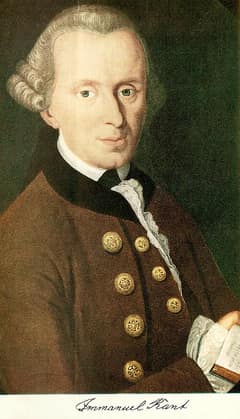
Immanuel Kant objects. (Applied; Kant predates Hegel's argument.) The critique is not an instrument applied from outside but reason's own self-knowledge, a tribunal in which reason examines its claims by its own laws; it is the inquiry Hegel says must happen in the course of knowing.
spirit · mindReality as self-knowing activity: the whole that comes to know itself through nature, history and human institutions. The true is to be grasped not only as substance but also as subject.1 link to other thinkers →
the Concept · the NotionNot a general idea abstracted from cases but the self-developing unity of universal, particular and individual. As concrete universal it is the inner form of things, not only of thought.1 link to other thinkers →
dialecticThe movement in which a fixed determination of thought, pressed to its limit, passes into its opposite, and the opposition is resolved in a richer unity. It drives the whole system forward.1 link to other thinkers →
sublation · supersessionCancelling and preserving at once: a stage of thought or life is negated as one-sided but kept as a moment of what follows. The German verb carries both senses.
determinate negationRefuting a position does not leave an empty nothing: the negation of this particular position has a content and so yields a new one. This is what moves the Phenomenology forward.
recognitionSelf-consciousness exists only in being acknowledged by another self-consciousness. Lordship and bondage show one-sided recognition failing; freedom needs mutual recognition.
ethical lifeFreedom made actual in living institutions (family, civil society, state), as against Moralität, the individual conscience judging its own duty. Here duty has content because it belongs to a shared way of life.1 link to other thinkers →
Thinkers named, not addressed, in the texts Hekmat holds. Naming someone is not evidence of influence.
Names in their works
None in the texts held here.
Named by
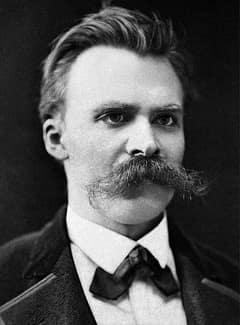
›Friedrich Nietzsche15 passages · 6 works
Beyond Good and Evil 204… Schopenhauer on the most modern Germany: by his unintelligent rage against Hegel, he has succeeded in severing the whole of the last generation of Germans …
Daybreak P.3… at the back of the famous fundamental principle of dialectics with which Hegel secured the victory of the German spirit over Europe—“contradiction moves the …
The Gay Science 99… the art peculiarly his own. Richard Wagner allowed himself to be misled by Hegel's influence till the middle of his life; and he did the same again when later …