Truth belongs first to reality (the Forms, Intellect, God) through its intelligibility or its conformity to a divine exemplar, and only derivatively to statements.
Friedrich Nietzsche — In the late texts Nietzsche replaces the question of what truth is with the question of what the will to truth is worth; truth as agreement with a world in itself is a fiction.
In order of birth. Open a row for the reading, its confidence and the passages. * contested reading.
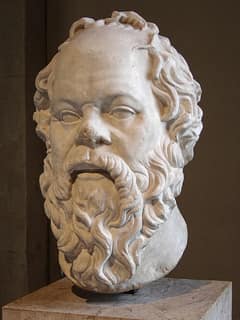
›Socratesc. 470–399 BCENot addressed
Not addressed. No account of what truth is survives in any layer of the testimony.
Socrates asks what piety, courage or justice is, and tests answers for consistency, but he does not ask what truth itself is or what makes a statement true. Aristotle reports that he dealt with ethics, not with nature or first principles.
Scholarly consensusPlato, early dialogues; Aristotle's testimony (Metaphysics A.6)Draft — not yet reviewed
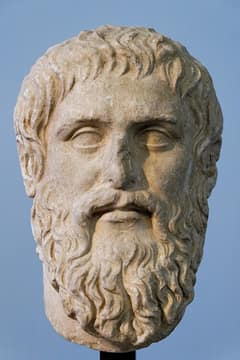
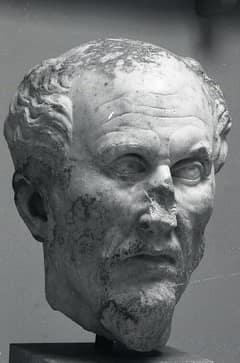
›Platoc. 428–348 BCETruth as a feature of being · Correspondence* (contested reading)
Truth belongs first to what fully is: the Form of the Good gives the objects of knowledge their truth and the knower the power to know, and what is more real is more true. Where Plato analyses speech, a true statement says of things that are that they are as they are, and a false one says what is other than what is. The two senses sit side by side; he never unifies them into a single theory.
Another reading. A common analytic reading takes the Republic's "true" and "truly" to mean genuine or real, a sense applied to things, not an account of what makes thoughts true; Plato's only theory of truth is then the correspondence account of the Cratylus and Sophist.
Another reading. Heidegger ("Plato's Doctrine of Truth", 1942) reads the Cave (Republic 514a–517a) as the moment truth shifts from unconcealment to correctness of seeing, so Plato stands at the turn between the two.
Contested readingRepublic VI (middle; speaker Socrates); Cratylus (middle; Socrates) and Sophist (late; the Eleatic Stranger)aletheia, to on, ontos on, idea tou agathou, logos alethesDraft — not yet reviewed
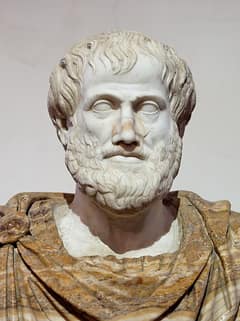
To say of what is that it is, and of what is not that it is not, is true. Truth and falsity belong to thought and statement, which combine or divide as things are combined or divided. Things are not pale because we truly think them so; our thought is true because they are.
Stated in the textMetaphysics Γ.7, E.4, Θ.10; De Interpretationealethes, pseudos, synthesis, diairesis, logos apophantikosDraft — not yet reviewed
Metaphysics Θ.10 also allows a non-propositional truth for simple, incomposite things, grasped by a kind of contact (thigein) rather than asserted, and α.1 (993b23–31) says that each thing stands to truth as it stands to being, a line later read as truth in things (Aquinas). Heidegger built on Θ.10.
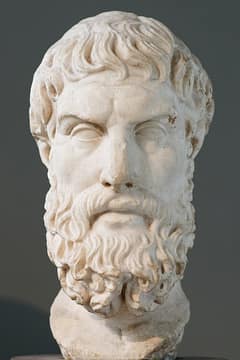
Presentations are true in that they are real effects of real things; images in dreams and pictures would not resemble anything if there were not actual things of that kind. Falsehood belongs to opinion: an opinion is true when it is confirmed or not contradicted by the evidence, and false when it is not confirmed or is contradicted.
Scholarly consensusLetter to Herodotus 50–52alethes, pseudos, doxa, epimarturesis, antimarturesisDraft — not yet reviewed
Confirmation and non-contradiction are tests of truth, not its definition; that an opinion is true when things are as it says is the natural reading but is inferred. The later report that "all perceptions are true" (Sextus Empiricus, Against the Professors VIII.9) uses "true" for what is real, a different sense.
Truth in the full sense is not the agreement of a thought with something outside it but Intellect's identity with the beings it thinks; it agrees with nothing but itself. Statements of discursive reason are true only derivatively.
Stated in the textaletheia, nous, ta ontaDraft — not yet reviewed
›Augustine of Hippo354–430Truth as a feature of being
Truth is not produced by our minds but stands above them, unchanging and common to all who reason; that Truth is God, and true statements and true things are true by sharing in it.
Stated in the textveritas, incommutabilis veritasDraft — not yet reviewed
›al-Farabic. 872–950Correspondence · Truth as a feature of being
A judgment is true when what is in the soul is as the thing is outside it; "existent" is said in one sense of what is true. Truth is also said of things according to their existence, and most of all of the First, whose existence is the most perfect.
Scholarly consensusḥaqq, ṣidq, mawjūdDraft — not yet reviewed
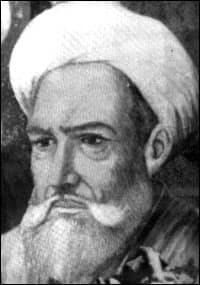
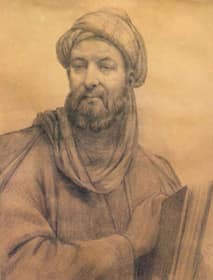
›Ibn Sina980–1037Correspondence · Truth as a feature of being
A statement is true when it corresponds to how the thing is, but "true" is said first of existence itself, and most of all of the Necessary Existent, whose existence is permanent.
Scholarly consensusḥaqq, ṣidq, wujūdDraft — not yet reviewed
God is the Real (al-Ḥaqq): he alone exists through himself, and everything else, taken in itself, is unreal and is real only through him. Truth belongs first to that being and to the light by which things are disclosed.
Scholarly consensusNiche of Lightsal-ḥaqq, al-bāṭil, nūr, wujūdDraft — not yet reviewed
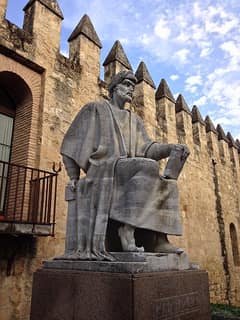
A judgment is true when it agrees with what is outside the soul. Truth is one: what is demonstrated cannot conflict with what the Law teaches, since one truth cannot contradict another; each confirms the other.
Not addressed. No account of what truth is, of statements or of things, is found in the works cited. The nearest thesis, that light is what is manifest in itself and makes other things manifest, answers what is real, not what truth is.
Not coded. Suhrawardi's theory of light as self-manifestation bears on truth only indirectly.
Scholarly consensusDraft — not yet reviewed
Read as a theory of truth, light as manifestation would sit near `being-itself`; that would be Hekmat's construction, not his.
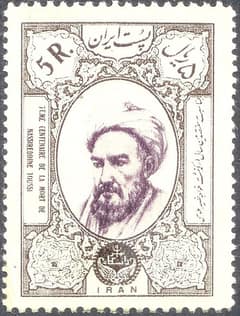
Later authors report that Tusi identified "how things are in themselves" with the separate intellect, which would add a `being-itself` element; that report is not checked here.
›Thomas Aquinasc. 1225–1274Correspondence · Truth as a feature of being
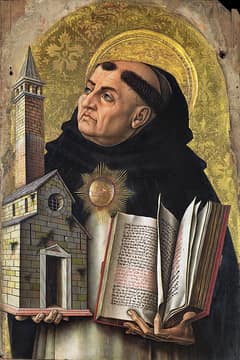
Truth is the adequation of intellect and thing, found properly in the judging intellect; things too are called true by their conformity to the divine intellect that conceived them.
Stated in the textadaequatio rei et intellectus, verum, transcendentaliaDraft — not yet reviewed
›MSMulla Sadrac. 1572–1640Correspondence · Truth as a feature of being
A statement is true when it matches how things are in themselves (nafs al-amr), but "the true" is said first of existence, and most of all of God, the Real, whose existence is pure and unmixed.
Scholarly consensusḥaqq, ṣidq, nafs al-amr, wujūdDraft — not yet reviewed
Truth is the conformity of thought with its object, a notion too clear to define; a judgment errs when it takes an idea to resemble or conform to something outside the mind that it does not.
Stated in the textveritas, conformitasDraft — not yet reviewed
Truth is agreement either with the real relations of ideas or with real existence and matter of fact; what cannot so agree, such as passions and actions, cannot be true or false.
Stated in the texttruth, relations of ideas, real existenceDraft — not yet reviewed
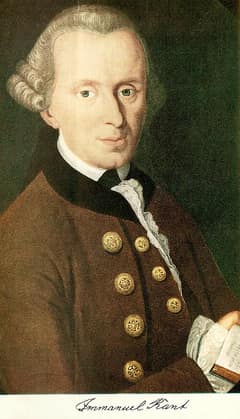
Kant grants the nominal definition of truth as the agreement of cognition with its object, and asks instead for a criterion. Empirical truth is possible because the a priori conditions of experience are also the conditions of its objects ("transcendental truth").
Scholarly consensusCritical periodÜbereinstimmung der Erkenntnis mit ihrem Gegenstande, transzendentale WahrheitDraft — not yet reviewed
Kant takes the correspondence definition as given rather than defending it; some readers argue that, since objects are appearances, his working criterion is closer to coherence within possible experience.
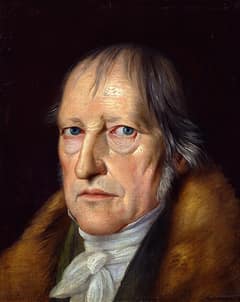
The true is the whole: truth is the agreement of an object with its concept, reached only in the developed system, where each part has its place. A single statement can be correct, agreeing with its object, without being true in this sense.
Stated in the textPhenomenology of Spirit (1807); Encyclopaedia (1830)das Wahre ist das Ganze, Begriff, Idee, RichtigkeitDraft — not yet reviewed
The option was written around Hegel. Correctness (Richtigkeit) of statements is the correspondence sense, which he keeps as a subordinate notion (Enc. §213 and Z.; cf. §172); the explicit contrast may rest on the Zusatz, so `textual` rests on PhG §20.
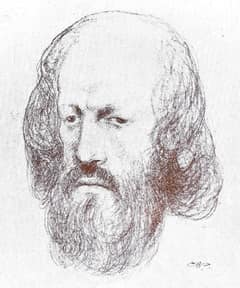
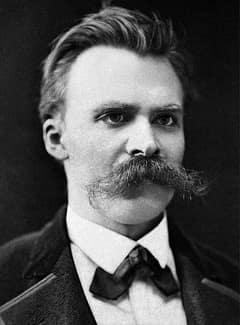
›Friedrich Nietzsche1844–1900Rejects the question* (contested reading)
Rejects the question. In the late texts Nietzsche replaces the question of what truth is with the question of what the will to truth is worth; truth as agreement with a world in itself is a fiction.
Once the "true world" is abolished, the idea of truth as correspondence to things as they are in themselves goes with it. The unconditional will to truth turns out to be a moral faith whose value must be questioned.
Across the works. The early, unpublished "On Truth and Lies" (1873, §1) gives a rival definition: truths are worn metaphors whose origin has been forgotten. No option expresses it.
Across the works. Clark (Nietzsche on Truth and Philosophy, 1990) reads a development: Nietzsche holds a falsification thesis through Beyond Good and Evil and drops it from the Genealogy on, keeping an ordinary, minimal correspondence notion of truth and rejecting only metaphysical truth.
Contested readingBeyond Good and Evil (1886); Genealogy of Morals III (1887); Twilight of the Idols (1889)Wille zur Wahrheit, wahre WeltDraft — not yet reviewed
Codebook gap: no option fits Nietzsche's account of truth (no pragmatist or error-theory option), so the late texts' questioning of truth's value is coded `rejects` as the best available coding. `perspectival` is coded under epi.source (GM III.12).
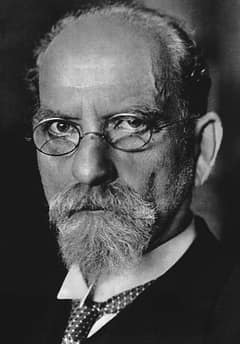
Truth is the identity between what is meant in an empty intention and what is given in the intuition that fulfils it; evidence is the experience of that agreement. This adequation is an act of identification, not a comparison of a picture with a thing outside consciousness.
Stated in the textLogical Investigations VI (1901)Erfüllung, Deckung, Evidenz, adaequatioDraft — not yet reviewed
LI VI §39 also gives an ontological sense of truth: the object that makes true, being in the sense of truth. It is not coded as `being-itself`, which gives being primacy over statements as a source of intelligibility. The standard treatment is Tugendhat, Der Wahrheitsbegriff bei Husserl und Heidegger (1967).
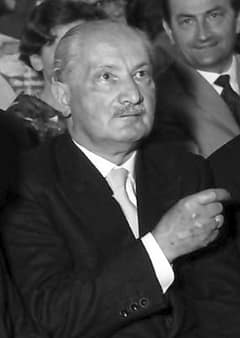
A statement is true because it uncovers the being as it is; that presupposes that Dasein is already in the truth, in an openness where beings can show themselves. Truth in the primary sense is unconcealment (aletheia), and correctness is derivative.
Stated in the textBeing and Time (1927); "On the Essence of Truth" (1930/1943)Unverborgenheit, aletheia, Entdecktsein, Erschlossenheit, RichtigkeitDraft — not yet reviewed
Tugendhat (Der Wahrheitsbegriff bei Husserl und Heidegger, 1967) objected that unconcealment cannot distinguish true from false; in "The End of Philosophy and the Task of Thinking" (1964) Heidegger conceded that aletheia should not simply be called truth.
Hekmat. "How is truth understood, and how does it stand to knowledge?." Draft, awaiting review; last updated 20 October 2026. https://hekmat.local/questions/epi-truth/