What makes a belief or a claim to knowledge justified?
چه چیزی یک باور یا ادعای شناخت را از نظر معرفتی موجه میسازد؟
What turns belief into knowledge or warranted belief — an account, demonstration from first principles, clear and distinct perception, custom, coherence — and how the regress of reasons ends.
Covers
knowledge as belief with an account · demonstration and first principles · foundations and the regress · coherence · reliability of faculties
Not here
the sources as such (epi.source) · whether certainty is possible (epi.certainty)
Area
Epistemology · also Logic, Philosophy of science, Philosophical method
A true belief counts as knowledge only when its holder can give an account (logos) of it, saying why it is so, and can hold that account against questioning.
Knowledge in the strict sense is a conclusion demonstrated from premises that are true, necessary and prior to it, and the chain ends in first principles known without demonstration, which stops the regress of reasons.
A claim is justified when what it says is itself evident, present to the mind or the senses so plainly, or given so fully in intuition, that it needs no further reason; other claims are justified by being referred back to such evidence.
The most basic knowing is the knower's immediate possession of, or identity with, what is known, with no representation between them; it cannot err, and knowledge through concepts and proofs depends on it.
A judgment is warranted because the mind sees its truth by a light from above itself (God or a separate intellect), on which even the trustworthiness of first principles depends.
Some claims are rightly held, though neither seen nor proved by the holder, on the word of a trustworthy witness, human or divine; this warrant differs in kind from demonstration.
A claim about what is not perceived is warranted only as far as experience bears it out, confirmed or at least not contradicted by what is observed, and belief should be proportioned to that support.
Our most basic beliefs are produced and kept by nature, custom or the needs of life rather than by reasons that could justify them; reflection cannot ground them and works only within them.
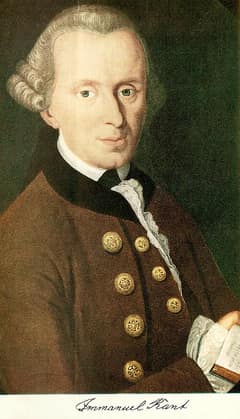
Immanuel Kant — Holding-to-be-true is knowing when its grounds are sufficient both objectively, valid for every rational being, and subjectively; the a priori principles that make such grounds possible are justified by a transcendental deduction showing them to be conditions of any possible experience.
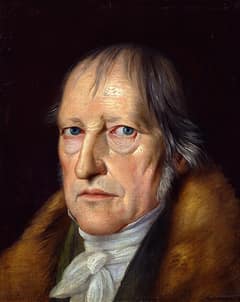
G. W. F. Hegel — No claim is justified in isolation or by a foundation laid down first; a claim is justified as a moment of the developed whole, in which consciousness tests its own knowledge by its own standard and the outcome proves the beginning.
Rejects the question
Martin Heidegger — The question takes knowing to be a subject's holding beliefs that need grounds; Being and Time treats knowing as a founded mode of being-in-the-world and holds that the demand for such proofs comes from a worldless subject, so justification of beliefs cannot be the basic question.
In order of birth. Open a row for the reading, its confidence and the passages. * contested reading.
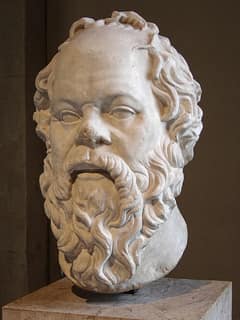
›Socratesc. 470–399 BCEAn account of why* (contested reading)
Socrates disclaims knowledge of the most important things, yet he holds some theses firmly, and what entitles him to them is that they have survived examination: he follows only the argument that seems best when he reflects, and what has been shown stays fastened by reasons "of steel and adamant" until someone undoes them. An expertise must be able to give an account of the nature and cause of what it deals with; a knack that cannot is no art.
Another reading. Vlastos ("Socrates' Disavowal of Knowledge", 1985) separates certain knowledge, which Socrates disclaims, from "elenctic" knowledge of theses that have survived refutation, which he allows; on this reading the account he can defend is exactly what warrants his moral claims.
Another reading. Benson (Socratic Wisdom, 2000) reads Socrates as holding that knowing anything about a virtue requires first knowing its definition, which he lacks, so his firm theses are not knowledge on his own standard and he offers no account of what would justify them.
Contested readingPlato, early dialogues (Crito, Gorgias, Apology); Xenophon, Memorabilia IV.6logos, elenchos, logon didonai, technēDraft — not yet reviewed
`account` is coded from what Socrates relies on, not from a theory he states; the option's demand that the account say why fits the Gorgias on technē better than the elenchus, which tests consistency. Xenophon's Socrates argues from what is most widely agreed (Memorabilia IV.6.15), a different, more dialectical warrant. The theory of a belief "tied down" by reasoning about the cause is the Meno's and is coded for Plato.
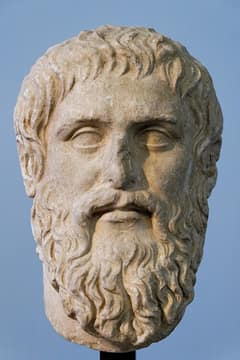
›Platoc. 428–348 BCEAn account of why* (contested reading)
True opinion can guide as well as knowledge, but it does not stay; it becomes knowledge, and stable, when it is tied down by reasoning out its cause. One who knows can give an account of what he knows, and in the Republic the dialectician gives an account of each thing's essence and does away with hypotheses until he reaches an unhypothetical first principle, the Good, where the whole chain is confirmed. The Theaetetus tests "true opinion with an account" in three senses and rejects each, ending without a definition.
Across the works. The Theaetetus examines "true opinion with an account" (201c–210b) and finds every version of the account either insufficient or circular, so the dialogue that asks the question directly leaves it open; whether this withdraws the Meno's answer or only shows that knowledge cannot be built from belief plus something is disputed.
Another reading. Fine ("Knowledge and Logos in the Theaetetus", 1979) reads Platonic knowledge as the ability to interrelate the items of a field, so that an account is justified by its place among others, a model closer to coherence than to foundations.
The Republic adds a foundational element the option does not show: hypotheses are confirmed only when they are traced to the unhypothetical principle (511b, 533c–d). "Justification" is a modern word; Plato's question is what turns true opinion into knowledge, and the answer is an account of the cause, not a reason that makes a belief probable. Speakers are recorded in `period`; the coding is never `textual`.
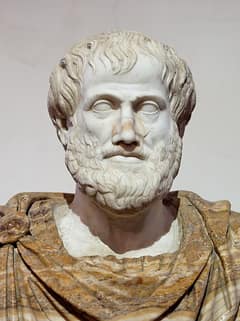
›Aristotle384–322 BCEDemonstration from first principles
To know something scientifically is to know its cause, that it is the cause, and that the thing cannot be otherwise; such knowledge is reached by demonstration from premises that are true, primary, immediate, better known than and prior to the conclusion, and explanatory of it. Not everything can be demonstrated, or the regress would be infinite, and demonstration in a circle proves nothing; the first principles are grasped by intellect (nous), made familiar by induction from perception. In ethics, where demonstration fails, a view is established when the puzzles are solved and the most authoritative reputable opinions are left standing.
Another reading. Burnyeat ("Aristotle on Understanding Knowledge", 1981) argues that epistēmē in the Posterior Analytics is explanatory understanding, not justified belief, so the work is a theory of what it is to understand, not an answer to the sceptic's demand for justification.
Another reading. Irwin (Aristotle's First Principles, 1988) argues that the first principles are themselves defended by a "strong dialectic" from what any inquirer must accept, so the regress ends in principles that have a dialectical warrant, not only in intellect's grasp.
Stated in the textPosterior Analytics I.2–3, II.19; Nicomachean Ethics VI.3, VI.6, VII.1epistēmē, apodeixis, aitia, archai, nous, epagōgē, endoxaDraft — not yet reviewed
Aristotle's standard is graded by subject: strict demonstration for what cannot be otherwise, the method of reputable opinions for ethics (NE VII.1) and what holds for the most part. `textual` rests on Posterior Analytics I.2–3 and NE VI.3, where he states the demonstrative standard in his own voice.
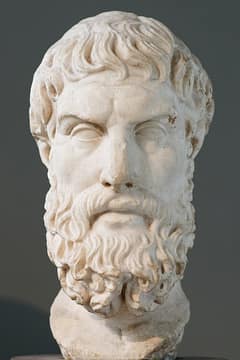
›Epicurus341–270 BCEEvidence of what is given · Borne out by experience
Every opinion must be referred to standards that need no proof, or proofs would run on untested without end: the clear meaning of words, sensations and feelings, which are always true as reports. Error enters only when opinion adds something, and an opinion is true if what is evident confirms it or does not contradict it, false if it is not confirmed or is contradicted. To reject all sensations leaves no standard even for judging what is false.
Stated in the textLetter to Herodotus; Principal Doctrines 22–24; the Canon reported by Diogenes Laertius X.31–34kanōn, kritērion, enargeia, prolēpsis, epimarturēsis, ouk antimarturēsisDraft — not yet reviewed
Two levels, two codes: the criteria are self-evident and unproved (`givenness`), and opinions about what is not evident are tested against them (`experience-test`). For the non-evident, "not contradicted" is enough, which is why several explanations of the same celestial event can all be accepted (Letter to Herodotus 78–80). Preconceptions (prolēpseis) as a criterion are known from Diogenes' report, not from the letters.
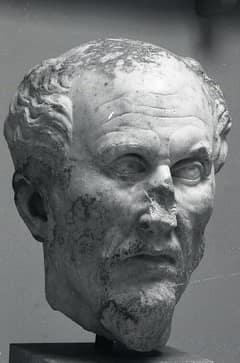
›Plotinusc. 204–270Knowledge by presence or identity
If Intellect knew its objects through impressions received from outside, it could never be sure it had them and would have only images; so true Intellect must be its objects, and its knowledge is certain because knower and known are one. Truth there agrees not with something else but with itself. Discursive reasoning and sense depend on this, and the One beyond Intellect is reached by a presence higher than knowledge.
Plotinus answers what makes knowledge secure, not what justifies a belief; human souls have this knowledge only by turning to Intellect, while their own discursive judgments are secured by "imprints" from above, which is close to `illumination` (coded for him under epi.source).
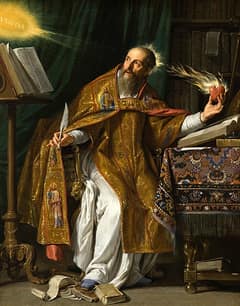
›Augustine of Hippo354–430A light from a higher source · Trustworthy testimony or revelation
Against the Academics, some things are known beyond doubt: that I exist, live and understand, and truths of number and logic. Words and teachers only prompt; we judge what is true by consulting the truth that presides within the mind, an inner light from God. Much else we rightly hold on the testimony of others, and he refuses to deny that this is knowledge; believing on authority comes before understanding and leads to it.
Scholarly consensusContra Academicos (386); De magistro (389); De Trinitate (c. 400–420)illuminatio, veritas interior, credere, intellegere, testimonium, auctoritasDraft — not yet reviewed
Three warrants sit side by side and are not ranked by Augustine as a theory: self-evident certainties against the sceptic, the inner light by which any truth is judged, and authority for what we cannot see for ourselves. How illumination works is disputed (see his epi.source fit note); that it is the condition of certain judgment holds on every reading.
›al-Farabic. 872–950Demonstration from first principles
Assent (taṣdīq) comes in grades, and only certainty is knowledge in the full sense: believing that something is so, that it cannot be otherwise, and that this belief cannot be otherwise. Necessary certainty comes from demonstration whose premises go back to first intelligibles that the mind has without learning. Dialectic, rhetoric and poetics produce lesser assent, suited to those who cannot follow demonstration.
Scholarly consensusThe Conditions of Certainty; Enumeration of the Sciencesyaqīn, burhān, taṣdīq, al-maʿqūlāt al-uwalDraft — not yet reviewed
The conditions of certainty are analysed in Black ("Knowledge (ʿilm) and Certitude (yaqīn) in al-Fārābī's Epistemology", 2006). The graded logic of assent, shared by Ibn Sina and Ibn Rushd, is a theory of what each kind of argument warrants; `demonstrative` records only its top grade.
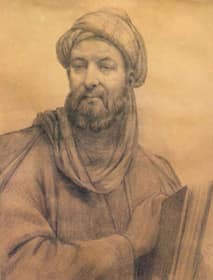
›Ibn Sina980–1037Demonstration from first principles
Certain knowledge comes by demonstration, and demonstration rests on premises of determinate kinds: primary propositions the intellect affirms by itself, observations, experiential propositions, and some others, each with its own warrant. Experience (tajriba) yields universal premises only when it is joined with a hidden syllogism showing that the regularity is not by chance. The middle terms of demonstration can be found by intuition (ḥads), a contact with the Active Intellect.
Scholarly consensusThe Book of Healing (Demonstration; Psychology); The Salvation (Logic)burhān, yaqīn, taṣdīq, awwaliyyāt, mujarrabāt, ḥadsDraft — not yet reviewed
Intuition (ḥads) is a source of middle terms (Gutas, "Intuition and Thinking: The Evolving Structure of Avicenna's Epistemology", 2001), but what is grasped is still certified by its place in a demonstration, so `illumination` (coded for him under epi.source) is not added here. On experience in the Burhān, McGinnis ("Scientific Methodologies in Medieval Islam", 2003).
›al-Ghazali1058–1111Demonstration from first principles · A light from a higher source
Certain knowledge is that in which the known is disclosed so that no doubt remains with it, not even the possibility of error, and no miracle against it could shake it. Testing his beliefs by this standard he lost trust in the senses and then in the necessary truths of reason, and regained it not by an ordered proof but by a light God cast into his breast. He keeps the philosophers' logic and judges their metaphysics by its own standard of demonstration, which it fails; above reason, tasting (dhawq) gives the Sufis what learning cannot.
Scholarly consensusDeliverance from Error (late autobiography); The Standard of Knowledge and The Incoherence of the Philosophers (1095)ʿilm yaqīnī, burhān, ḍarūriyyāt, nūr, dhawq, taqlīdDraft — not yet reviewed
The light restores trust in the first principles; it does not replace demonstration, which stays the test of every philosophical claim. Inherited belief (taqlīd) is what the Deliverance sets out to leave behind. Tasting is a higher, experiential knowing that `presence` would catch only in part.
›Ibn Rushd1126–1198Demonstration from first principles
The Law commands reflection on beings, and the most perfect reflection is by demonstration, which gives certain knowledge from true premises; demonstrative truth cannot contradict scripture rightly read. People differ by nature in how they come to assent: some by demonstration, some by dialectical and some by rhetorical arguments, and scripture speaks to all three. Only demonstrative assent is knowledge in the strict sense, and only the demonstrative class may interpret.
Scholarly consensusThe Decisive Treatise (c. 1179); The Incoherence of the Incoherence (c. 1180)burhān, taṣdīq, jadal, khaṭāba, taʾwīlDraft — not yet reviewed
The three ways to assent are not three kinds of justification of equal rank but grades suited to capacities; rhetorical assent to scripture is legitimate for the many without being knowledge, which is why `authority` is not coded.
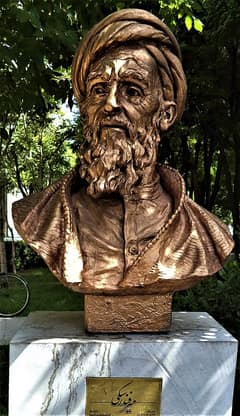
›Suhrawardi1154–1191Knowledge by presence or identity
Definitions cannot give the essence of a thing, since they define by what is no better known, so knowledge cannot rest on definitions as the Peripatetics hold. The self knows itself by being a light manifest to itself, without any representing form, and things are known when they are present to it with no veil, or when the higher lights are witnessed. Suhrawardi says he first had his doctrine by tasting and only afterwards sought proofs for it, so that proofs, though required, are secondary to witnessing.
Scholarly consensusThe Philosophy of Illumination (1186); The Intimationsishrāq, mushāhada, dhawq, ẓuhūr, ḥuḍūrDraft — not yet reviewed
The shining of the higher lights on a prepared soul is also `illumination`; it is not coded because what warrants knowledge for Suhrawardi is the presence of the object, of which illumination is one case. The phrase "knowledge by presence" (ʿilm ḥuḍūrī) is the standard later name for his view (Ha'iri Yazdi, The Principles of Epistemology in Islamic Philosophy, 1992).
›Nasir al-Din Tusi1201–1274Demonstration from first principles
Knowledge in the full sense is certainty reached by demonstration from primary, necessary premises. The Foundation of Inference sorts premises by their warrant, primary, observed, experiential, widely accepted and the rest, and so by which art (demonstration, dialectic, rhetoric, poetics) can use them.
Scholarly consensusburhān, yaqīn, awwaliyyāt, mujarrabāt, mashhūrātDraft — not yet reviewed
Knowledge by presence, which Tusi applies to the self's knowledge of itself and to the First's knowledge of its effects, answers how one knows, not what justifies a claim, so `presence` is not added.
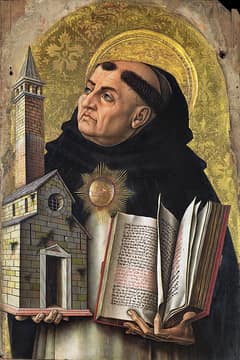
›Thomas Aquinasc. 1225–1274Demonstration from first principles · Trustworthy testimony or revelation
The intellect assents in different ways. It is moved by the object itself either at once, in understanding first principles, or through them, in science, which is demonstrated knowledge of conclusions; when the object does not move it enough, it gives opinion, or, moved by the will, the firm assent of faith. Faith is certain because it rests on God's authority, not on seeing, and sacred doctrine is a science whose principles are known by a higher science, God's own. Argument from human authority is the weakest, from revealed authority the strongest.
Stated in the textDisputed Questions on Truth (1256–1259); Summa Theologiae (1265–1273)assensus, scientia, intellectus principiorum, opinio, fides, auctoritasDraft — not yet reviewed
Faith and science are not two routes to the same assent: no one can have science and faith about the same thing in the same respect (ST II-II q.1 a.5). The demonstrative standard follows his commentary on the Posterior Analytics, which is not in the works list and is not cited.
›MSMulla Sadrac. 1572–1640Knowledge by presence or identity · Demonstration from first principles
Knowing is a mode of existence: the soul knows by becoming one with the intelligible form, and its knowledge of itself and of what it produces is by presence, not by representation. Demonstration still has full authority in its domain, and Sadra holds that demonstration, unveiling (kashf) and the Quran cannot disagree, so a claim is secure when demonstrated and most secure when also witnessed.
Scholarly consensusThe Four Journeys (Asfar)wujūd, ʿilm ḥuḍūrī, ittiḥād al-ʿāqil wa-l-maʿqūl, burhān, kashfDraft — not yet reviewed
Kalin (Knowledge in Later Islamic Philosophy: Mulla Sadra on Existence, Intellect, and Intuition, 2010) presents his theory of knowledge as part of his ontology. The two codes are one view: presence grounds, demonstration articulates and checks.
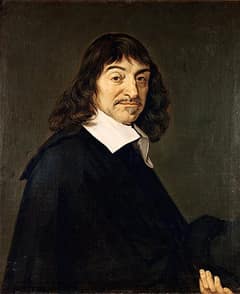
Whatever I perceive very clearly and distinctly is true, and I err only when the will affirms beyond what the intellect perceives in this way. A clear and distinct perception compels assent while I attend to it, but a conclusion I merely remember having demonstrated can be doubted until I know that a God who is no deceiver exists; so the certainty and truth of all knowledge depends on knowing God, and an atheist geometer has no true science. Firm conviction that nothing could shake is all we can ask for, even if it might seem false to an angel.
Another reading. Doney ("The Cartesian Circle", 1955) reads the divine guarantee as covering only remembered demonstrations, not present clear and distinct perceptions, which removes the circle.
Another reading. Frankfurt (Demons, Dreamers, and Madmen, 1970) reads the Meditations as showing that reason does not undermine itself, a justification by consistency rather than by correspondence with things.
Stated in the textMeditations (1641) with the Second Replies; Principles of Philosophy (1644)clare et distincte percipere, scientia, persuasio, regula generalisDraft — not yet reviewed
The divine guarantee is a second element the option does not show: present evidence suffices while attended to, but stable science needs the knowledge of God. Arnauld's objection that this argues in a circle is in the Fourth Objections (AT VII 214).
›David Hume1711–1776Nature, custom or life, not reasons · Borne out by experience
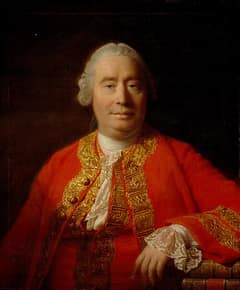
Relations of ideas are known by intuition or demonstration. All reasoning about matters of fact beyond memory and the senses rests on cause and effect, and that inference is not founded on any argument but on custom, the great guide of life; nature has determined us to judge as it has to breathe, and no system can defend the understanding or the senses. Within that given practice there is still a standard: the wise man proportions his belief to the evidence, from proof down to probability, weighing opposite experiments.
Another reading. Kemp Smith (The Philosophy of David Hume, 1941) reads Hume as a naturalist for whom nature, not reason, settles our basic beliefs; the sceptical arguments only clear the ground for that.
Another reading. Stove (Probability and Hume's Inductive Scepticism, 1973) reads Hume as an inductive sceptic who denies that any experience makes an unobserved matter of fact even probable, which leaves the rule of proportioning belief without a rational basis.
Stated in the textTreatise of Human Nature Book 1 (1739); Enquiry concerning Human Understanding (1748)custom, belief, proof, probability, relations of ideas, matters of fact, mitigated scepticismDraft — not yet reviewed
Two codes because Hume says two things: what produces belief (custom, nature) and how a reflective person should regulate it (proportion to experience). How these fit together is the classic problem of Humean "normativity". Demonstrative knowledge of relations of ideas (EHU 4.1) is real but narrow, and the Treatise argues that even it decays into probability (1.4.1).
Own position. Holding-to-be-true is knowing when its grounds are sufficient both objectively, valid for every rational being, and subjectively; the a priori principles that make such grounds possible are justified by a transcendental deduction showing them to be conditions of any possible experience.
Kant distinguishes opining, believing and knowing as grades of holding-to-be-true: opinion is insufficient both subjectively and objectively, belief is subjectively sufficient only, knowledge both. A conviction differs from a mere persuasion by resting on grounds valid for everyone, and its outward touchstone is that it can be communicated and found valid by every human reason. For the a priori concepts and principles themselves the question is one of right (quid juris), answered by a deduction that shows experience is possible only through them.
Stated in the textCritique of Pure Reason (1781/1787)Fürwahrhalten, Meinen, Glauben, Wissen, Überzeugung, Überredung, quid juris, transzendentale DeduktionDraft — not yet reviewed
No shared option fits: Kant's justification of principles is neither demonstration from self-evident premises nor evidence of what is given, but proof that they are conditions of possible experience. Practical belief (Glaube) in God and immortality is subjectively sufficient only, which is a warranted holding that is not knowledge.
Own position. No claim is justified in isolation or by a foundation laid down first; a claim is justified as a moment of the developed whole, in which consciousness tests its own knowledge by its own standard and the outcome proves the beginning.
To examine the faculty of knowing before knowing is like learning to swim without going into the water, and it treats cognition as an instrument that stands between us and the absolute. Consciousness supplies its own standard and compares its knowledge with it, so the examination is the movement of knowing itself. The true is the whole, essentially a result, and philosophy is a circle that returns into itself, so its beginning is justified only at its end.
Scholarly consensusPhenomenology of Spirit (1807), Preface and Introduction; Encyclopaedia (1830)Maßstab, Prüfung, das Wahre ist das Ganze, Resultat, Kreis, VermittlungDraft — not yet reviewed
Read as an answer to the modern question, this is anti-foundationalist and holist (Rockmore, Hegel's Circular Epistemology, 1986), though not a coherence theory of justification between beliefs: what develops is the concept, not a set of propositions. Readers who stress the Logic's presuppositionless beginning (Houlgate, The Opening of Hegel's Logic, 2006) see a different kind of grounding at the start; the Science of Logic is not in the works list.
›Friedrich Nietzsche1844–1900Nature, custom or life, not reasons* (contested reading)
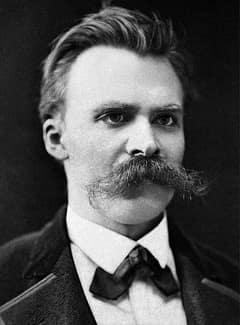
Our basic beliefs, that there are enduring things, equal things, substances, free will, were errors that proved useful, and their strength comes from their age and their being conditions of life, not from their truth; the falseness of a judgment is no objection to it. But life is no argument: being needed does not make a belief true. Against this Nietzsche sets an intellectual conscience that demands reasons for and against, and an "objectivity" that consists in commanding many perspectives and affects, not in a view from nowhere.
Across the works. Clark (Nietzsche on Truth and Philosophy, 1990) argues that Nietzsche gives up the thesis that our basic beliefs falsify reality from the Genealogy on and keeps ordinary standards of evidence, so the late texts (GM III.12) answer the question with disciplined, many-sided inquiry rather than with life's needs.
Contested readingGay Science I–III (1882); Beyond Good and Evil (1886); Genealogy of Morals III (1887)intellektuelles Gewissen, Irrtum, Lebensbedingung, Objektivität, PerspektiveDraft — not yet reviewed
`naturalised` catches the explanation of why beliefs are held, which Nietzsche shares with Hume in outline but not in reasons (rule 6: Hume appeals to custom, Nietzsche to the preservation and growth of life). His positive norms, the intellectual conscience (GS 2) and perspectival objectivity (GM III.12), have no option; together they would be a candidate own position if the development reading is adopted.
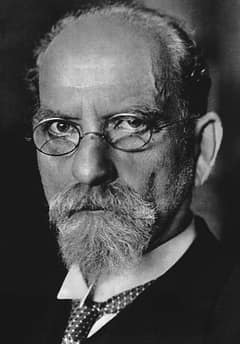
Every originary giving intuition is a legitimate source of cognition: what presents itself in person is to be accepted as it gives itself, within the limits in which it gives itself. Evidence is the experience of the agreement between what is meant and what is given, and a rational positing is justified by such fulfilling intuition, immediately or through mediation. Genuine science must go back to evidences, and philosophy to apodictic ones, whose non-being is inconceivable.
Stated in the textLogical Investigations VI (1901); Ideas I (1913); Cartesian Meditations (1931)Evidenz, originär gebende Anschauung, Erfüllung, Rechtsquelle, Vernunftsetzung, ApodiktizitätDraft — not yet reviewed
The option fits closely, but Husserl's evidence is graded (adequate and inadequate, apodictic and assertoric) and most evidence of things is open to correction by further experience (Ideas I §138), so the view is not infallibilist about perception.
Rejects the question. The question takes knowing to be a subject's holding beliefs that need grounds; Being and Time treats knowing as a founded mode of being-in-the-world and holds that the demand for such proofs comes from a worldless subject, so justification of beliefs cannot be the basic question.
The scandal of philosophy is not that a proof of the external world is lacking but that such proofs are expected again and again. When an assertion is borne out, what is shown is not an agreement between a mental content and a thing but the entity itself showing itself just as the assertion uncovered it; and that is possible only because Dasein is already disclosing, already in the truth. Correctness, and with it every warrant for statements, rests on a prior openness that is not itself justified.
Scholarly consensusBeing and Time (1927); "On the Essence of Truth" (1930/1943)Ausweisung, Bewährung, Entdecktsein, Erschlossenheit, In-der-Welt-seinDraft — not yet reviewed
§44a gives an account of how an assertion is borne out (the entity shows itself in its selfsameness), close in structure to Husserl's fulfilment and so to `givenness`; it is not coded because Heidegger presents it as derivative of disclosedness, not as what grounds knowledge.
Hekmat. "What makes a belief or a claim to knowledge justified?." Draft, awaiting review; last updated 20 October 2026. https://hekmat.local/questions/epi-justification/