Narrowed from epi.innate: 1.1.3 asked "known or structured before experience", which mixed innateness and the a priori. The stance innate-structures (Kant) needs a home if a priori knowledge leaves this question.
Stances
Innate knowledge
The soul already possesses knowledge or ideas, from before birth or by nature, which experience only occasions us to recover or notice; possession may be dispositional.
G. W. F. Hegel — The contrast between innate and acquired knowledge rests on separating immediacy from mediation; Hegel argues that what seems immediately present in the mind is itself the result of mediation.
Edmund Husserl — Innateness is a psychological, natural-scientific notion; the a priori is an ideal law grasped in eidetic intuition, valid whatever the make-up of any real mind.
Martin Heidegger — The a priori is the "earlier" of Being, which Dasein always already understands, not content stored in a mind before experience; the innate–acquired contrast presupposes a worldless subject.
In order of birth. Open a row for the reading, its confidence and the passages. * contested reading.
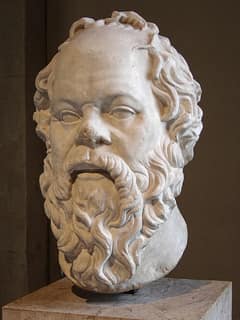
›Socratesc. 470–399 BCENot addressed
Not addressed. The early dialogues say nothing about knowledge present in the soul before experience; the doctrine first appears in the Meno.
In the early dialogues Socrates searches for definitions by questioning, without explaining how the answers could already be in the questioner. The Meno meets this puzzle with recollection, the soul having always possessed the truth, and that dialogue marks the point where most readers see Plato's own theory begin.
Another reading. If the Socrates of the Meno is counted, he holds that learning is recollection of what the soul already possesses (Meno 81c–86b).
Scholarly consensusPlato, early dialogues; the Meno is transitionalDraft — not yet reviewed
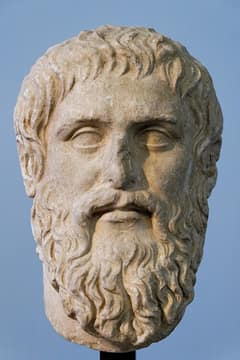
Learning is recollection. Questioned step by step, an untaught slave recovers geometrical truths from within himself, and we judge sensible equals deficient only because we already know Equality itself. The soul therefore has knowledge that it did not get from perception in this life; experience only prompts it to recover what it has.
Scholarly consensusMeno, Phaedo, Phaedrus (transitional and middle); speaker Socratesanamnesis, psyche, eidosDraft — not yet reviewed
The two main texts differ on how the soul came to have this knowledge. The Meno leaves open whether it was acquired or always possessed and concludes that the truth is always in the soul (85d–86b); the Phaedo says it was acquired before birth and lost at birth (75c–76c). Neither is innateness in the early-modern sense of ideas built into the mind.
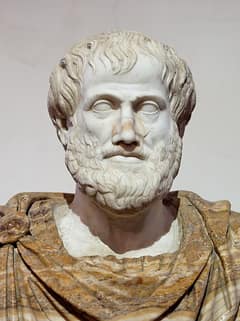
We are not born with knowledge of first principles: it would be absurd to possess the most precise knowledge without noticing it. We are born only with a capacity to acquire it, through perception and induction. Before it thinks, the intellect is nothing actual, like a writing tablet on which nothing is yet written.
Stated in the textPosterior Analytics II.19; De Anima III.4dynamis, nous pathetikos, grammateion, hexisDraft — not yet reviewed
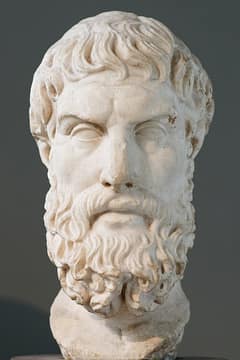
Words and concepts must have a clear primary meaning to which inquiry can refer, and that meaning comes from preconceptions, general notions stored up from repeated perceptions. Language itself began in natural responses to feelings and impressions. Nothing in Epicurus' own writings posits knowledge present before experience.
Another reading. Cicero's Epicurean spokesman Velleius calls the notion of the gods a preconception that is implanted or rather innate in all people (Cicero, De natura deorum I.43–44), which some take to show that some preconceptions are not learned.
Contested readingLetter to Herodotus; Diogenes Laertius' account of the canon (Lives X.33)prolepsis, ennoema, phoneDraft — not yet reviewed
The derivation of preconceptions from perception is stated in Diogenes Laertius' doxography, not in the letters, which is why the position is not `textual`.
The soul already has the intelligibles within it, since its highest part remains in Intellect; we fail to notice them because our attention is turned to the senses, and learning is a turning back to what we possess.
Scholarly consensusnous, logoi, epistropheDraft — not yet reviewed
›Augustine of Hippo354–430Innate knowledge* (contested reading)
Memory holds the truths of number and the liberal disciplines, which did not enter through the senses but were already there, hidden, until learning drew them out.
Another reading. Augustine's considered view replaces innateness with illumination: On the Trinity XII.15.24 rejects recollection and holds that intelligible truths are seen in the divine light whenever we understand them, not stored in the soul.
Across the works. Early works entertain Platonic recollection (On the Greatness of the Soul 20.34), which On the Trinity XII.15.24 later rejects and the Retractations correct (I.4.4, I.8.2).
Contested readingmemoria, reminiscentia, abditumDraft — not yet reviewed
The refusal to explain such knowledge by a life before birth is not in Confessions X but in On the Trinity XII.15.24 and the Retractations' corrections of the early recollection passages.
The human intellect starts as a mere disposition. The first intelligibles, such as that the whole is greater than the part, come to it from the Active Intellect without study and without our knowing how, but they are not present from birth.
Scholarly consensusal-ʿaql al-hayūlānī, al-maʿqūlāt al-ūlāDraft — not yet reviewed
The human intellect begins as pure potentiality, a material intellect with no forms of its own, and acquires intelligibles step by step; even the first principles come to it without learning but are not stored in it from birth.
The primary notions (existent, thing, necessary) are said to be in the soul from the first and cannot be acquired from anything better known (Metaphysics I.5), which borders on innateness; but the intellect has them only once it is actualised, not from birth.
The intellect is first a natural disposition (gharīza) by which humans can receive theoretical knowledge; necessary truths, such as that two exceed one, appear in the child at the age of discernment, and the rest is acquired by experience and learning.
Scholarly consensusRevival, Book 1ʿaql, gharīza, ʿulūm ḍarūriyya, fiṭraDraft — not yet reviewed
He also speaks of the human disposition (fiṭra) to know God and, in Book 21, of the heart as holding the realities of things potentially, as a mirror holds images; both border on innate knowledge, held as capacity rather than content.
The material intellect has no form of its own; it is pure capacity to receive the forms of material things, which it receives only through imagination and sense.
Scholarly consensusal-ʿaql al-hayūlānī, istiʿdādDraft — not yet reviewed
The soul has no stock of ideas. It is a light aware of itself as soon as it exists, and that self-awareness is its very being, not something learned; everything else it comes to know by the presence of things to it or by illumination from the lights above it.
Scholarly consensusal-nūr al-isfahbad, al-ʿilm al-ḥuḍūrīDraft — not yet reviewed
Self-awareness is unacquired and prior to every experience, which borders on `innate-knowledge`; but it is the self's being, not a content stored in it, as with Ibn Sina's primary notions.
The human intellect starts as a material intellect, a bare potency for intelligibles, and passes through the intellect in habit and in act to the acquired intellect; the first principles come to it without learning but are not there from birth.
The human intellect is at first like a blank tablet, with no innate ideas; but it has a natural light and a natural disposition by which first principles are known at once when their terms are grasped.
Stated in the texttabula rasa, synderesis, semina scientiarum, lumen naturaleDraft — not yet reviewed
The "seeds of knowledge" (De veritate q.11 a.1) are pre-existing principles, but they are known through species drawn from the senses, not stored as ideas.
The soul comes to be as a bodily form with no knowledge, a material intellect in potency to every intelligible, and becomes an intellect in act only through its substantial motion and its union with what it comes to know.
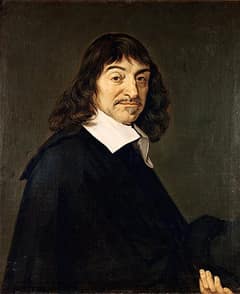
Some ideas, such as those of God, of the mind, of extension and of the eternal truths, are innate; they are present in the mind as a faculty or disposition, as some families are disposed to certain illnesses, and experience only occasions our thinking of them.
Stated in the textideae innatae, adventitiae, a me ipso factaeDraft — not yet reviewed
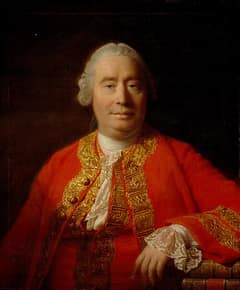
No idea is innate if that means present before experience; if "innate" only means original and not copied, then impressions are innate and ideas are not, so the dispute dissolves into a question of words.
Stated in the textinnate ideas, impressions, originalDraft — not yet reviewed
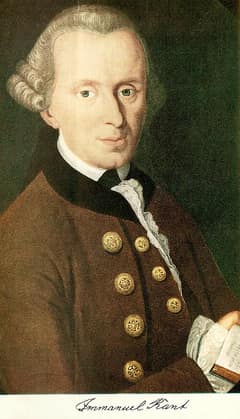
›Immanuel Kant1724–1804A priori structures, not contents
The forms of intuition and the pure concepts of the understanding lie ready in the mind before any experience, but they give knowledge of no particular object until sensation supplies a content. Kant calls them "originally acquired" rather than innate, and rejects implanted ideas.
Stated in the textCritical period; reply to Eberhard (1790)ursprünglich erworben, a priori, Form der AnschauungDraft — not yet reviewed
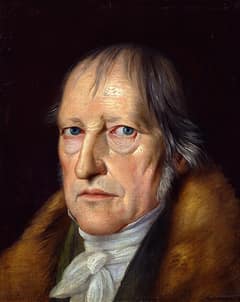
Rejects the question. The contrast between innate and acquired knowledge rests on separating immediacy from mediation; Hegel argues that what seems immediately present in the mind is itself the result of mediation.
Knowledge that appears immediate, such as the faith of the immediate-knowing school or the old innate ideas, depends on education and development; immediacy and mediation are inseparable moments. So the question whether knowledge is inborn or acquired is wrongly posed.
›Friedrich Nietzsche1844–1900A priori structures, not contents* (contested reading)
The intellect inherited from the species a set of useful errors, such as enduring things, equal things and cause and effect, which now precede and shape every individual's experience. These forms are conditions of life, not knowledge: Kant's synthetic a priori judgments must be believed, though they may be false.
Another reading. Because the forms are acquired by the species and could have been otherwise, naturalist readings deny that Nietzsche admits any a priori structure in Kant's sense.
Contested readingGay Science (1882); Beyond Good and Evil (1886)Grundirrtümer, Lebensbedingung, synthetische Urteile a prioriDraft — not yet reviewed
›Edmund Husserl1859–1938Rejects the question* (contested reading)
Rejects the question. Innateness is a psychological, natural-scientific notion; the a priori is an ideal law grasped in eidetic intuition, valid whatever the make-up of any real mind.
Logical and essential laws are not facts about how human minds happen to work, so the question of whether they are inborn or learned confuses validity with psychological genesis. A priori truths are seen in eidetic intuition, not found stored in the mind.
Across the works. Genetic phenomenology describes a universal a priori of the transcendental ego, such as time as the form of all genesis, that precedes and structures all experience.
Contested readingLogical Investigations, Prolegomena (1900); Ideas I (1913)Psychologismus, Wesensgesetz, Apriori, EidosDraft — not yet reviewed
›Martin Heidegger1889–1976Rejects the question* (contested reading)
Rejects the question. The a priori is the "earlier" of Being, which Dasein always already understands, not content stored in a mind before experience; the innate–acquired contrast presupposes a worldless subject.
Dasein lives in a vague, average understanding of Being before any explicit ontology, and this understanding belongs to its way of being, not to a faculty or a store of ideas. Heidegger criticises the concepts of soul, subject and consciousness on which the old question rests.
Another reading. Transcendental readings of Being and Time (e.g. Crowell) treat the understanding of Being and the existentials as a priori structures that make experience possible.
Contested readingBeing and Time (1927)Seinsverständnis, Apriori, vorontologischDraft — not yet reviewed
Hekmat. "Are there innate knowledge or innate principles of knowing?." Draft, awaiting review; last updated 20 October 2026. https://hekmat.local/questions/epi-innate/