The mind knows intelligible truths because God or a separate intellect illuminates it or emanates forms into it, whether or not sense experience first prepares the mind.
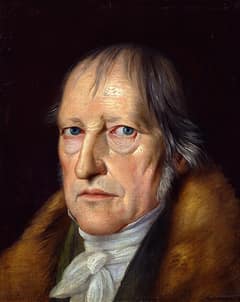
G. W. F. Hegel — The question assumes that knowledge has a source or instrument that could be examined before knowing; Hegel holds that knowing can only prove itself in its own development, so truth is a result, not an origin.
In order of birth. Open a row for the reading, its confidence and the passages. * contested reading.
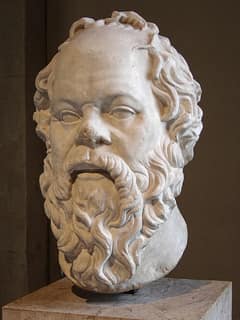
›Socratesc. 470–399 BCENot addressed
Not addressed. No surviving layer gives Socrates a theory of where knowledge comes from; he disclaims wisdom rather than explaining its origin.
The Socrates of the early dialogues examines whether others know, and finds that neither they nor he know what virtue or piety is, but he never says what the ultimate source of knowledge would be. Aristotle reports that Socrates confined his inquiries to ethics and the search for definitions. The theory of recollection, which would answer the question, appears first in the Meno and is usually credited to Plato.
Another reading. Unitarian and literary readers, who take the Socrates of all Plato's dialogues as one character, credit him with recollection (Meno 81c–86b) and so with knowledge by reason; developmentalists such as Vlastos (1991) assign recollection to Plato.
Scholarly consensusPlato, early dialogues (Apology); Aristotle's testimony (Metaphysics A.6)Draft — not yet reviewed
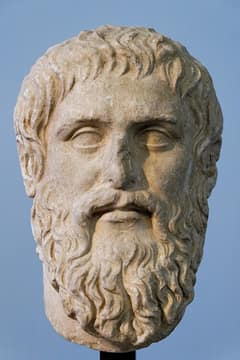
The senses report things that change and that both are and are not what they are called, so they cannot supply stable knowledge. Knowledge is the soul's grasp of the Forms, which it recovers by recollection when perception reminds it; perception occasions the recovery but is not its source. A true belief becomes knowledge only when reason ties it down by working out the explanation (aitias logismos).
Scholarly consensusMeno (transitional) and middle dialogues (Phaedo, Republic VI); speaker Socratesanamnesis, episteme, doxa, noesis, aitias logismosDraft — not yet reviewed
"Reason alone" understates the role Plato gives to perception as the occasion of recollection (Phaedo 74a–75d), but he never treats perception as a source of knowledge.
›Aristotle384–322 BCEExperience, completed by intellect
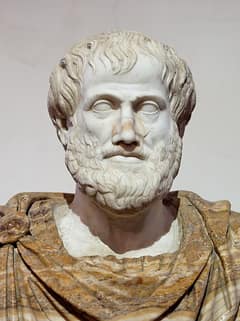
All knowledge starts from perception. Repeated perceptions leave memories, many memories of the same thing make up experience, and from experience the universal comes to rest in the soul as the starting point of art and science. Intellect (nous) then grasps the first principles that induction has made familiar, so the stability of knowledge comes from universals that are present in particulars and are drawn out of them.
Stated in the textPosterior Analytics II.19; Metaphysics A.1; De Anima III.8aisthesis, mneme, empeiria, epagoge, nous, techne, epistemeDraft — not yet reviewed
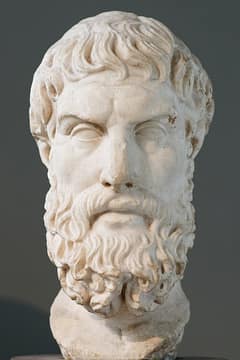
Sensations and feelings are the standards to which every opinion must be referred, and reason reaches what cannot be seen, such as atoms and void, only by inference from what the senses make evident. To reject sensation is to lose any standard at all, even for judging which beliefs are false.
Stated in the textLetter to Herodotus; Principal Doctrines 22–24aisthesis, pathe, prolepsis, kanon, enargeia, epibole tes dianoiasDraft — not yet reviewed
Diogenes Laertius reports three criteria, sensations, preconceptions (prolepseis) and feelings (Lives X.31). Preconceptions are formed from repeated perception, so the option still fits, but inference from signs to the non-evident is central to Epicurus in a way the option does not show.
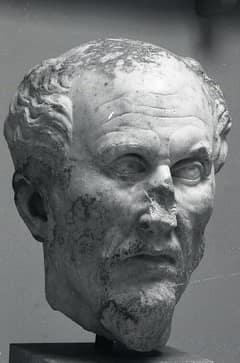
›Plotinusc. 204–270Reason alone · Illumination from a higher intellect
Knowledge is stable because its objects are the Forms, which are the very content of Intellect; a part of our soul never descends and always thinks there, and we know by turning inward to it. Discursive reason judges by imprints it receives from Intellect above, while sense perception is only a messenger reporting from below.
Scholarly consensusnous, noesis, dianoia, aisthesisDraft — not yet reviewed
Both codes describe one doctrine from different sides: our own highest intellect is undescended (reason), yet it is Intellect, a hypostasis above the individual soul, that gives discursive reason its light (illumination).
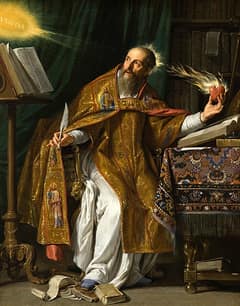
›Augustine of Hippo354–430Illumination from a higher intellect
Unchanging truths cannot come from the changing senses or from a human teacher, whose words only prompt us to look; we see them in an inner light, Christ the Truth dwelling in the mind, as the eye sees by the sun.
Stated in the textilluminatio, magister interior, veritas, luxDraft — not yet reviewed
How illumination works is disputed: ontologist readings (vision in God), Thomist ones (God gives only the intellect's light), Franciscan ones (a special divine concurrence in certain judgment) and formal ones (God supplies the forms by which the mind judges, not its contents), surveyed in Nash, The Light of the Mind (1969). The stance holds on every reading.
›al-Farabic. 872–950Experience, completed by intellect · Illumination from a higher intellect
The material intellect begins as a disposition to receive the forms of things, which reach it from sensation through imagination. It becomes actual only when the Active Intellect acts on it, as light makes colours actually visible and the eye actually seeing; the first intelligibles, common to all, arise in it this way.
Scholarly consensusLetter on the Intellect; Virtuous City ch. 13al-ʿaql bi-l-quwwa, al-ʿaql bi-l-fiʿl, al-ʿaql al-faʿʿāl, al-maʿqūlāt al-ūlāDraft — not yet reviewed
Both codes describe one account: the content comes from sensible forms, and the separate Active Intellect makes them intelligible. In human knowing, al-Farabi's Active Intellect acts chiefly as a light on what imagination holds, where Ibn Sina's emanates the intelligibles themselves (Davidson, 1992).
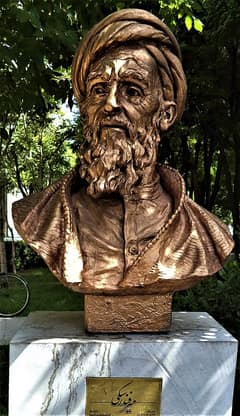
›Ibn Sina980–1037Illumination from a higher intellect* (contested reading)
Perception, imagination and reflection prepare the soul, but the universal form is received from the Active Intellect, which emanates intelligibles onto a soul made ready for them, as the sun's light lets the eye see.
Another reading. Gutas ("The Empiricism of Avicenna", 2012): emanation is Ibn Sina's metaphysical description of what is, in cognitive terms, abstraction from sensory images by the human intellect, so the source is experience completed by intellect.
Another reading. Hasse ("Avicenna on Abstraction", 2001) and McGinnis (2007) reject the either/or: abstraction prepares the soul and emanation completes it, so both codes apply.
Contested readingal-ʿaql al-faʿʿāl, fayḍ, tajrīd, istiʿdādDraft — not yet reviewed
The coding follows the emanation reading, on which the Active Intellect does the work (Davidson, 1992). The `illumination` option already allows that the senses prepare the mind first.
›al-Ghazali1058–1111Illumination from a higher intellect
Sense and reason give knowledge in their domains, but the highest knowledge, of God and the soul's states, comes as light that God casts into the heart once it is cleansed. It reaches the Sufis by tasting (dhawq) and the prophets by revelation, beyond what the intellect reaches by learning.
Scholarly consensusDeliverance from Error; Revival, Book 21nūr, ilhām, kashf, dhawq, taʿallumDraft — not yet reviewed
Learning and inspiration are two routes to the same knowledge: one by study, from the senses upward, the other from within, as a mirror takes images once polished. His account of inspired knowledge is built on Ibn Sina's psychology of the prophetic soul (Treiger, Inspired Knowledge in Islamic Thought, 2012).
›Ibn Rushd1126–1198Experience, completed by intellect
Knowledge begins with sensation and imagination. The agent intellect, a separate substance, acts on the forms held in imagination as light acts on colours, making them actually intelligible, and the material intellect receives them.
Scholarly consensusLong Commentary on De Animaal-ʿaql al-faʿʿāl, al-ʿaql al-hayūlānī, al-ṣuwar al-khayāliyya, tajrīdDraft — not yet reviewed
`illumination` would fit only in Aristotle's own sense of the agent intellect as light; he rejects Ibn Sina's giver of forms, and the intelligibles are drawn from the senses.
›Suhrawardi1154–1191Illumination from a higher intellect
The soul knows by presence. It knows itself because it is a light manifest to itself, and it knows other things when they are present to it with nothing veiling them, or when the higher lights shine on it and it witnesses them. The highest knowledge comes from this illumination and witnessing, prepared by ascetic practice, not from definitions or abstracted forms.
Scholarly consensusishrāq, al-ʿilm al-ḥuḍūrī, mushāhada, dhawqDraft — not yet reviewed
`illumination` catches the shining of higher lights on a prepared soul, but the core of the view, knowledge by presence with no representing form, has no option; `intuition` is close in structure but is defined in phenomenological terms. Sense perception is itself a case of presence: sight occurs when a lit object faces a sound eye with no veil between them.
›Nasir al-Din Tusi1201–1274Illumination from a higher intellect · Experience, completed by intellect* (contested reading)
Tusi follows Ibn Sina: the senses and imagination prepare the soul, the intellect abstracts and composes, and the intelligible forms come to a prepared soul from the Active Intellect. His Commentary keeps both halves of the account, the soul's work on what the senses give and the reception from above.
Another reading. As for Ibn Sina, emanation can be read as a metaphysical description of what, in cognitive terms, is abstraction by the human intellect, so only `experience-then-intellect` applies.
Contested readingal-ʿaql al-faʿʿāl, tajrīd, istiʿdād, ḥadsDraft — not yet reviewed
The dispute over Ibn Sina (Gutas, Hasse, McGinnis) carries over to the commentator; nothing found here sets Tusi apart from his master on this question.
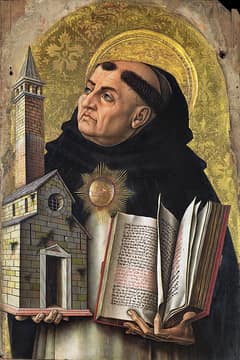
›Thomas Aquinasc. 1225–1274Experience, completed by intellect
All our knowledge begins in the senses, and the agent intellect abstracts universal natures from the images that perception and imagination supply; in this life we understand only by turning to those images.
Stated in the textintellectus agens, phantasmata, abstractio, species intelligibilisDraft — not yet reviewed
Not addressed. No surviving work gives an account of how knowledge is gained. The ode speaks of a ladder of knowledge by which the soul climbs to the origin of forms and says outward understanding cannot reach it, which bears on the question but does not say what the sources of knowledge are.
Not coded; the ode's ladder of knowledge is an image, not an account of knowing.
Scholarly consensusDraft — not yet reviewed
Read as an epistemology, the ode would sit near `illumination`; that would be Hekmat's construction.
›MSMulla Sadrac. 1572–1640Illumination from a higher intellect
Knowing is a mode of existence. Sense and imagination are the soul's own productions, not imprints, and the soul rises through them by substantial motion until it can unite with the active intellect and witness the intelligible forms. Intellectual knowledge comes from that union with a higher intellect, which experience only prepares.
Sadra keeps the language of abstraction (tajrīd) but takes it to be the soul's own ascent, not the stripping of forms from matter, so `experience-then-intellect` fits less well. Kalin (Knowledge in Later Islamic Philosophy: Mulla Sadra on Existence, Intellect, and Intuition, 2010) presents his theory of knowledge as a theory of existence.
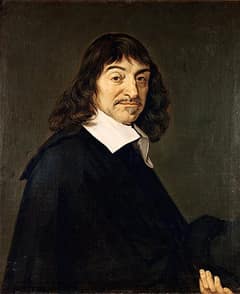
Even bodies are known not by the senses or imagination but by the mind's inspection alone, as the wax shows; the senses give confused information useful for life, and knowledge rests on clear and distinct perceptions of the intellect.
Stated in the textsolius mentis inspectio, clare et distincte, intuitusDraft — not yet reviewed
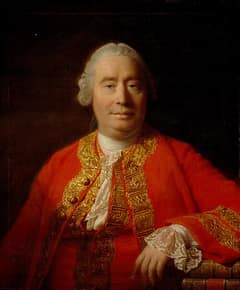
Every idea is copied from an earlier impression of sense or reflection, so the mind's materials all come from experience; reason only compares ideas or infers from what experience has shown.
Stated in the textimpressions, ideas, copy principle, relations of ideas, matters of factDraft — not yet reviewed
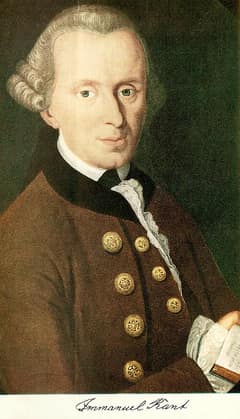
›Immanuel Kant1724–1804Experience structured by the mind
All knowledge begins with experience, but not all of it arises from experience: the senses supply the matter, while space, time and the categories are forms the knowing subject brings to it. Intuitions without concepts are blind and concepts without intuitions are empty, so knowledge needs both.
Stated in the textCritical period (Critique of Pure Reason, 1781/1787)a priori, Sinnlichkeit, Verstand, Anschauung, BegriffDraft — not yet reviewed
Rejects the question. The question assumes that knowledge has a source or instrument that could be examined before knowing; Hegel holds that knowing can only prove itself in its own development, so truth is a result, not an origin.
To examine the faculty of knowledge before using it treats cognition as an instrument or medium that distorts what it grasps, and is like wanting to swim before going into the water. Consciousness tests itself as it goes, and knowledge is the outcome of that self-correcting movement, which begins with sensuous immediacy but is not founded on it.
Scholarly consensusPhenomenology of Spirit (1807); Encyclopaedia (1830)Werkzeug, Medium, Erfahrung des Bewusstseins, ResultatDraft — not yet reviewed
Hegel accepts that philosophy owes its development to experience (Enc. §12) and that nothing is in thought that was not in sense, and the converse (Enc. §8); he denies that either is a foundation.
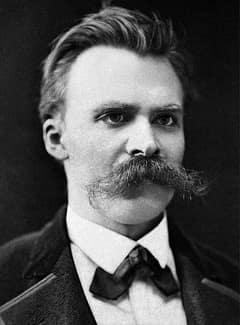
There is only a perspectival seeing and knowing: every claim to knowledge is an interpretation shaped by the drives, needs and history of the knower. The more perspectives we bring to bear on a thing, the more complete our "objectivity" becomes, but there is no view from nowhere.
Stated in the textGenealogy of Morals (1887); Gay Science V (1887)Perspektivismus, Interpretation, AffektDraft — not yet reviewed
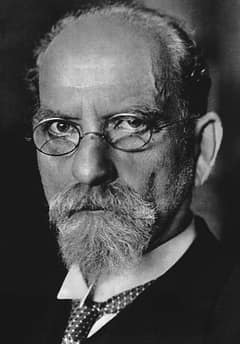
›Edmund Husserl1859–1938Intuition of what is given
Every originary giving intuition, sensory or eidetic, is a legitimate source of knowledge: whatever presents itself in intuition in person is to be accepted as it gives itself, within the limits in which it gives itself. Even categorial forms and essences can be seen, not only inferred.
Stated in the textLogical Investigations (1900–1901); Ideas I (1913)originär gebende Anschauung, Wesensschau, kategoriale Anschauung, EvidenzDraft — not yet reviewed
Knowing is a founded mode of being-in-the-world: before any theory, Dasein already understands itself, its world and the being of what it deals with, and explicit interpretation and assertion develop that prior understanding. Theoretical observation arises when practical dealings break down or are held back.
Stated in the textBeing and Time (1927)Verstehen, Vorstruktur, Auslegung, Zuhandenheit, VorhandenheitDraft — not yet reviewed
Hekmat. "From what sources and by what ways is knowledge gained?." Draft, awaiting review; last updated 20 October 2026. https://hekmat.local/questions/epi-source/