The inquirer disclaims secure knowledge of the most important matters while holding that inquiry is worthwhile; narrow practical certainties may be allowed.
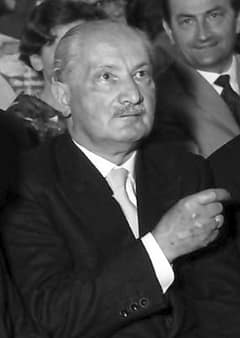
Martin Heidegger — Certainty is the modern, Cartesian form of truth, the self-assurance of a representing subject; the demand for it presupposes a worldless subject that must prove there is a world.
In order of birth. Open a row for the reading, its confidence and the passages. * contested reading.
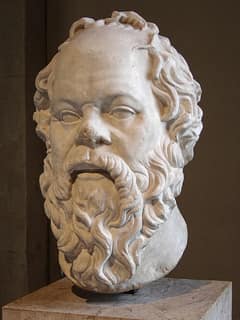
›Socratesc. 470–399 BCEProfessed ignorance
Socrates says that he knows nothing fine and good, and that his only advantage is not thinking he knows what he does not. He reads the oracle as saying that human wisdom is worth little. Yet he also claims a few moral certainties, such as that doing wrong is evil and shameful, and holds that examining oneself and others is the best thing a human being can do.
Another reading. The sceptical Academy read the disavowal as full suspension of judgment: Arcesilaus is said to have denied that anything can be known, not even what Socrates had left himself (Cicero, Academica I.44–45).
Scholarly consensusPlato, early dialogues (Apology, Meno 71a–b); Xenophon's Socrates disclaims knowledge far less and instructs his companions directlyeironeia, aporia, anthropine sophia, elenchosDraft — not yet reviewed
How the disavowal fits with the moral claims he does make is the central dispute. Vlastos (1985, "Socrates' Disavowal of Knowledge") distinguishes certain knowledge, which he disclaims, from fallible "elenctic" knowledge, which he allows; the option's "narrow practical certainties" covers this only roughly.
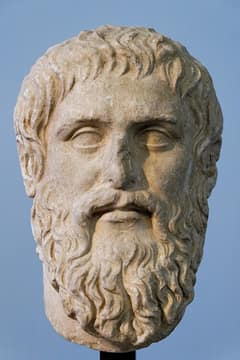
Plato's question is less whether certainty is possible than how knowledge differs from opinion. In Republic V knowledge is an infallible power set over what is, and opinion a fallible power set over what both is and is not; the dialectician who reaches the Good can give an account that survives every refutation. Fallibility belongs to opinion, not to knowledge as such, though the Socrates of the Republic disclaims having that knowledge of the Good himself (506b–e).
Across the works. In the early dialogues Socrates disclaims knowledge of the most important things and the discussions end in aporia (Apology 21b–23b); the confident epistemology of the Republic is a later development.
Another reading. The sceptical Academy, from Arcesilaus to Carneades, read Plato himself as an aporetic inquirer who asserts nothing, pointing to the dialogue form and to the Theaetetus, which ends without a definition of knowledge.
Contested readingRepublic V–VII (middle; speaker Socrates); contrast the early dialogues and the late-middle Theaetetusepisteme, doxa, logos, dialektikeDraft — not yet reviewed
The summary follows the traditional "objects" (two-worlds) reading of Republic V. On the veridical reading (Fine 1978), knowledge and opinion differ in whether their contents are guaranteed true, not in having different objects; the stance is unchanged, but the argument for it is different.
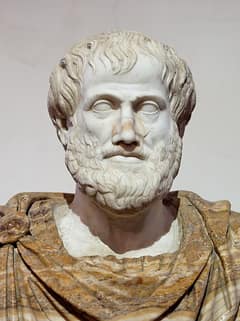
Scientific knowledge (episteme) is of what cannot be otherwise, reached by demonstration from first principles that are true, primary and immediate; those principles are grasped by nous and are not themselves demonstrated. The principle of non-contradiction is the firmest of all and cannot be doubted coherently. But each subject admits only its own degree of precision: ethics and politics hold only for the most part.
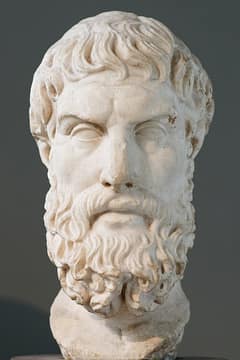
What the senses and the mind directly grasp is always true; error arises only when opinion adds something that is afterwards not confirmed or is contradicted. Certainty is therefore available wherever there is clear evidence, and the sceptic who rejects sensation undermines his own judgments. About distant phenomena such as eclipses, where the evidence allows several causes, Epicurus accepts all the consistent explanations rather than claiming to know which is true.
Stated in the textLetter to Herodotus; Principal Doctrines 22–24enargeia, epimarturesis, ouk antimarturesis, doxa, pleonachos troposDraft — not yet reviewed
The certainty is of what is evident; for the non-evident it is graded, and multiple explanations (Hdt. 78–80) are a principled suspension among rival causes.
Questioning stops in Intellect, whose knowledge is infallible because it is identical with its objects and needs no premise or proof from outside. The soul reaches this certainty by rising to Intellect, though the One beyond Intellect is beyond knowledge altogether.
Scholarly consensusnous, episteme, aletheiaDraft — not yet reviewed
The Academic sceptics are wrong that nothing can be known: I know that I exist, live and understand, since even if I am deceived I must exist to be deceived, and truths of number and of logic are equally beyond doubt.
Stated in the textsi fallor sum, Academici, certitudoDraft — not yet reviewed
Certainty is attainable: demonstration from necessary first premises yields certain knowledge, the highest of the kinds of assent, which dialectic, rhetoric and poetics only approach.
Scholarly consensusyaqīn, burhān, al-muqaddimāt al-ūlāDraft — not yet reviewed
Certain knowledge is attainable: the first notions (existent, thing, necessary) and the first principles are known in themselves, and demonstrations from them yield certainty; whoever denies the principle of contradiction has to be made to feel its force.
Scholarly consensusyaqīn, burhān, al-awwaliyyātDraft — not yet reviewed
Certainty is knowledge in which no doubt remains and none is possible, so firm that a miracle against it would not shake it. After doubting the senses and the first principles of reason themselves, he regained trust in the principles not by argument but by a light from God.
Stated in the textDeliverance from Erroryaqīn, ʿilm yaqīnī, safsaṭa, nūrDraft — not yet reviewed
The doubt is told as a crisis of some two months, ended by God rather than by method; the parallel with Descartes' First Meditation is a modern comparison.
Demonstration, the most perfect kind of syllogism, yields certain knowledge from true and necessary premises; those capable of it reach certainty, while others assent through dialectic or rhetoric.
Scholarly consensusburhān, yaqīn, qiyāsDraft — not yet reviewed
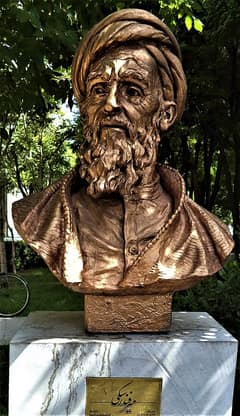
Certainty is attainable. Suhrawardi says he first reached his doctrine by tasting and only then sought proofs for it, so that if the proofs were set aside no doubter could make him doubt it. What is known by presence leaves no gap between knower and known in which error could arise.
Stated in the textyaqīn, dhawq, burhān, mushāhadaDraft — not yet reviewed
The immunity of knowledge by presence to error is the standard reading (Ha'iri Yazdi, The Principles of Epistemology in Islamic Philosophy, 1992), not a sentence of Suhrawardi's.
Certainty is attainable: demonstration from primary premises gives knowledge that cannot be otherwise, and his logic separates it from the lesser assent that dialectic, rhetoric and poetry produce.
Scholarly consensusyaqīn, burhān, taṣdīqDraft — not yet reviewed
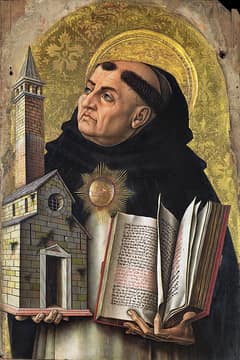
Questioning stops at first principles known in themselves, such as that the same thing cannot be affirmed and denied together; the intellect is not deceived about these, and demonstration from them yields science.
Stated in the textprincipia per se nota, scientia, demonstratioDraft — not yet reviewed
Not addressed. No surviving work discusses the reach or limits of certain knowledge. The ode's line that al-Farabi and Ibn Sina could not grasp its teaching sets a limit to outward understanding, not to knowledge as such.
Not coded; the ode limits outward understanding but gives no account of certainty.
Certain knowledge is attainable, by demonstration and, more fully, by unveiling, in which the knower is present to what is known; Sadra holds that demonstration, unveiling and the Quran cannot disagree.
Scholarly consensusyaqīn, burhān, kashf, ʿilm ḥuḍūrīDraft — not yet reviewed
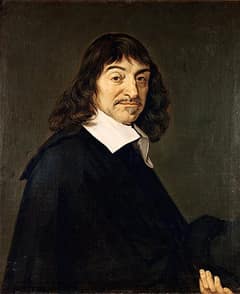
Doubt stops at my own existence, which is true whenever I think of it, even if an all-powerful deceiver tries to mislead me; from there, a God who is no deceiver guarantees whatever I clearly and distinctly perceive.
Stated in the textcogito, certitudo, clare et distincte, Deus non fallaxDraft — not yet reviewed
The step "God guarantees" faces the Cartesian circle: Arnauld objects that clear and distinct perception is used to prove the God who guarantees it (Fourth Objections, AT VII 214; reply AT VII 245–246). Whether the cogito itself is an inference or a simple intuition is also disputed: he denies it is deduced by syllogism (AT VII 140), and Hintikka (1962) reads it as performative. Gassendi's objection that any action, such as walking, would prove existence as well is answered in the Fifth Replies (AT VII 352): only the awareness of walking, a thought, is certain.
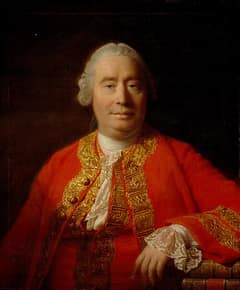
Reason cannot justify our belief in causes, in the external world or in a lasting self; we hold these beliefs from custom and nature, which are too strong for scepticism to dislodge, and a mitigated scepticism keeps inquiry within common life.
Scholarly consensusmitigated scepticism, custom, belief, PyrrhonismDraft — not yet reviewed
Relations of ideas, as in mathematics, are known with certainty by intuition and demonstration (EHU IV, Part 1), though Treatise 1.4.1 argues that even demonstration decays into probability in practice. Naturalist readings (Kemp Smith) still fit the option, which allows belief from nature. What "reason" fails to justify is disputed: Stove (1973) reads it as deductive reason, Garrett (1997) and Owen (1999) as the faculty of reasoning.
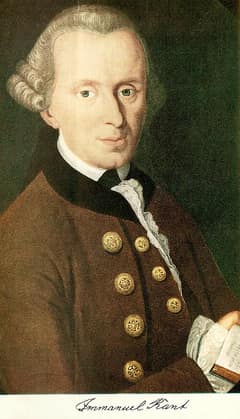
Mathematics, the principles of natural science and the a priori conditions of experience are known with apodictic certainty, but only for objects of possible experience. When reason tries to know what lies beyond experience (the soul, the world as a whole, God) it falls into illusion.
Stated in the textCritical periodapodiktisch, mögliche Erfahrung, transzendentaler ScheinDraft — not yet reviewed
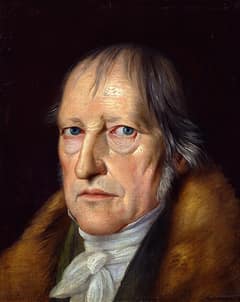
Certainty that has not been tested is not yet truth; the Phenomenology is a scepticism that carries itself through to the end, in which each form of consciousness discovers that its certainty does not match its truth. At its end, absolute knowing, certainty and truth coincide.
Another reading. Pragmatist readings (Brandom, A Spirit of Trust, 2019) take absolute knowing as the recognition that every determinate claim stays open to revision within an ongoing practice of reasons, not as a final and unrevisable result.
Contested readingPhenomenology of Spirit (1807)Gewissheit, Wahrheit, sich vollbringender Skeptizismus, absolutes WissenDraft — not yet reviewed
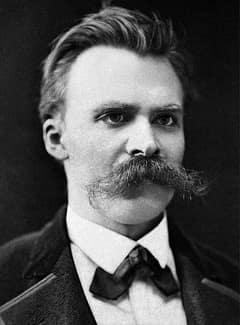
Immediate certainty is a contradiction in terms, and convictions endanger truth more than lies do. Nietzsche keeps a rigorous, experimental knowing that is always provisional and never unconditional.
Across the works. The early essay "On Truth and Lies" (1873, unpublished) treats all truths as forgotten illusions, which reads as a radical scepticism about knowledge.
Another reading. Postmodern readings take the attack on truth to reject the question of certainty altogether, not to answer it with a fallibilism.
Contested readingHuman, All Too Human (1878); Beyond Good and Evil (1886); Gay Science (1882/1887)unmittelbare Gewissheit, Überzeugung, VersuchDraft — not yet reviewed
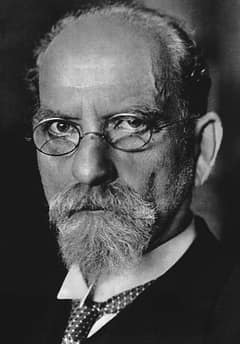
Philosophy must begin from apodictic evidence, and the ego's own experiencing is given with an indubitability that the existence of the world lacks. Adequate evidence of physical things, by contrast, is never complete and remains an idea in the Kantian sense.
Another reading. Some readers stress that for Husserl evidence admits degrees and every perception of a transcendent thing stays open to correction (Ideas I §§138, 143), so his epistemology is fallibilist about almost everything.
Across the works. The late Husserl subjects even apodictic evidence to a critique of its range and reach (CM §9; also Formal and Transcendental Logic, 1929), which moves the later work toward fallibilism.
Contested readingIdeas I (1913); Cartesian Meditations (1931)apodiktische Evidenz, adäquate Evidenz, ego cogitoDraft — not yet reviewed
Rejects the question. Certainty is the modern, Cartesian form of truth, the self-assurance of a representing subject; the demand for it presupposes a worldless subject that must prove there is a world.
What is scandalous in philosophy is not that a proof of the external world is still missing but that such proofs are expected at all, since Dasein is already in a world. In modernity truth becomes the certainty of representation, and Heidegger treats that shift as a fate of metaphysics, not as a standard to meet.
Scholarly consensusBeing and Time (1927); "The Age of the World Picture" (1938)Gewissheit, Vorstellen, Skandal der Philosophie, WeltbildDraft — not yet reviewed
Dasein's certainty of its own death (SZ §52) is a distinct, existential certainty, more original than any apodictic or empirical certainty about beings.
Hekmat. "How far is certainty possible, and what limits does human knowledge face?." Draft, awaiting review; last updated 20 October 2026. https://hekmat.local/questions/epi-certainty/