What place do causation, necessity and possibility have in explaining reality?
علیت، ضرورت و امکان چه جایگاهی در تبیین واقعیت دارند؟
What a cause is, whether causes necessitate their effects, and how necessity and possibility enter the account of what is.
Covers
kinds of cause · necessary connection or its denial · occasionalism · causation as a category or a habit of mind · necessity and possibility (modality)
Not here
human freedom against causal necessity (ont.free-will) · the first cause as God (ont.god)
Area
Metaphysics · also Philosophy of science, Epistemology, Logic
A thing is fully explained only when the end or good it serves is given; material and moving causes are real but subordinate, or are only conditions without which the true cause could not act.
Given its complete cause an effect cannot fail to exist, and the order of things follows necessarily from first causes; whatever is not necessary in itself exists only because something else necessitates it.
Created things are real causes of their effects, but the whole order of causes depends at every moment on a first cause that acts by will, so the order could have been otherwise.
Created things have no causal power of their own; what is called a cause is only the regular companion of its effect, both created by God, who could create the one without the other.
Natural things are explained by matter and the motions and efficient causes that act on it; purposes are not used to explain nature, either because there are none or because they cannot be known.
Not everything that happens is necessitated by its causes: some events are contingent, coming about by chance or from causes that can fail to produce them, so possibility is real in nature and not only in thought.
No necessary connection is perceived in things themselves; the necessity in causal judgment comes from the mind, whether from custom, from an a priori rule of the understanding, or from interpretation.
Causal explanation holds only within a bounded domain, such as nature as an object of science or the finite understanding, and rests on a more basic relation that is not itself causal, such as motivation, freedom, the concept or disclosure.
In order of birth. Open a row for the reading, its confidence and the passages. * contested reading.
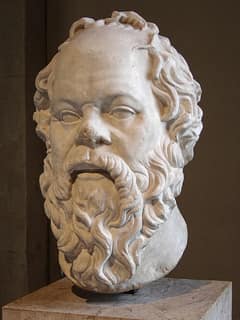
›Socratesc. 470–399 BCEEnds govern explanation* (contested reading)
Xenophon's Socrates argues that the parts of living bodies, such as eyelids that shield the eyes, show design rather than chance, so he explains them by their purpose. In the Phaedo, Plato's Socrates recalls hoping natural science would show why each thing is best as it is, and faults Anaxagoras for citing air and water, which are only conditions of the real cause. Both authors also show him declining to ask by what necessities the heavens came about.
Another reading. Read from the Apology and Memorabilia I.1, he refuses to inquire by what necessities heavenly things come about and thinks such matters beyond human discovery, so he abstains on natural causation; the design argument then belongs to his piety (coded under ont.god) and the Phaedo's search for the best to Plato. On that reading the mode is `abstains`.
Contested readingXenophon, Memorabilia I.4 and IV.3; Plato, Phaedo 96a–99d (middle dialogue); contrast Plato, Apology and Xenophon, Memorabilia I.1aitia, to beltiston, gnome, tyche, anankeDraft — not yet reviewed
Coded under the coding rule from the layer that states a view (Xenophon's design argument), as ont.god is. Whether the Phaedo's account of his early interest in natural science is history or Plato's construction is disputed, as noted under ont.cosmos.
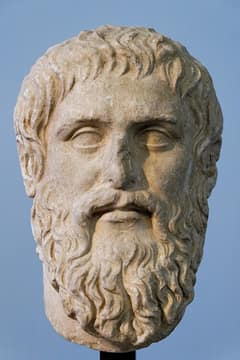
Whatever comes to be has a cause, and the true cause of a thing is why it is best for it to be so; the bodily processes most people call causes are only conditions through which the cause works. Lacking such an account, the Phaedo's Socrates falls back on the Forms as the safest causes: beautiful things are beautiful by the beautiful. The Timaeus gives the full picture, a world made by reason persuading necessity, an errant cause that reason masters only for the most part.
Another reading. Vlastos ("Reasons and Causes in the Phaedo", 1969) argues that aitia here means an explanatory reason, so the Forms are logical-metaphysical explanations, not agents; the teleological code stands, but the Forms are not causes in the efficient sense.
Across the works. In the Phaedo teleological explanation is only hoped for and replaced by the Forms; the Timaeus carries it out for the whole cosmos, with necessity as a second, subordinate kind of cause (Sedley, Creationism and Its Critics in Antiquity, 2007).
Scholarly consensusmiddle dialogues (Phaedo, Republic VI; speaker Socrates) and late dialogues (Timaeus, speaker Timaeus; Philebus)aitia, to beltiston, synaitia, ananke, planomene aitia, nous, deuteros plousDraft — not yet reviewed
Two kinds of explanation sit together: the Forms (and the Good, Republic 509b) explain what a thing is, and reason working for the best explains why the world is ordered. Necessity in the Timaeus is a cause, not a law; it is what reason must persuade.
›Aristotle384–322 BCEEnds govern explanation · Real contingency
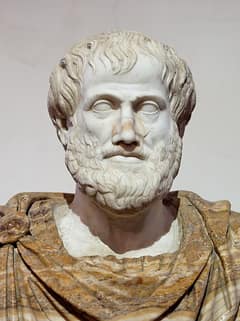
To know a thing is to grasp its causes, and there are four: matter, form, the source of change and the end; in nature the last three often coincide. Nature acts for an end, and the necessity in natural things is mostly hypothetical, needed if the end is to come about. Chance and spontaneity are incidental causes, and not everything happens of necessity: what is not yet decided, like tomorrow's sea battle, can go either way.
Another reading. Hintikka (Time and Necessity, 1973) reads his modal terms statistically: the necessary is what always is, and every genuine possibility is realised at some time, which narrows the room for contingency. Sorabji (Necessity, Cause and Blame, 1980) argues instead that coincidences have no cause and that Aristotle is no determinist.
Stated in the textPhysics II; Metaphysics Δ, E, Θ; De Interpretatione 9aition, hyle, eidos, arche tes kineseos, to hou heneka, ex hypotheseos ananke, tyche, automaton, dynamis, energeia, endechomenonDraft — not yet reviewed
Whether natural teleology is a real cause or a principle of explanation is disputed: Wieland (Die aristotelische Physik, 1962) takes it as a heuristic concept, while Gotthelf ("Aristotle's Conception of Final Causality", 1976) and Cooper ("Aristotle on Natural Teleology", 1982) take it as real. Actuality is prior to potentiality, and eternal things are necessary (Metaphysics Θ.8).
›Epicurus341–270 BCEEfficient causes only · Real contingency
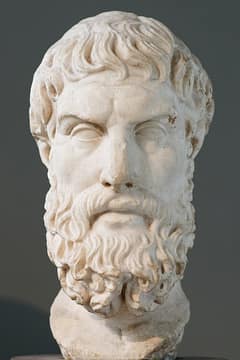
Nothing comes from nothing; bodies are compounds of atoms moving through void, and celestial and other events are explained by their motions, without any god ordering them or any purpose. Necessity is not universal: some things happen by necessity, some by chance and some through us. Where the evidence allows several causes, as for eclipses, he keeps them all open.
Scholarly consensusLetters to Herodotus and Menoeceus; Lucretius and Cicero for the swerve and bivalenceatomoi, kenon, ananke, tyche, par' hemas, heimarmene, parenklisisDraft — not yet reviewed
The case against purposes in nature (eyes were not made for seeing) is fully argued only in Lucretius (IV.823–857). The swerve, which breaks the chain of necessity, and the denial that every statement about the future is already true or false, are attested in Lucretius and Cicero, not in the surviving letters. Chance is not a god and gives no good or evil (Menoeceus 134).
Everything after the One proceeds from it, as light from the sun or heat from fire: each perfect thing produces an image of itself without willing or changing, and the One cannot remain alone. Each level causes the next by its own activity and contemplation; nothing lower acts on what is higher. Against atomists and Stoics he denies that bodily causes or a single chain of fate explain all, since soul is a principle and cause in its own right.
Another reading. Gerson ("Plotinus's Metaphysics: Emanation or Creation?", 1993) argues from VI.8, where the One is what it wills to be, that its causing is willed rather than necessary, so "necessary emanation" is misleading.
Contested readingEnneads (V.1, V.2, V.4, IV.8, III.1–2; VI.8 on the One's freedom)proodos, energeia tes ousias, energeia ek tes ousias, aitia, heimarmene, pronoia, archeDraft — not yet reviewed
The One is not under necessity; it is the cause of necessity (VI.8). What necessitates is the perfection of each producer, not a law over it, and Plotinus has no doctrine of the possible in itself.
›Augustine of Hippo354–430Real causes under a free first cause
God's will is the cause of all things, a cause that makes and is not made; created spirits are causes that are also made, and bodies are less causes than instruments of wills. God placed in creation hidden causal reasons from which kinds unfold in time, and governs all continuously. An order of causes exists, and our wills are within it, but foreknowledge does not make what it foresees necessary.
Scholarly consensusCity of God V and XII; On the Trinity III; Literal Commentary on Genesisvoluntas Dei, ordo causarum, rationes causales, rationes seminales, providentia, miraculumDraft — not yet reviewed
The option fits with a caveat: only wills are efficient causes in the full sense (City of God V.9), so bodily causes are instruments, which comes close to the later doctrine that God alone acts in bodies. A miracle is not against nature but against nature as we know it (XXI.8).
The First exists without cause, and the existence of everything else follows from its existence, through the secondary intellects and the heavens down to the elements; it does not create for any end beyond itself. Natural things are explained by the four causes he takes from Aristotle, and below the moon matter brings in things that may or may not be.
Another reading. His commentary on De Interpretatione 9 defends real contingency against the claim that God's foreknowledge makes the future necessary (Adamson, "The Arabic Sea Battle", 2006), so beside the necessary procession from the First he holds that sublunary events are contingent.
Contested readingThe Virtuous City; The Philosophy of Aristotle; Long Commentary on De Interpretationeal-awwal, al-thawānī, fayḍ, ʿilla, al-mumkin, al-ḍarūrīDraft — not yet reviewed
The language of the possible in itself made necessary by another is Ibn Sina's; al-Farabi's emanation is necessary in that it follows from the First's substance, not by its choice.
Whatever is possible in itself is equally open to being and not being, so it exists only when a cause makes it necessary; the effect is necessary through its cause and needs that cause for as long as it exists, not only to begin. The chain ends in the Necessary Existent, which is necessary in itself. In metaphysics the efficient cause is the giver of existence, not only a mover, and the final cause is the cause of the other causes' being causes.
Stated in the textThe Healing (Metaphysics I.6–7, VI; Physics I); Pointers IVwājib al-wujūd bi-dhātihi, mumkin al-wujūd bi-dhātihi, wājib bi-ghayrihi, al-ʿilla al-tāmma, al-fāʿil, al-ghāya, ʿillat al-ʿilalDraft — not yet reviewed
Chance exists only relative to a limited view; from the whole order of causes everything is necessary (Physics I.13–14). The necessitarian reading is argued in full by Belo (Chance and Determinism in Avicenna and Averroes, 2007). He keeps final causes, so `teleological` could be added; it is left off because his distinctive thesis is about existence and necessity.
›al-Ghazali1058–1111God the only true cause* (contested reading)
The link between what is customarily called a cause and its effect is not necessary: neither implies the other, and fire touching cotton does not make the burning, which God creates at the time of contact. The regularity of nature is God's habit, and God could break it, since the possible is whatever involves no contradiction. Causes are means God uses and the believer still uses them, but they act by no power of their own.
Another reading. Marmura ("Al-Ghazali's Second Causal Theory in the 17th Discussion of His Tahafut", 1981) finds a second account in the same Discussion that allows natures in things while subjecting them to God's will. Frank (Creation and the Cosmic System, 1992) reads a necessary order of secondary causes as strict as Ibn Sina's, and Griffel (Al-Ghazali's Philosophical Theology, 2009) argues that he leaves open whether God acts directly or through secondary causes, denying only that their connection is necessary apart from God's will.
Contested readingIncoherence, Seventeenth Discussion (polemical layer, but stated "according to us"); Moderation in Belief, Treatise II; Revival, Book 35 (own voice)iqtirān, ʿāda, sabab, musabbab, khalq, qudra, tajwīz, tawakkulDraft — not yet reviewed
Every event is still fully determined by God's eternal will, so denying necessary connection is not a claim of contingency in the sense of the `contingency` option; this agrees with his coding under ont.free-will.
›Ibn Rushd1126–1198Causes necessitate · Ends govern explanation
Things have natures that determine what they do, and whoever denies causes denies the intellect, since knowledge is knowledge of things through their causes. Denying causes also destroys the evidence of the Maker's wisdom, which is seen in how everything serves an end. Against Ibn Sina he denies that a giver of forms supplies them from outside: the agent brings forms out of the potency of matter.
Scholarly consensusIncoherence of the Incoherence, Seventeenth Discussion (answering al-Ghazali, partly dialectical); Exposition of the Methods of Proof; Long Commentary on Metaphysics Λasbāb, rafʿ al-asbāb, ṭabīʿa, ḍarūra, ḥikma, ʿināya, ikhrāj min al-quwwa ilā al-fiʿlDraft — not yet reviewed
He faults Ibn Sina's division of the possible in itself and the necessary through another, but holds that natural causes act of necessity in their natures; Belo (Chance and Determinism in Avicenna and Averroes, 2007) reads him as necessitarian, though he also speaks of what happens for the most part.
To cause is to illuminate: each higher light shines on the lower, which depends on it wholly, and the Light of Lights, which never ceases to shine, makes its effects permanent; from the one only one proceeds directly. Lower lights also turn toward the higher in love while the higher dominate them. Necessity, possibility and existence themselves are considerations of the mind, not further realities in things.
Scholarly consensusThe Philosophy of Illumination, Parts I–IIishrāq, qahr, maḥabba, nūr al-anwār, ghanī, faqīr, iʿtibārāt ʿaqliyyaDraft — not yet reviewed
The option fits the dependence and permanence of illumination; the modal concepts are mental for him, which sits beside `mind-contributed` for the concepts, though not for the dependence they describe.
What is possible in itself exists only when its cause makes it necessary, and a complete cause cannot fail to produce its effect. The effect needs its cause as long as it exists, because possibility, not origination, is what calls for a cause. Defending Ibn Sina against al-Razi, he holds that a single simple cause, as such, produces only one effect, so multiplicity enters the world through the aspects of the first effect.
Another reading. In the Abstract God is an agent who acts by choice and could have done otherwise, while created causes keep their efficacy, which is the theologians' version of the same causal rules.
Contested readingThe Commentary on the Pointers; the Abstract of Beliefal-ʿilla al-tāmma, wujūb bi-l-ghayr, imkān, al-wāḥid lā yaṣdur ʿanhu illā l-wāḥidDraft — not yet reviewed
The rule that a thing is not until it is necessitated holds in both works; they differ on whether the First necessitates the world or chooses it (see ont.cosmos).
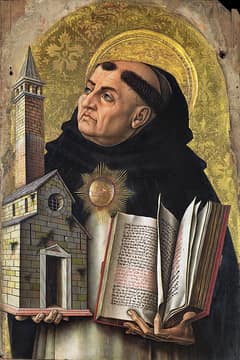
›Thomas Aquinasc. 1225–1274Real causes under a free first cause · Ends govern explanation · Real contingency
God works in every created agent as first cause, yet created things have their own actions, and the same effect is wholly from God and wholly from the natural agent at different levels. Every agent acts for an end, and God is the end of all. God's will imposes necessity on some effects and contingency on others, giving them necessary or contingent proximate causes, so that providence does not make everything necessary.
Stated in the textSumma Theologiae I; Summa contra Gentiles IIIcausa prima, causa secunda, instrumentum, finis, providentia, necessarium, contingensDraft — not yet reviewed
Summa contra Gentiles III.69 argues against those who deny natural agents their own actions, naming the theologians of Islam, so his view is written against `occasionalism`. The third way (I q.2 a.3) uses the possible and the necessary, with necessary beings caused by another, a scheme that comes from Ibn Sina.
Not addressed. The Treatise on Motion holds that every motion has a mover and that movers go back to a first mover, an account of moving causes; whether causes necessitate their effects, and how necessity and possibility enter, is not taken up in what survives.
Not coded; the surviving treatise traces motions to movers but does not say what makes a cause a cause.
Scholarly consensusDraft — not yet reviewed
As a Peripatetic he would likely hold `necessitation`; that would be inferred from his school.
A thing does not exist until it is necessitated, and the complete cause necessitates its effect. But the effect's possibility is not that of an essence indifferent to being; it is need itself: its existence is nothing but a relation to its cause. Pressed to the end, causation becomes manifestation, and effects are modes of the one existence rather than things that receive it.
Scholarly consensusFour Journeys, Journey I (the stage on cause and effect)al-ʿilla al-tāmma, al-wujūd al-rābiṭ, imkān faqrī, imkān māhawī, tashaʾʾun, tajallī, shaʾnDraft — not yet reviewed
He keeps the Avicennian rule that what is not necessitated does not exist, but replaces quidditative possibility with the poverty of what is only a relation, and ends by reducing causation to the cause's self-manifestation (Rizvi, Mulla Sadra and Metaphysics, 2009). The second step has no option of its own.
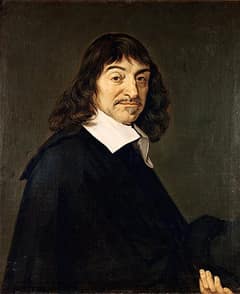
›René Descartes1596–1650Efficient causes only · Real causes under a free first cause* (contested reading)
Physics should seek efficient causes, not God's purposes, which are hidden from us. God is the first and general cause of motion and conserves the world by continually creating it, and the laws of nature that follow from his constancy are secondary causes of particular motions. By the natural light there must be as much reality in the total cause as in its effect, and even the eternal truths are necessary only because God freely willed them.
Another reading. Garber (Descartes' Metaphysical Physics, 1992) reads him as holding that God alone causes motion in inanimate bodies, which is occasionalism for body on body.
Contested readingMeditations III–IV (1641); Principles I–II (1644); letters of 1630 and 1644causa efficiens, causa prima, causae secundae, leges naturae, creatio continua, lumen naturale, veritates aeternaeDraft — not yet reviewed
`secondary-causes` fits the laws as secondary causes and the dependence on God's free will, including for the eternal truths, but it is disputed whether bodies themselves act; minds do.
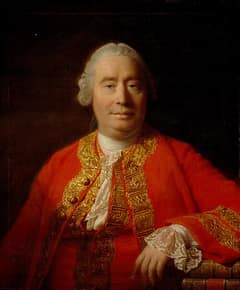
No reasoning a priori finds an effect in its cause, and in experience we see only one event following another, never a tie between them. The idea of necessary connection comes from the mind's customary move, after repeated conjunction, from one object to the idea of its usual attendant. Whatever is conceivable is possible, and the contrary of every matter of fact is possible, so no causal law is necessary in itself.
Another reading. The "New Hume": he denies that we know or have an idea of necessary connection in things, not that real powers exist (Wright, The Sceptical Realism of David Hume, 1983; Strawson, The Secret Connexion, 1989); Winkler ("The New Hume", 1991) defends the traditional reading. Both fit the option, which is about where our idea of necessity comes from.
Stated in the textTreatise 1.3 (1739); Enquiry IV–VII (1748)necessary connexion, constant conjunction, custom, power, two definitions of causeDraft — not yet reviewed
Necessity in this sense holds of human actions as of bodies (Enquiry VIII), and chance is only our ignorance of causes. Unlike Kant, the necessity has no a priori ground.
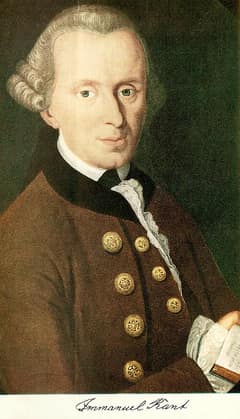
Experience shows that one thing follows another, never that it must; the concept of cause is a pure concept of the understanding, and that every event follows something by a rule is a condition of experiencing objective succession at all. So causal necessity holds strictly of all appearances, because the understanding gives nature its laws, but not of things in themselves, which leaves room for a causality of freedom. Possibility, actuality and necessity add nothing to a concept; they relate its object to our cognition, and purposes in nature are a guide for judgment, not a constitutive principle.
Stated in the textCritique of Pure Reason (1781/1787); Prolegomena (1783); Critique of the Power of Judgment (1790)Kausalität, Kategorie, Analogien der Erfahrung, Postulate des empirischen Denkens, Kausalität aus Freiheit, regulatives Prinzip, NaturzweckDraft — not yet reviewed
Shared answer, different reasons (rule 6): against Hume the necessity is a priori and objectively valid of every possible object of experience. What the Second Analogy proves is disputed: that every event has a cause, or also that there are particular causal laws (Strawson, The Bounds of Sense, 1966; Guyer, Kant and the Claims of Knowledge, 1987).
›G. W. F. Hegel1770–1831Causation as a derived mode
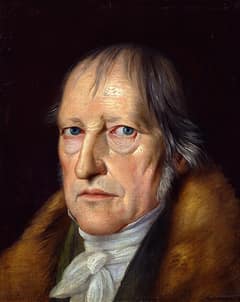
Possibility, contingency, necessity, substance, cause and reciprocal action are stages in the logic of actuality. Cause and effect are finite: each passes into the other, an endless chain that is resolved in reciprocal action, and the truth of necessity is freedom, the concept. Causal relation therefore cannot explain life or spirit, and contingency has its place, in nature above all.
Scholarly consensusEncyclopaedia Logic (1830), Doctrine of Essence; Science of Logic (1813)Wirklichkeit, Möglichkeit, Zufälligkeit, Notwendigkeit, Kausalitätsverhältnis, Wechselwirkung, Begriff, FreiheitDraft — not yet reviewed
The domain is not a region of things but a level of thought: causality is true of the finite, and the concept is its truth. Whether Hegel is a necessitarian is disputed; Henrich ("Hegels Theorie über den Zufall", 1958) argues that he makes contingency itself necessary.
›Friedrich Nietzsche1844–1900Necessity from the mind* (contested reading)
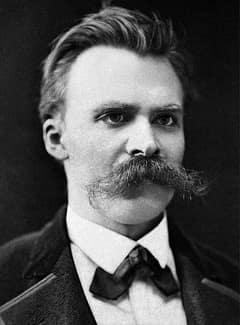
Cause and effect are conventional fictions for designating and communicating, not explanations; we describe better than earlier ages but explain no more. The belief in causes comes from the belief that our will causes our acts, and purposes are our invention. Yet he can also say that there are only necessities, with no laws, no commander and no chance, and that each person is a piece of fate.
Another reading. Leiter (Nietzsche on Morality, 2002) reads him as a naturalist who explains people causally by their type-facts; on that reading BGE 21 rejects only the reification of cause and effect, not causal explanation.
Contested readingGay Science (1882); Beyond Good and Evil (1886); Twilight of the Idols (1888)Ursache und Wirkung, Fiktion, Beschreibung, Notwendigkeit, Irrtum der falschen Ursächlichkeit, FatumDraft — not yet reviewed
The option fits the fictions of BGE 21 and the derivation of causality from the will; it does not fit his affirmations of necessity without law (GS 109; BGE 22), which he offers in turn as interpretation.
›Edmund Husserl1859–1938Causation as a derived mode
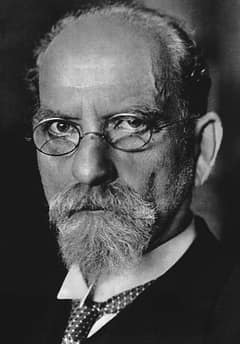
Causality belongs to material nature: a real thing is what it is through its causal dependencies on other things. The life of spirit is governed by motivation, in which a subject is moved by what it takes as a reason, and that is not causation. Natural causality is constituted in consciousness and its exact form is an idealisation of the life-world's typical regularities, so it cannot explain consciousness itself.
Scholarly consensusIdeas II (manuscripts 1912–1928, published 1952); Ideas I (1913); Crisis §9 (1936)Kausalität, Motivation, Realität, Natur, Geist, Umwelt, LebensweltDraft — not yet reviewed
Ideas II is a manuscript edited by Stein and Landgrebe, so the position is not textual. The bounded domain is a region (material nature); transcendental consciousness, which constitutes it, stands in no causal relation to it (Ideas I §49).
›Martin Heidegger1889–1976Causation as a derived mode
Possibility ranks above actuality: Dasein is its possibilities, which are neither empty logical possibility nor the contingency of what is merely present. Grounds, causes among them, spring from a freedom that is the ground of grounding, so causality is a problem within freedom, not the reverse. The later essays read the four causes as ways of being responsible for something's coming forth, and the rule of efficient causality as a mark of modern technology.
Across the works. Early, causality is derived from the freedom and possibility of Dasein (1927–1930); later, it is a destiny of being, the way modern metaphysics and technology set beings in order as calculable (1953).
Another reading. Since the question asks how causes explain "reality", a notion Heidegger restricts to one mode of being (SZ §43), the cell could be coded `rejects`, as other questions that presuppose the metaphysics he set out to overcome are.
Scholarly consensusBeing and Time (1927); On the Essence of Ground (1929); The Essence of Human Freedom (1930, lecture course); The Question Concerning Technology (1953)Möglichkeit, Grund, Freiheit, Verschulden, Ver-an-lassen, causa efficiens, Satz vom GrundDraft — not yet reviewed
Hekmat. "What place do causation, necessity and possibility have in explaining reality?." Draft, awaiting review; last updated 20 October 2026. https://hekmat.local/questions/ont-causation/