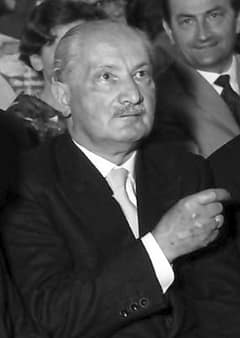
True freedom is not choice between alternatives but determination by one's own reason or what one recognises as one's own, a higher condition than free choice.
Martin Heidegger — The question treats freedom as a property of the will within a causal order of present-at-hand things; Heidegger takes freedom to be the ground of truth and of Dasein's choosing itself, prior to causality.
In order of birth. Open a row for the reading, its confidence and the passages. * contested reading.
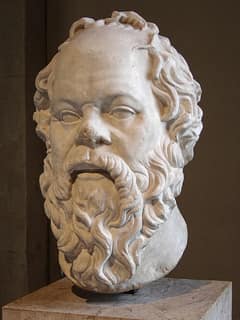
›Socratesc. 470–399 BCENot addressed
Not addressed. Whether choices are causally determined is never asked; his thesis that wrongdoing is involuntary concerns knowledge, not freedom.
Socrates holds that no one does wrong willingly, so a wrongdoer needs teaching rather than punishment; he says this of himself at his trial. This bears on responsibility, but it rests on the claim that everyone wants the good and errs from ignorance, not on any view about causes and choice. The intellectualist thesis is coded under virtue and knowledge.
Scholarly consensusPlato, early dialogues (Apology, Protagoras, Gorgias)hekon, akon, amathiaDraft — not yet reviewed
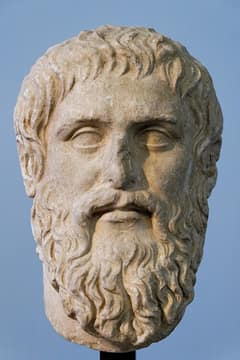
›Platoc. 428–348 BCEVoluntary action (determinism not posed)* (contested reading)
Plato does not set freedom against causal determinism. He holds people responsible for the lives they choose, placing the blame on the chooser and not on god, while also holding the Socratic thesis that no one does wrong willingly, since everyone wants what is truly good and errs only from ignorance. The Laws reconciles the two by treating injustice as an involuntary disease of the soul, which the law nonetheless punishes and tries to cure.
Another reading. Freedom in Plato is the condition of a soul ruled by reason, which does what it really wants, namely the good; the tyrant and the tyrannical soul do what seems best to them but not what they wish, and are enslaved (Gorgias 466d–468e; Republic 577d–e). Plotinus' account of freedom (Enneads VI.8) develops this line.
Contested readingProtagoras and Gorgias (early; Socrates); Republic X, the myth of Er (middle; Socrates); Laws IX (late; the Athenian Stranger)hekon, akon, aitia helomenou, hairesis, boulesisDraft — not yet reviewed
The Socratic paradox makes wrongdoing in a sense involuntary, so "voluntary action" here does not mean what it means for Aristotle: Plato grounds responsibility in choice, not in knowing what one does.
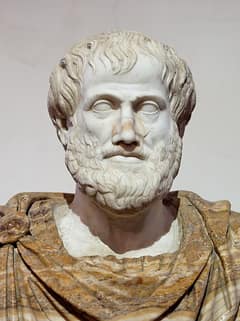
›Aristotle384–322 BCEVoluntary action (determinism not posed)
An action is voluntary when its origin lies in the agent and the agent knows the particular circumstances; force and ignorance make it involuntary. Virtue and vice are therefore up to us, and we are responsible even for our characters, since we formed them by our earlier acts. He does not ask whether the agent's choices are themselves causally determined.
De Interpretatione 9 (the sea battle) denies that future contingents are already true, which some read as an indeterminist commitment; the ethics itself stays with voluntariness.
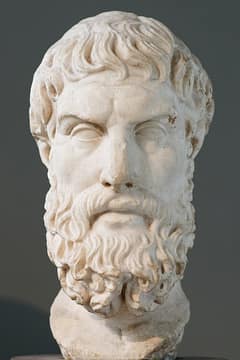
Some things happen by necessity, some by chance and some through our own agency. Necessity would destroy responsibility, while our own actions are free of any master, so praise and blame belong to them. The fate taught by the natural philosophers is worse than the myths about the gods, since it cannot be appealed to at all.
Another reading. Bobzien (2000, "Did Epicurus Discover the Free Will Problem?") argues that his concern is that our actions be up to us rather than necessitated, not freedom to choose otherwise in the modern sense, and that the swerve need not occur at each choice.
Stated in the textLetter to Menoeceus 133–134ananke, tyche, par' hemas, adespoton, heimarmeneDraft — not yet reviewed
The swerve of atoms, the physical basis usually given for this view, is not in the surviving letters; it is attested in later sources (Lucretius II.216–293; Cicero, De fato 22–23). How it secures agency is disputed.
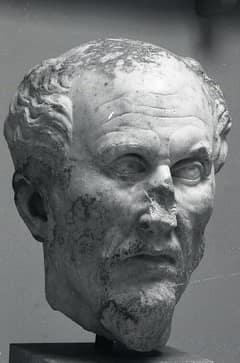
›Plotinusc. 204–270Freedom as rational self-determination
Freedom is not the power to choose otherwise but acting from intellect without being driven by passion or outer circumstance; what is "up to us" is virtue and intellect, and the One is free in the highest degree as wholly its own.
Stated in the textto eph' hemin, autexousion, boulesisDraft — not yet reviewed
VI.8.1–7 treats human freedom, VI.8.7–21 (esp. 13–21) the One's. Readers will set against this the soul's descent, both voluntary and necessary (IV.8.5), and his rejection of Stoic and astral determinism (III.1.2–7).
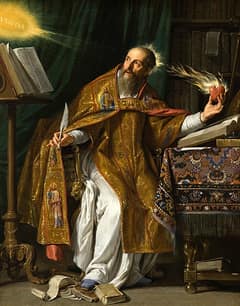
›Augustine of Hippo354–430Free and determined* (contested reading)
The mature Augustine holds that grace and predestination settle whether the will turns to the good, yet the will remains our own and we act willingly; freedom in its full sense is the will freed by grace to love the good. Foreknowledge, by contrast, he denies necessitates anything.
Across the works. On Free Choice of the Will (III.1–3) makes sin depend wholly on the will's own movement, which is not caused by its nature or by God, and argues that God's foreknowledge does not necessitate it (III.2.4–4.11). Harrison (2006), and Augustine himself (Retractations I.9; I.8 in older numbering), deny a break between this and the later theology of grace.
Another reading. Stump (2001) resists the compatibilist reading of the late works defended by Couenhoven (2007): grace restores the will rather than determining it, so a libertarian element survives.
Contested readingfrom To Simplician (396), developed in the anti-Pelagian worksliberum arbitrium, libertas, gratia, praedestinatioDraft — not yet reviewed
›al-Farabic. 872–950Voluntary action (determinism not posed)* (contested reading)
Will and choice belong to the rational animal: happiness is reached by voluntary actions, the good ones those that lead to it and the bad ones those that hinder it, and praise and blame follow.
Another reading. His commentary on De Interpretatione 9 argues that God's foreknowledge does not make future events necessary, defending real contingency (Adamson, "The Arabic Sea Battle", 2006); on that reading he poses the question and leaves human choice undetermined.
Contested readingirāda, ikhtiyār, al-afʿāl al-irādiyyaDraft — not yet reviewed
›Ibn Sina980–1037Free and determined* (contested reading)
Every event, human choices included, is necessary through its causes in an order that flows from the First; we choose, but our choice is itself caused by our dispositions and what we perceive, and providence includes it.
Another reading. Ibn Sina never poses the problem of responsibility under determinism, so calling him a compatibilist reads a later question into a theory of causal necessity and providence.
Contested readingikhtiyār, qadar, ʿināyaDraft — not yet reviewed
God creates the human act, the will and the knowledge on which it rests; the human is the place in which they occur and is compelled in the very act of choosing. Choice is real as a link in the chain, and responsibility stands, but nothing in it escapes God's determination.
Scholarly consensusRevival, Book 35; Moderation in Belief, Treatise IIikhtiyār, jabr, kasb, qudra, tawakkulDraft — not yet reviewed
Majbūr ʿalā l-ikhtiyār, compelled to choose, is his phrase (Revival, Book 35). The compatibilism is theological: determination is by God, not by nature. How it runs is disputed: Frank (Creation and the Cosmic System, 1992) finds a necessary order of secondary causes as strict as Ibn Sina's; Marmura reads an occasionalist on whom God creates each act and the human only acquires it (kasb). Both make choice determined.
Our acts come from our will, but our will is moved by things outside us that God has ordered by fixed causes; so we choose, and our choosing has determinate causes. This is a middle way between those who deny human power and those who make it independent of God.
Scholarly consensusqaḍāʾ, qadar, ikhtiyār, asbābDraft — not yet reviewed
Not addressed. The works cited do not ask whether human choices are determined or whether responsibility needs freedom; agency appears only as the soul's governance of its body and its love for the lights above.
Not coded; Suhrawardi's account of the soul's love and subjection toward higher lights answers a different question.
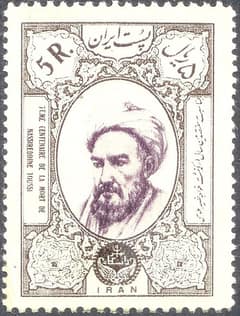
›Nasir al-Din Tusi1201–1274Free and determined* (contested reading)
Against the Ash'arites, our acts are ours: we know by necessity that they depend on our power and will, and God's justice in reward and punishment requires it. That an act follows necessarily once the motive is present does not take away the agent's power.
Another reading. In the Twelver tradition the Abstract is read as giving the agent power over both doing and not doing, which responsibility requires, so the view is libertarian.
Contested readingThe Abstract of Beliefikhtiyār, qudra, dāʿī, ʿadl, jabrDraft — not yet reviewed
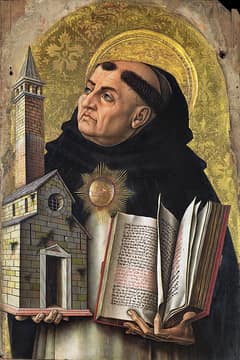
›Thomas Aquinasc. 1225–1274Free, not determined* (contested reading)
Humans have free choice because reason can weigh particular goods either way, and no finite good necessitates the will; without it counsels, commands and punishments would be pointless.
Another reading. Intellectualist readings: choice follows the intellect's last practical judgment, and God moves the will as first cause, so his account is a form of compatibilism with rational self-determination at its centre.
Contested readingliberum arbitrium, electio, voluntas ut naturaDraft — not yet reviewed
The libertarian reading is defended by MacDonald ("Aquinas's Libertarian Account of Free Choice", 1998) and Stump (Aquinas, 2003). `rational-self-determination` also has a claim, since freedom is rooted in reason's judgment.
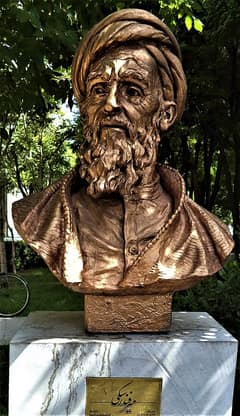
Human acts are done by will and are truly the agent's own, yet the will and its act exist only as a degree of the existence that flows from God, so they are also God's. Sadra takes this as the meaning of the Imami formula "a matter between two matters", between compulsion and delegation.
The formula answers how one act can belong to both God and the agent, given the gradation of existence; it does not pose responsibility under determinism, so `compatibilist` fits only loosely. A candidate for the own-position option in codebook 1.2.0.
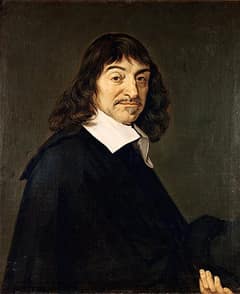
›René Descartes1596–1650Free, not determined* (contested reading)
Free will is self-evident and the greatest perfection in us: we can give or withhold assent, and absolutely speaking we can even turn from a clearly known good to show our freedom, though morally speaking we scarcely can; how this fits divine preordination is beyond our grasp.
Another reading. Chappell ("Descartes's Compatibilism", 1994): freedom is spontaneity, the more clearly the intellect shows the true and the good the freer the assent, and indifference is the lowest grade of freedom (AT VII 57–58), a view compatible with determination by reasons.
Across the works. Kenny ("Descartes on the Will", 1972): the Fourth Meditation's freedom of spontaneity gives way to a two-way power only in the letter of 9 February 1645 (AT IV 173–175, probably to Mesland), so the libertarian view is a late development.
Contested readingFourth Meditation (1641) through the letters of 1644–45libertas, arbitrium, indifferentia, spontaneitasDraft — not yet reviewed
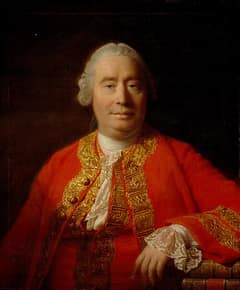
Human actions are caused as regularly as natural events, and liberty means only the power of acting according to the determinations of the will; this liberty is consistent with necessity and is what responsibility requires.
Stated in the textliberty of spontaneity, necessity, constant conjunctionDraft — not yet reviewed
Treatise 2.3.1–2 is harder-line than the Enquiry: liberty of indifference amounts to chance. Russell (Freedom and Moral Sentiment, 1995) argues that responsibility rests on moral sentiment rather than on a reconciliation of liberty and necessity.
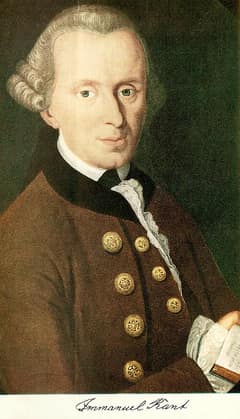
As appearances in time, our actions are wholly determined by natural causes; as rational beings who act under the idea of freedom, we must regard ourselves as belonging to an intelligible order and as free. Kant dismisses compatibilism as a mere evasion of the problem (AA 5:96).
Across the works. Groundwork III (AA 4:446–455) tries to establish the moral law from the presupposition of freedom. The Critique of Practical Reason reverses the order: the moral law is a "fact of reason" and the ground by which we know freedom, while freedom is the ground of the law's being (AA 5:4 note; 5:29–31). The stance is unchanged.
Stated in the textCritical periodKausalität aus Freiheit, intelligibler Charakter, Idee der FreiheitDraft — not yet reviewed
How to read the stance is disputed: two-world readings take the intelligible and empirical orders as distinct realms, against two-standpoint or two-aspect readings (Allison, Kant's Theory of Freedom, 1990; Korsgaard, "Morality as Freedom", 1989). The dispute concerns the reading, not the stance.
›G. W. F. Hegel1770–1831Freedom as rational self-determination
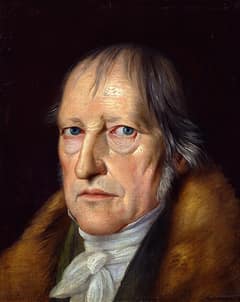
Freedom is not the arbitrary choice between given options, which is only formal, but the will that wills itself, being at home with itself in its other. It is realised in rational institutions that the will can recognise as its own.
Stated in the textPhilosophy of Right (1820)Willkür, in diesem Anderen bei sich selbst, der freie Wille, der den freien Willen willDraft — not yet reviewed
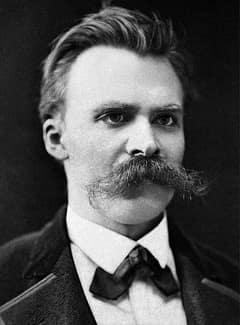
Free will in the metaphysical sense would require being causa sui, which is a self-contradiction; the doctrine was invented by priests to make people accountable and punishable. "Unfree will" is equally a mythology: in real life there are only strong and weak wills.
Another reading. Gemes and Richardson (both 2009) find a positive, non-metaphysical freedom in the "sovereign individual" who has the right to make promises (GM II.2): freedom as an achieved unity of drives.
Stated in the textBeyond Good and Evil (1886); Twilight of the Idols (1889)causa sui, Irrtum vom freien Willen, starker und schwacher WilleDraft — not yet reviewed
Not hard determinism: BGE 21 rejects "unfree will" too, and BGE 19 treats willing as a multiplicity of drives. The stance is backed by Leiter (Nietzsche on Morality, 2002), who reads him as a fatalist; the causa sui critique is the argument for it.
›Edmund Husserl1859–1938Freedom as rational self-determination* (contested reading)
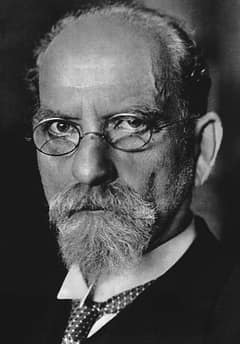
The life of persons is governed by motivation, not by natural causality, and a person is free to the extent that they take positions on the basis of their own reason. Husserl's ideal is a life of self-responsibility, in which reason becomes autonomous.
Another reading. The contrast between the naturalistic attitude, in which the psyche is causally dependent on the body, and the personalistic attitude, in which persons act from motives, can be read as a version of Kant's two standpoints.
Contested readingIdeas II (manuscripts 1912–1928); Crisis §73 (manuscript, first published in Hua VI, 1954)Motivation, Selbstverantwortung, Autonomie der Vernunft, Ich kannDraft — not yet reviewed
›Martin Heidegger1889–1976Rejects the question* (contested reading)
Rejects the question. The question treats freedom as a property of the will within a causal order of present-at-hand things; Heidegger takes freedom to be the ground of truth and of Dasein's choosing itself, prior to causality.
Anxiety reveals Dasein as free for choosing itself, and authenticity is choosing to choose. Later, freedom is "letting beings be": not a human property but the openness that possesses the human being.
Another reading. Authenticity as owning one's existence can be read as a version of freedom as self-determination by what one recognises as one's own.
Contested readingBeing and Time (1927); The Essence of Human Freedom (1930; lecture course), where the reason is argued against Kant; "On the Essence of Truth" (1930/1943)Freiheit, Seinlassen, Wählen der Wahl, EntschlossenheitDraft — not yet reviewed
Hekmat. "Is human action free, and how does it stand to necessity or determinism?." Draft, awaiting review; last updated 20 October 2026. https://hekmat.local/questions/ont-free-will/