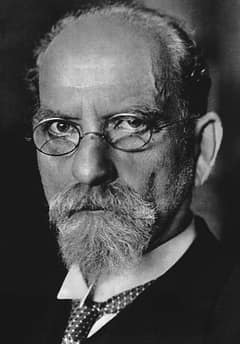
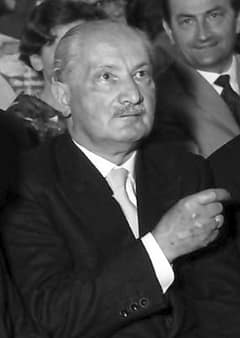
Martin Heidegger — Ethics as a discipline belongs to the metaphysical division of philosophy; Heidegger holds that thinking the truth of Being is a more original "ethics", dwelling (ethos), and gives no criterion of right action.
In order of birth. Open a row for the reading, its confidence and the passages. * contested reading.
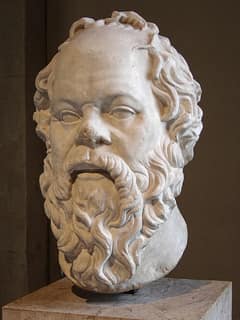
›Socratesc. 470–399 BCEKnowledge of the good
Right action follows from knowing what is good and bad: everyone pursues what they think good, and wrongdoing comes from false belief, not from being overcome. Doing wrong harms the soul of the wrongdoer, so one must never do wrong, not even in return. Rightness is not made by the gods' approval: the gods love the holy because it is holy.
Another reading. Xenophon's Socrates identifies the just with the lawful in conversation with Hippias (Memorabilia IV.4.12–13); no option names this.
Scholarly consensusPlato, early dialogues (Protagoras, Crito, Euthyphro); contrast Xenophon, Memorabilia IV.4episteme, sophia, to agathon, adikein, to hosionDraft — not yet reviewed
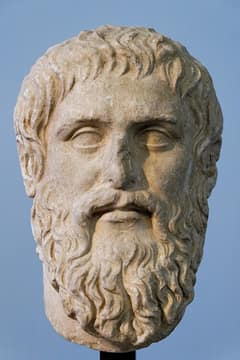
›Platoc. 428–348 BCEKnowledge of the good · Virtue* (contested reading)
An action is right when it comes from, and preserves, a soul ordered by reason, and that order depends on knowledge of the Good, the greatest study, which makes just things and everything else useful. Plato thus reverses the usual order of explanation: just actions are defined by the condition of soul they produce and preserve, not the just soul by its actions.
Across the works. In the early Protagoras, Socrates argues that knowledge of good and bad is sufficient for right action and that wrongdoing is ignorance, without the Republic's trained character and non-rational parts of the soul.
Another reading. Rightness is grounded in the soul's order rather than in knowledge, since in the Republic most citizens act rightly from trained character and correct belief, not from knowledge of the Good. Sachs (1963) objected that justice so defined need not issue in ordinary just conduct.
Contested readingProtagoras (early) and Republic IV, VI (middle); speaker Socratesidea tou agathou, megiston mathema, dikaiosyne, phronesisDraft — not yet reviewed
The Euthyphro (10a–11b) shows that the pious is not pious because the gods love it, so rightness is not grounded in divine approval; but it is an early, Socratic dialogue. Plato's positive grounding is metaphysical (the Good), which neither option names exactly.
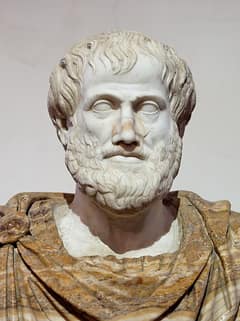
Right action is what a person of practical wisdom would determine. Virtue is a settled state concerned with choice, lying in a mean relative to us, and there is no rule that fixes the mean in advance. Acting well also requires acting knowingly, by choice, for the sake of the noble, and from a firm character.
Stated in the textNicomachean Ethics II.4–6, VIarete, hexis, mesotes, phronesis, phronimos, prohairesis, to kalonDraft — not yet reviewed
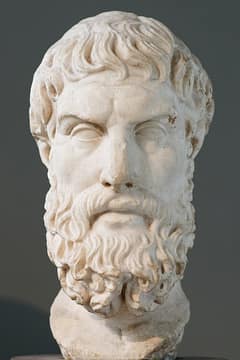
Pleasure is the first good and the starting point of every choice and avoidance, but not every pleasure is to be chosen: pleasures and pains must be measured against each other over a whole life. The virtues are inseparable from the pleasant life and valued as means to it. Justice is a compact not to harm or be harmed, binding only where it serves mutual advantage.
Stated in the textLetter to Menoeceus 129–132; Principal Doctrines 5, 31–38hedone, symmetresis, phronesis, dikaion, syntheke, sympheronDraft — not yet reviewed
Justice as a compact for mutual advantage (Principal Doctrines 31–38) has no option of its own; it is grounded in pleasure through security and freedom from fear of detection.
Right action comes from virtue, whose aim is to become like god: civic virtues measure the passions, and higher, purificatory virtues free the soul from the body and turn it to Intellect.
Scholarly consensusarete, homoiosis theoi, katharsis, politikai aretaiDraft — not yet reviewed
An action is good when love is rightly ordered: God is to be enjoyed for his own sake and all else used or loved in relation to him, so virtue itself is the order of love.
Stated in the textordo amoris, uti, frui, caritasDraft — not yet reviewed
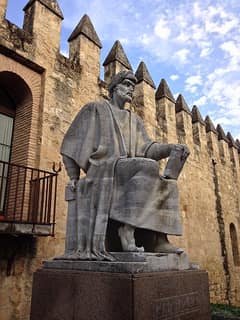
Good actions are those in the mean, as determined by the practically wise; the virtues are settled states acquired by repeating such actions, and the ruler and the law habituate citizens to them.
Scholarly consensustawassuṭ, faḍīla, taʿaqqulDraft — not yet reviewed
Right action keeps to the mean set by practical wisdom, through temperance, courage and wisdom whose sum is justice; the prophet's law gives that mean to people who cannot reach it by reason.
Scholarly consensustawassuṭ, ʿadāla, ḥikma, sharīʿaDraft — not yet reviewed
Good character is a settled state of the soul from which good acts flow easily, a balance of its powers under reason and the Law; an act's worth before God depends on the intention behind it, and its highest form is love of God.
Scholarly consensusRevival, Books 22, 36 and 37khuluq, ḥusn al-khuluq, niyya, ikhlāṣ, sharʿDraft — not yet reviewed
As an Ashʿarite jurist he holds that acts are obligatory or forbidden only by the revealed Law, not by reason; no option names divine command, so that thesis stays here.
Right action is that of the virtues of character, settled by habituation under law and governed by practical wisdom; the Law gives everyone the practical virtues and right beliefs suited to them.
Scholarly consensusfaḍīla, sharīʿa, ʿadlDraft — not yet reviewed
Against the Ashʿarites he holds that justice and injustice are such in themselves, not only because God commands or forbids (Exposition, on justice). The Law's role has no option of its own.
Not addressed. He gives no account of what makes an action right. Ethics appears as ascetic discipline and detachment that prepare the soul for illumination, which answers how one comes to know, not what rightness is.
Not coded; ascetic practice in Suhrawardi serves knowledge and the soul's return, not a theory of right action.
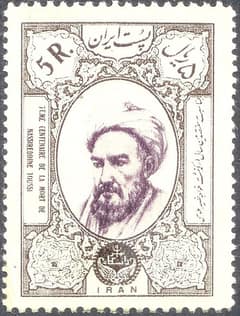
A good act comes from a settled good character, and a good character keeps the mean set by practical wisdom among the powers of the soul: wisdom, courage and temperance, with justice as their sum.
In the Abstract of Belief he also holds, with the Mu'tazila and against the Ash'arites, that some acts are good or evil in themselves and known to be so by reason, before any command. In the Commentary on the Pointers he expounds Ibn Sina, for whom "justice is good" is a widely accepted premise, not a truth of reason. The two registers are not reconciled in the works cited.
Actions are right when they accord with reason: the first precept, to do good and avoid evil, unfolds into precepts following our natural inclinations, a share in God's eternal law, and the virtues, guided by prudence, make us act on them.
Stated in the textlex naturalis, lex aeterna, prudentia, inclinatio naturalisDraft — not yet reviewed
Not addressed. Sadra gives no account of what makes an action right. Ethics appears as purification of the soul and obedience to revealed law, serving the soul's perfection in knowledge and existence.
Not coded; for Sadra practice serves the soul's ascent, and he does not ask what makes an act right.
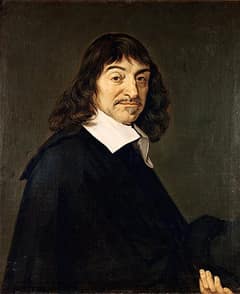
An action is right when it comes from the resolution to follow what reason judges best, even where the judgment proves mistaken; generosity, the esteem of oneself as the free master of one's will, is the key to all virtues.
Scholarly consensusrésolution, générosité, morale par provisionDraft — not yet reviewed
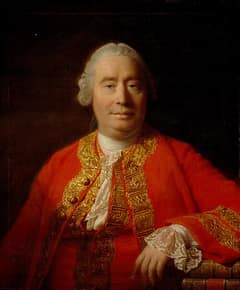
Reason cannot tell virtue from vice; we call a character virtuous because contemplating it gives a peculiar feeling of approval, and the virtues are the traits useful or agreeable to their possessor or to others.
Stated in the textmoral sentiment, sympathy, utility, artificial virtuesDraft — not yet reviewed
What the is–ought paragraph (Treatise 3.1.1.27) forbids is disputed: the standard reading takes it to deny any derivation of "ought" from "is"; MacIntyre ("Hume on 'Is' and 'Ought'", 1959) reads it as allowing a bridge through wants and needs.
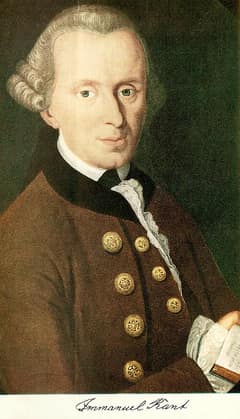
An action has moral worth only if done from duty, and it is right if its maxim could be willed as a universal law. The categorical imperative is a law reason gives itself, not one derived from happiness, feeling or the divine will.
Stated in the textCritical periodPflicht, kategorischer Imperativ, Maxime, AutonomieDraft — not yet reviewed
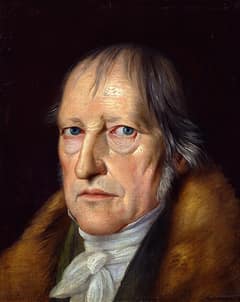
Kant's moral law is an empty formalism: the test of non-contradiction can justify any content. Duties have determinate content only in the institutions of a rational community, family, civil society and the state, in which individuals recognise their own freedom.
Stated in the textPhilosophy of Right (1820)Sittlichkeit, Moralität, leerer Formalismus, PflichtDraft — not yet reviewed
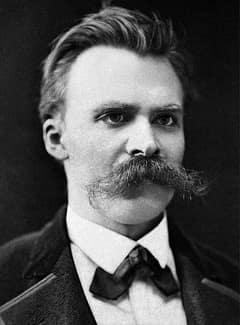
›Friedrich Nietzsche1844–1900No unconditional foundation
Moral values have no unconditional foundation: they arose from the needs and ressentiment of particular types of people and serve particular forms of life. The value of these values must itself be questioned and, where it harms life, revalued.
Stated in the textBeyond Good and Evil (1886); Genealogy of Morals (1887)Umwertung aller Werte, Herren-Moral, Sklaven-Moral, RessentimentDraft — not yet reviewed
Ethics rests on a formal axiology and practics with a priori laws, parallel to formal logic. Its highest law, which Husserl calls a categorical imperative, is to do the best among what is attainable in one's whole practical sphere.
Another reading. The imperative to choose the best attainable (taken from Brentano) maximises value rather than testing maxims, so it is not a duty ethics in Kant's sense; no option fits this rationalist value ethics.
Across the works. In the 1920s Husserl moves to an ethics of personal vocation and love, in which absolute obligations arise from what a person loves, not from a formal rule (Einleitung in die Ethik, lectures 1920/1924, Hua XXXVII; Kaizo articles, Hua XXVII). Melle, the editor of Hua XXVIII, traces this development.
Contested readingLectures on ethics and value theory (1908–1914; Hua XXVIII)formale Axiologie, formale Praktik, kategorischer Imperativ, das Beste unter dem ErreichbarenDraft — not yet reviewed
Codebook gap: no option for a rationalist value ethics. `duty` is the nearest option (an a priori, formal law of practical reason that Husserl names after Kant), but the codebook defines it by the universalisable maxim, while Husserl's imperative, taken from Brentano, maximises value; hence `contested`.
Rejects the question. Ethics as a discipline belongs to the metaphysical division of philosophy; Heidegger holds that thinking the truth of Being is a more original "ethics", dwelling (ethos), and gives no criterion of right action.
Asked when he would write an ethics, Heidegger answers that ethos means abode, and that thinking which thinks the truth of Being as the human abode is already original ethics. Conscience and guilt in Being and Time are existential structures prior to any morality.
Scholarly consensusBeing and Time (1927); Letter on Humanism (1946)ethos, Aufenthalt, ursprüngliche Ethik, SchuldigseinDraft — not yet reviewed
Hekmat. "On what basis is the rightness or wrongness of moral actions determined?." Draft, awaiting review; last updated 20 October 2026. https://hekmat.local/questions/axi-moral-basis/