David Hume — There is no single highest good for all people; happiness depends on how a person's passions and temper suit their pursuits, and no philosophy can prescribe one object for everyone.
Martin Heidegger — Thinking in terms of goods and values is subjectivism: to call something a value is to make it an object of human estimation, which Heidegger counts as part of the metaphysics to be overcome.
In order of birth. Open a row for the reading, its confidence and the passages. * contested reading.
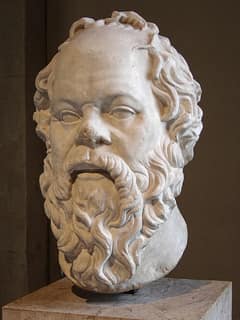
›Socratesc. 470–399 BCEFlourishing through virtue
What matters is not living but living well, and living well is the same as living justly. The good person is happy and the unjust person wretched, so doing wrong is worse than suffering it. Care for the soul's excellence comes before care for body, wealth or reputation.
Another reading. In the Protagoras (351b–358d) Socrates argues from the premise that pleasure is the good. Irwin (1977, Plato's Moral Theory) takes this as Socrates' own view; most readers take it as an assumption granted for the sake of argument against the many.
Scholarly consensusPlato, early dialogues (Apology, Crito, Gorgias)eudaimonia, arete, eu zen, dikaiosyneDraft — not yet reviewed
Whether virtue is sufficient for happiness, identical with it, or only its dominant part is disputed: Vlastos (1991) holds virtue sufficient but allows minor non-moral goods; Brickhouse and Smith (1994, Plato's Socrates) deny sufficiency. All three readings fall within this option.
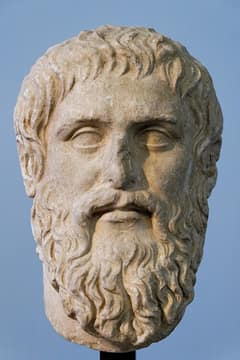
›Platoc. 428–348 BCEFlourishing through virtue* (contested reading)
Happiness lies in a just soul, in which reason rules spirit and appetite with their agreement. Virtue is the soul's health and injustice its disease, so the just person is happier than the unjust whatever else befalls him, and justice is good both in itself and for what comes of it.
Another reading. The highest life is contemplative: becoming like god as far as possible (Theaetetus 176a–b), the philosopher's vision of the Good (Republic VII) and the ascent to Beauty itself (Symposium 210a–212a), which practical virtue serves.
Contested readingGorgias (early); Republic II–IV, IX (middle); Theaetetus (late-middle); speaker Socrateseudaimonia, dikaiosyne, arete, harmonia, homoiosis theoiDraft — not yet reviewed
Whether virtue suffices for happiness, as the Gorgias suggests, or is only its dominant constituent is debated for Plato's Socrates (Vlastos 1984); the option does not separate the two.
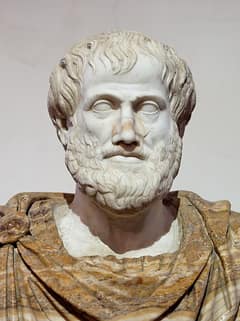
›Aristotle384–322 BCEFlourishing through virtue* (contested reading)
The highest good is eudaimonia, which is complete and self-sufficient. The function argument shows it to be activity of the soul in accordance with virtue, and in the best and most complete virtue, over a complete life. Book X then ranks the contemplative life first and the life of practical virtue second.
Another reading. Intellectualist or dominant-end reading (Kraut 1989): eudaimonia in the strict sense is theoretical contemplation alone, as Nicomachean Ethics X.7–8 says; the life of practical virtue is happy only in a secondary way.
Contested readingNicomachean Ethics I.7 vs X.7–8eudaimonia, ergon, energeia, arete, theoria, teleionDraft — not yet reviewed
The main code follows the inclusive reading (Ackrill 1974), on which eudaimonia comprises all intrinsically worthwhile activities, chief among them virtuous action. The inclusive versus dominant-end dispute is a dispute over exactly these two options.
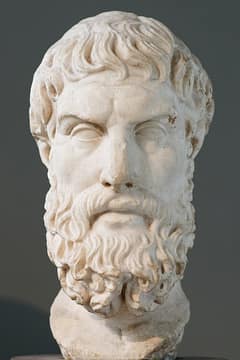
›Epicurus341–270 BCETranquillity and freedom from pain
The goal of every action is to be free from pain in the body and disturbance in the soul; once that is reached, nothing further is lacking. Pleasure in this sense is the beginning and end of the blessed life, and its limit is the removal of all pain. It is not the pleasure of the profligate but a calm state reached by sober reasoning and simple living.
Stated in the textLetter to Menoeceus 128–132; Principal Doctrines 3ataraxia, aponia, hedone, katastematike hedone, telosDraft — not yet reviewed
Well-being belongs to the life of intellect, which the wise person can have whatever befalls the body; its summit is the soul's union with the One, reachable briefly in this life.
Scholarly consensuseudaimonia, theoria, henosisDraft — not yet reviewed
The heart is restless until it rests in God; the supreme good is eternal life with God, joy in the Truth, which no virtue or good fortune in this life can secure.
Stated in the textbeatitudo, vita aeterna, gaudium de veritate, frui DeoDraft — not yet reviewed
Happiness is the soul's perfection in existence to the point where it needs no matter, joining the separate substances; it is the good sought for itself. Begun in this life through the theoretical, deliberative and moral virtues and the practical arts, it is completed after death.
Across the works. The lost Ethics commentary, as Ibn Rushd reports it, made political happiness in this life the only happiness, which is flourishing through virtue in a city.
Contested readingsaʿāda, kamāl, al-faḍāʾil al-naẓariyyaDraft — not yet reviewed
The soul's perfection is to become an intellectual world mirroring the whole order of existence, joined to the Active Intellect; its pleasure, begun in this life, is complete after death.
Another reading. Pointers and Reminders describes happiness as love and joy in the First, reached through the stations of the knowers and perfect only after death, nearer to union with God.
Contested readingsaʿāda, kamāl, ittiṣāl, ladhdha ʿaqliyyaDraft — not yet reviewed
The highest good is love of God and, in the hereafter, the vision of him, the greatest of all pleasures; in this life it is anticipated in the knowledge and intimacy of those who love him.
Stated in the textRevival, Book 36maḥabba, ruʾya, ladhdha, uns, shawqDraft — not yet reviewed
The ultimate human end is theoretical perfection, completed by conjunction (ittiṣāl) with the agent intellect, in which the human knows the separate intellect; it is reached, if at all, in this life.
Scholarly consensusittiṣāl, saʿāda, al-ʿaql al-mustafādDraft — not yet reviewed
He weighs Ibn Bajja's and al-Farabi's views on whether conjunction is possible before affirming it. The Commentary on the Republic adds that this perfection is reached only in a city ordered by the practical virtues.
The soul's good is to free itself from the darkness of the body and return to the world of lights, witnessing them and taking joy in their illumination. Sages who have stripped themselves of the body reach this in part in this life, in experiences of light, and fully after death.
Scholarly consensustajrīd, mushāhada, ladhdha, ʿālam al-nūrDraft — not yet reviewed
Happiness is the perfection of the rational soul. Its higher power perfects itself in knowledge of the true order of existence and its practical power in ordering the soul and its acts, and the highest rank is reached by one whose knowledge and acts both become wholly turned toward God.
Another reading. The Nasirean Ethics makes happiness need both theoretical and practical perfection, with the virtues constituting the practical half, so the virtue-centred reading fits as well.
No created good satisfies the will; perfect happiness is the vision of God's essence, possible only after this life, while the contemplative life gives an imperfect happiness here.
Stated in the textbeatitudo, visio Dei, felicitas imperfectaDraft — not yet reviewed
Not addressed. The Treatise on the Crafts ranks crafts by their ends and puts highest the one whose end is in itself, but the summaries available do not say which craft or life that is, and no other work states the highest good.
Not coded; the ranking of crafts implies a highest end that the available summaries do not name.
The soul's perfection is to become an intellectual world matching the order of existence, united with the intelligibles. The philosopher's four journeys run from creation to God, in God, from God back to creation, and in creation with God. The ascent begins in this life and is completed after death.
Another reading. Read from the eschatology of Journey IV and the Wisdom of the Throne, the highest happiness is meeting God after death, which this life only prepares.
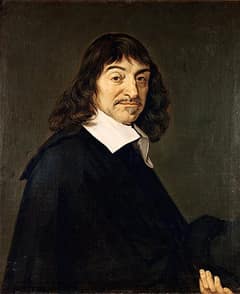
›René Descartes1596–1650Flourishing through virtue* (contested reading)
The supreme good is a firm and constant will to do what one judges best, which is virtue and the one thing fully in our power; the contentment that follows from it is happiness.
Another reading. Because the supreme good is the good use of free will and contentment follows from it, the view anticipates the structure of a good will crowned by happiness.
Contested readingsouverain bien, vertu, contentement, béatitudeDraft — not yet reviewed
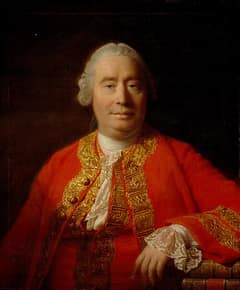
›David Hume1711–1776Rejects the question* (contested reading)
Rejects the question. There is no single highest good for all people; happiness depends on how a person's passions and temper suit their pursuits, and no philosophy can prescribe one object for everyone.
Hume denies that philosophy can name one highest good: what makes a life happy varies with temper and taste, though virtue, peace of mind and good company commonly serve best.
Another reading. "The Sceptic" is one of four personae, and the Enquiry concerning the Principles of Morals presents virtue as the surest route to happiness (IX, Part 2), so Hume holds a form of flourishing through virtue.
Contested readinghappiness, temper, peace of mindDraft — not yet reviewed
`rejects` denies a presupposition: that there is a single highest good for every human being. It rests on a persona essay; EPM IX, Part 2 supports the alternative, not the main code.
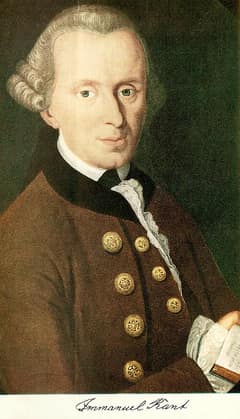
›Immanuel Kant1724–1804Virtue crowned by happiness
The only thing good without qualification is a good will, the supreme good. The complete good is virtue together with happiness in proportion to it, which a rational being must hope for but cannot bring about by its own powers.
Stated in the textCritical periodhöchstes Gut, guter Wille, GlückswürdigkeitDraft — not yet reviewed
Whether the highest good adds anything to the moral law is disputed: Beck (Commentary on Kant's Critique of Practical Reason, 1960) says it does not; Reath ("Two Conceptions of the Highest Good in Kant", 1988) traces a shift from a theological to a secular, this-worldly conception.
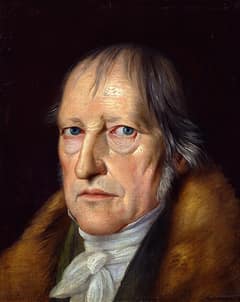
›G. W. F. Hegel1770–1831Contemplation* (contested reading)
The good is the unity of the concept of the will with the particular will: freedom realised, the final end of the world, within which individual welfare is a moment. The highest activity of spirit is absolute spirit knowing itself in art, religion and philosophy, and the Encyclopaedia closes with Aristotle on thought thinking itself.
Another reading. Read from the Philosophy of Right, Hegel's answer is the good as realised freedom (PR §129), an end of the world and of rational institutions rather than of one person's life; no option expresses it.
Contested readingPhilosophy of Right (1820); Encyclopaedia (1830)das Gute, realisierte Freiheit, Wohl, absoluter GeistDraft — not yet reviewed
Codebook gap: there is no "realised freedom" option. Hegel answers the question, so the nearest stance is coded: philosophical comprehension of absolute spirit as the highest activity (Enc. §577).
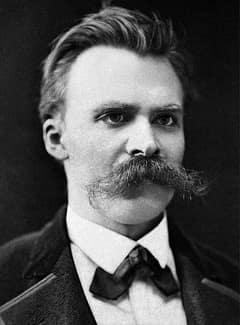
Life is what must always overcome itself, and the highest value is the creation of new values, a task for higher types rather than a good for all. A good common to everyone is a contradiction, since what is common has little value, and peoples have had a thousand goals, not one.
Another reading. No highest good: since what is good for one type harms another and there is no common good (BGE 43), the summum bonum belongs to the morality Nietzsche wants to revalue, and he offers none.
Contested readingZarathustra (1883–1885); Beyond Good and Evil (1886)Selbstüberwindung, Rangordnung, GemeingutDraft — not yet reviewed
The perfectionist reading (Hurka, "Nietzsche: Perfectionist", 2007) takes self-overcoming and the creation of values as the value by which Nietzsche ranks types and ways of life, which grounds the stance. It answers the question as posed, the highest good for a human being, while denying that one good holds for all; the rival reading takes that denial as a refusal of the question.
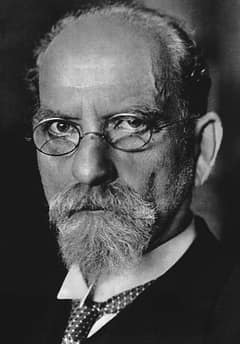
›Edmund Husserl1859–1938Flourishing through virtue* (contested reading)
The best possible life is one of absolute self-responsibility, in which a person examines and justifies every goal by reason and lives from a vocation they recognise as their own; the satisfaction of such a life is the true happiness open to a human being.
Another reading. The Vienna Lecture and the Crisis present the theoretical life of philosophy as the telos of European humanity, which suggests a primacy of contemplation.
Of Husserl's practical writings only three of the five Kaizo articles, including this one, appeared in his lifetime (Kaizo, 1923–1924); the other two were first published in Hua XXVII. The option fits only loosely, since self-responsibility is not virtue in Aristotle's sense.
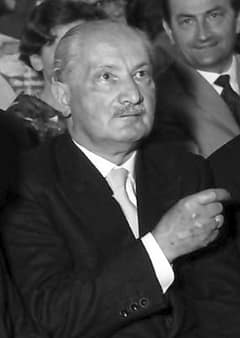
Rejects the question. Thinking in terms of goods and values is subjectivism: to call something a value is to make it an object of human estimation, which Heidegger counts as part of the metaphysics to be overcome.
Heidegger refuses value-thinking, including the highest values, because it reduces what is to what counts for a valuing subject; Nietzsche's revaluation is its completion, not its overcoming. Authenticity in Being and Time is not offered as a moral ideal.
Scholarly consensusLetter on Humanism (1946); "Nietzsche's Word 'God Is Dead'" (1943)Wert, Wertdenken, SubjektivismusDraft — not yet reviewed
Hekmat. "What is the highest good, the end worth pursuing in a human life?." Draft, awaiting review; last updated 20 October 2026. https://hekmat.local/questions/axi-highest-good/