Virtue is not a kind of knowledge; knowing what is good does not by itself make one good. It lies in sentiment, instinct or strength of will (thinkers differ on whether reason can move us at all).
In order of birth. Open a row for the reading, its confidence and the passages. * contested reading.
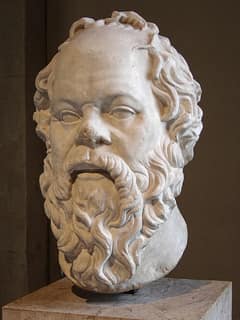
›Socratesc. 470–399 BCEYes
Virtue is a kind of knowledge or wisdom, and no one who knows what is best will act otherwise. What the many call being overcome by pleasure is really ignorance about the relative size of goods and evils. Plato, Xenophon and Aristotle agree in attributing this intellectualism to Socrates, which makes it the best-attested of his doctrines.
Scholarly consensusPlato, early dialogues (Protagoras, Meno 87b–89a); Xenophon, Memorabilia III.9; Aristotle's testimony (Nicomachean Ethics VI.13, VII.2)arete, episteme, sophia, akrasia, metretike techneDraft — not yet reviewed
Whether Socrates allows non-rational desires any motivating force is disputed (Penner's strict intellectualism against Brickhouse and Smith, Socratic Moral Psychology, 2010); both sides keep the thesis that virtue is knowledge. The Meno itself ends by suggesting that virtue comes by divine dispensation as true opinion (99e–100b).
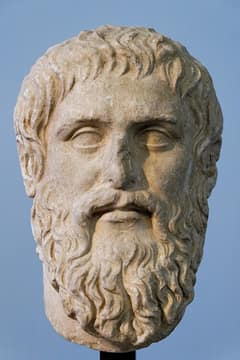
›Platoc. 428–348 BCEKnowledge plus habituation* (contested reading)
In the Republic the soul has parts that can conflict, so knowing what is best does not by itself ensure acting on it: appetite can drag a person against his reasoning, and spirit and appetite must be trained by music, gymnastics and habit to follow reason. Virtue is reason's wisdom together with the agreement of the trained lower parts.
Across the works. In the early Protagoras Socrates argues that knowledge rules whoever has it and that acting against one's knowledge of the best is impossible (352b–358d).
Contested readingRepublic IV (middle; speaker Socrates); contrast Protagoras (early)arete, episteme, logistikon, thumoeides, paideia, akrasiaDraft — not yet reviewed
The trap here is attributing the Socratic thesis to Plato wholesale. Even in the Republic it is unclear whether someone with full knowledge, not mere belief, could act against it.
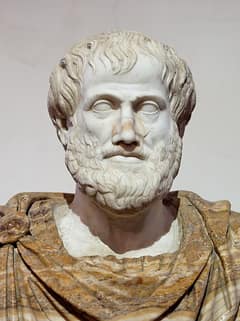
Character virtue is not knowledge: it comes from habituation, as we become just by doing just acts. Practical wisdom is needed to complete it, but knowing the good does not guarantee acting on it. Against Socrates, weakness of will (akrasia) is real; yet Aristotle's analysis concedes that it is not knowledge in the full sense that passion overcomes.
Stated in the textNicomachean Ethics II.1; VII.1–3ethos, ethike arete, phronesis, akrasia, enkrateiaDraft — not yet reviewed
Not addressed. The letters make the virtues instrumental to pleasure and derive them from prudence, but never ask whether knowing the best is enough to do it.
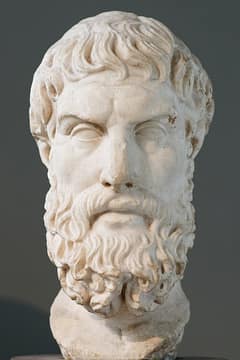
Prudence, sober reasoning about the grounds of every choice, is the greatest good, and all the other virtues spring from it, since one cannot live pleasantly without living prudently, honourably and justly. Epicurus does not discuss acting against one's knowledge, and his frequent call to practise the doctrines day and night may imply that knowing them is not by itself enough.
Scholarly consensusLetter to Menoeceus 132, 135phronesis, nephon logismos, arete, meleteDraft — not yet reviewed
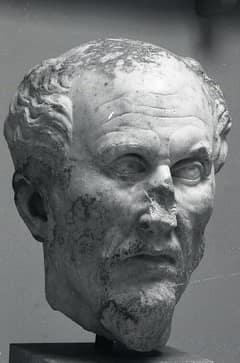
›Plotinusc. 204–270Knowledge plus habituation* (contested reading)
At the civic level virtue is a trained measure of desire guided by reason, so one can fail through the passions; at the higher level wisdom is the contemplation of what Intellect contains.
Another reading. The higher virtues that alone make one godlike are forms of intellectual vision, and vice is the soul's ignorance of itself, so the considered view is Socratic intellectualism.
Augustine knew the good and still could not will it: the will is divided against itself and bound by habit, so knowledge does not make it good, and only grace heals it.
Stated in the textvoluntas, consuetudo, gratia, duae voluntatesDraft — not yet reviewed
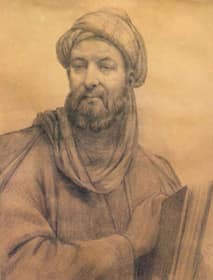
Theoretical virtues are produced by instruction, but moral virtues and practical arts by habituation; the ruler forms citizens by both, persuading some and compelling others.
Scholarly consensustaʿlīm, taʾdīb, al-faḍāʾil al-khuluqiyyaDraft — not yet reviewed
Theoretical knowledge alone does not perfect the soul: it must also acquire, by habit, a disposition of the mean that keeps it from being ruled by bodily inclinations.
Scholarly consensusmalaka, tawassuṭ, akhlāqDraft — not yet reviewed
Character can be changed: good traits are acquired by practice and discipline of the soul until they become second nature. Knowledge produces a state of the heart, and the state produces action; knowledge alone is not enough.
Scholarly consensusRevival, Books 22 and 32; Deliverance from Errorriyāḍa, mujāhada, ʿilm, ḥāl, ʿamalDraft — not yet reviewed
Deliverance recounts that he knew the Sufi way in theory but could not leave his post until God made it easy for him, which has the shape of `grace-needed`; the Revival's account of discipline is the general doctrine coded.
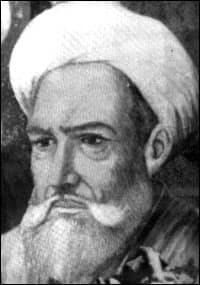
Theoretical virtue comes by instruction, and the virtues of character by habituation from youth; the many are brought to virtue by persuasion and those who resist by compulsion.
Scholarly consensustaʿlīm, taʾdīb, iqnāʿ, ikrāhDraft — not yet reviewed
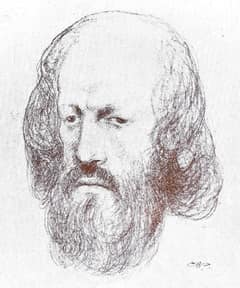
Not addressed. He does not ask whether knowing the good is enough to do it. The nearby thesis runs the other way: discursive knowledge without ascetic practice cannot reach the highest knowledge.
Not coded; for Suhrawardi practice is a condition of knowledge, not knowledge a condition of virtue.
Scholarly consensusDraft — not yet reviewed
He asks readers of the Philosophy of Illumination to prepare by a period of ascetic retreat before studying it.
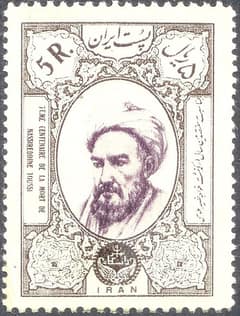
›Nasir al-Din Tusi1201–1274Knowledge plus habituation
Character is a disposition of the soul from which acts come without deliberation. Some of it is natural, but all of it can be changed by habit and training, so knowing the good is not enough; ethics is the art of acquiring good dispositions and curing bad ones.
›Thomas Aquinasc. 1225–1274Knowledge plus habituation* (contested reading)
Virtue needs prudence and also moral virtues formed by habit in the appetite; one can know what is good and fail through passion, as the incontinent person does.
Another reading. Only infused virtues, given by grace, are virtues simply and perfectly, so his considered answer is that knowledge and habit are not enough without grace.
Contested readinghabitus, prudentia, incontinentia, virtutes acquisitaeDraft — not yet reviewed
›MSMulla Sadrac. 1572–1640Knowledge plus habituation
Knowledge is the soul's perfection, but acts repeated become settled traits that enter the soul's very substance; without purification knowledge does not take hold, and the soul's traits shape the body it is given after death.
Scholarly consensusmalaka, ʿilm, ʿamal, tazkiyaDraft — not yet reviewed
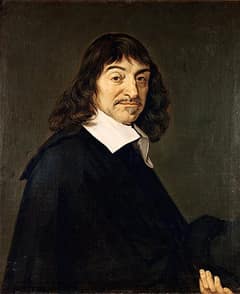
›René Descartes1596–1650Knowledge plus habituation* (contested reading)
Virtue lies in the will's firm resolution, helped by knowledge of the good, and the passions can be retrained by habit so that even weak souls can master them.
Another reading. Judging well is enough for acting well (Discourse III, AT VI 28), and no one can sin while clearly seeing that an act is wrong (to Mesland, 2 May 1644, AT IV 117), so Descartes is an intellectualist about virtue.
Contested readingrésolution, habitude, passionsDraft — not yet reviewed
Knowledge can never move us to act on its own, because reason is the slave of the passions; virtue lies in passions and character that win approval, not in knowing.
Stated in the textreason is the slave of the passions, calm passionsDraft — not yet reviewed
Virtue is the strength of a person's maxims in fulfilling duty, a strength of will against inclination, not a kind of knowledge and not a mere habit. Ordinary moral cognition already knows what duty demands; failure comes from frailty or a corrupted will, not from ignorance.
Scholarly consensusMetaphysics of Morals (1797)Tugend, Stärke, GesinnungDraft — not yet reviewed
›G. W. F. Hegel1770–1831Knowledge plus habituation* (contested reading)
In ethical life virtue is mainly rectitude, the individual's conformity to the duties of their station, which custom makes a second nature. It requires knowing the ethical order as one's own, but also habituation.
Another reading. Hegel does not pose the Socratic question of whether knowing the good is enough; his account of virtue answers a different question, so the stance may overstate him.
Contested readingPhilosophy of Right (1820)Tugend, Rechtschaffenheit, Sitte, zweite NaturDraft — not yet reviewed
Socrates' equation of reason, virtue and happiness was a symptom of decadence: virtue that has to prove itself by reasons is already in decline. Healthy virtue is instinct, one's own invention and need, not knowledge.
Stated in the textBirth of Tragedy (1872); Twilight of the Idols (1889)Instinkt, Décadence, theoretischer MenschDraft — not yet reviewed
Not addressed. No layer asks whether virtue is knowledge or whether one can know the good and fail to do it.
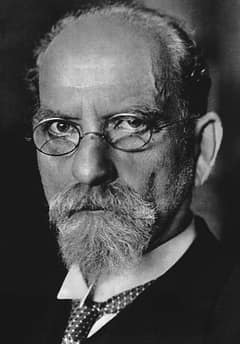
Husserl's practical writings treat valuing and willing as founded on, but distinct from, cognitive acts, and describe a life of rational self-responsibility; they do not take up the Socratic question.
Scholarly consensusIdeas I (1913); Kaizo articles (1923–1924)Draft — not yet reviewed
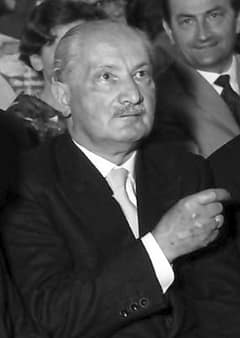
Not addressed. Heidegger does not ask whether virtue is knowledge; his readings of Aristotle's practical wisdom (phronesis) answer a question about Dasein's self-understanding.
In the 1924–25 lectures on Plato's Sophist Heidegger reads phronesis as Dasein's insight into its own situation, close to conscience, but he does not take a position on akrasia or the Socratic thesis.
Scholarly consensusPlato's Sophist (1924–1925; lecture course, edited from notes and transcripts); Letter on Humanism (1946)Draft — not yet reviewed
Hekmat. "What is virtue, and how does it stand to knowledge and rationality?." Draft, awaiting review; last updated 20 October 2026. https://hekmat.local/questions/axi-virtue-knowledge/