Split from axi.politics: 1.1.3 asked for the best political order; none of its six stances is a conception of justice, so this question starts without stances.
Stances
Order of the soul
Justice is first an inner order in which each part or power of the soul does its own work under reason, and just actions are those that make or keep that order.
Justice between persons is a kind of equality: common goods are shared in proportion to worth, and gains and losses from exchanges and wrongs are brought back to equality.
Besides rules that differ by enactment or agreement, some justice holds by nature, binding whether or not anyone enacts or accepts it, and it is the measure of enacted law.
What is just in human dealings must be laid down by a divinely guided lawgiver, because people left to their own judgments or agreements each call just what serves themselves.
Justice is not prior to human agreement: it arises from a compact or convention entered into for mutual advantage, and its rules are just only so far as they serve that advantage.
Justice is right: the order of law in which the freedom of each rational will exists and is secured, grounded in freedom rather than in advantage or actual agreement, and rightly enforced against what violates it.
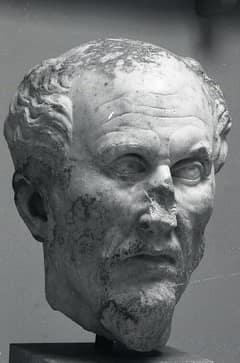
Socrates — Justice is the good of the soul, which injustice ruins, so one must never do injustice or harm anyone, not even in return for a wrong, and must keep just agreements, the agreement with the laws included.
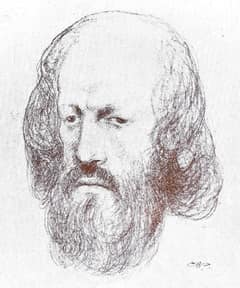
Friedrich Nietzsche — There is no right or wrong in itself; justice begins as exchange and settlement between powers of roughly equal strength, is maintained by the stronger against resentment, and in its highest form is the active, objective eye that gives equality to equals and inequality to unequals.
Martin Heidegger — Dikē, before any moral or legal sense of justice, is the jointure (Fug) of being, the order by which what is present abides in presencing, and adikia is what is out of joint.
Own position. Justice is the good of the soul, which injustice ruins, so one must never do injustice or harm anyone, not even in return for a wrong, and must keep just agreements, the agreement with the laws included.
The Socrates of the early dialogues never reaches a definition of justice, but he holds firm principles about it. The part of us that justice benefits and injustice ruins matters more than the body; doing wrong is the greatest evil and worse than suffering it; and since the good cannot harm, it is never just to harm anyone, so wrong may not be returned for wrong. In the Crito the same principle binds him to keep his agreement with the laws.
Another reading. Xenophon's Socrates identifies the just with the lawful, and counts as law the unwritten laws the gods laid down, which are observed alike in every country (Memorabilia IV.4.12–25); on this layer he holds a justice by nature behind written law.
Another reading. Readers who take Plato's Socrates as one figure across the dialogues, with the early works written to lead into the Republic (Kahn, Plato and the Socratic Dialogue, 1996), credit him with the Republic's account of justice as the order of the soul.
No shared option fits: the principles concern how justice binds the agent, not what grounds it in the soul's structure, in a law of nature or in an agreement. Vlastos (Socrates: Ironist and Moral Philosopher, 1991, ch. 7) reads the ban on retaliation as Socrates' break with the traditional morality of helping friends and harming enemies.
›Platoc. 428–348 BCEOrder of the soul · Justice by nature
Against the view that justice is a compact the weak make because they cannot do wrong with impunity, the Republic finds justice in each part doing its own work: in the city each class keeps to its task, and in the soul reason rules with spirit as its ally over appetite. Justice in the true sense is this inner order, a health of the soul set by nature; just actions are those that produce and preserve it. Late in life Plato states political justice as proportional equality, the judgment of Zeus that gives more to the greater and less to the lesser according to nature.
Across the works. The Laws states political justice as proportional equality, distributing honours by worth and education (757b–d), and tempers it with the equality of the lot to keep peace; the Republic's account in terms of the parts of the soul does not return there as the definition of justice.
Scholarly consensusRepublic II–IV (middle; speaker Socrates, answering Glaucon and Adeimantus); Laws IV, VI and X (late; the Athenian Stranger)dikaiosyne, ta hautou prattein, oikeiopragia, kata physin, isotesDraft — not yet reviewed
`natural-law` records that justice is by nature and measures enacted law (Republic 444d; Laws 714b–715b, 889e–890d), not a doctrine of natural law in the later sense. The Republic grounds justice finally in the Forms and the Good; Glaucon's compact (358e–359b) is a view Socrates is asked to refute, not Plato's.
›Aristotle384–322 BCEProportional and corrective equality · Justice by nature* (contested reading)
"Just" has two senses: the lawful, which is the whole of virtue as exercised towards others, and the equal or fair, which is a particular virtue. Particular justice distributes common goods in proportion to worth (geometrical proportion) and corrects private transactions by restoring arithmetic equality between gain and loss, the judge acting as a mean. Political justice holds between free and equal citizens under law and is partly natural, partly conventional; equity corrects the law where its generality fails.
Another reading. Strauss (Natural Right and History, 1953, ch. IV) stresses that for Aristotle all natural right is changeable, so his natural justice is not a fixed natural law of the Stoic or Thomist kind.
Another reading. Kelsen ("Aristotle's Doctrine of Justice", in What Is Justice?, 1957) argues that the formula of proportion is empty until positive law fixes worth, and that Aristotle's natural justice in effect endorses the existing legal order.
Contested readingNicomachean Ethics Vdikaiosyne, to dikaion, to ison, nomimon, dianemetikon, diorthotikon, physikon dikaion, epieikeiaDraft — not yet reviewed
General justice (the lawful as complete virtue towards others) has no option of its own; it is recorded here. The natural-justice passage (1134b18–1135a5) is short and obscure, which is why the position is contested; Rhetoric I.13 adds a common law by nature.
›Epicurus341–270 BCEConvention for mutual advantage
There is no justice in itself: justice is an agreement, made among those able to make one, neither to harm nor be harmed. What the needs of living together show to be useful is just, so justice is the same for all in general but varies with place and circumstance, and a law that stops being useful stops being just. Injustice is bad only for its consequence, the fear of being found out.
Stated in the textPrincipal Doctrines 31–38 (Diogenes Laertius X.150–153)to tes physeos dikaion, symbolon tou sympherontos, syntheke, me blaptein mede blaptesthaiDraft — not yet reviewed
Epicurus keeps the phrase "natural justice" (PD 31) but means by it the pledge of mutual advantage, not a justice independent of agreement, so `natural-law` does not apply.
Plotinus takes over Plato's definition: civic justice is each part of the soul doing its own work in ruling and being ruled. Above it stands a purified justice, the soul's own activity turned towards Intellect, and in Intellect justice is simply its own work without parts to order. The order of the universe is also just, since providence assigns souls the lives their former deeds deserve.
Scholarly consensusEnneads I.2 (On Virtues); III.2–3 (On Providence)dikaiosyne, oikeiopragia, politikai aretai, katharseis, AdrasteiaDraft — not yet reviewed
The option fits the civic level only; Plotinus' higher justice is a self-relation of the soul to Intellect, not an order among its parts. Cosmic justice belongs with ont.cosmos and providence.
›Augustine of Hippo354–430Rendering each their due · Order of the soul · Justice by nature
Justice is the virtue that gives each their due, and it begins with what is due to God: only a soul that serves God rules the body rightly, and only then does reason rightly rule the vices. Where that order is missing, in a person or a people, there is no true justice, and a kingdom without justice is a great band of robbers. Behind human law stands the eternal law, by which it is just that all things be perfectly ordered, and a law that is not just is not a law.
Scholarly consensusOn Free Choice I (388–395); City of God IV and XIX (413–426)iustitia, sua cuique distribuere, ordo, lex aeterna, lex temporalisDraft — not yet reviewed
The three options name three sides of one view: the classical definition (due-to-each), the right order of soul under God (order-of-soul) and the eternal law (natural-law). What is due is set by the order of love towards God, which none of the options names.
›al-Farabic. 872–950Proportional and corrective equality
Justice lies first in dividing the goods the citizens share, such as security, wealth and honour, among them according to their worth, and then in preserving that division, restoring to each what is taken without right. Justice is also said more generally of any virtue exercised towards another. He reports and rejects the view of the ignorant cities that justice by nature is conquest, or that it is only a pact the weak keep out of fear.
The account follows Nicomachean Ethics V, adapted to the virtuous city, where the ruler's law sets the division; whether al-Farabi also holds a justice by nature is left open here.
›Ibn Sina980–1037Justice laid down by a prophet-lawgiver · Order of the soul
Human beings cannot live alone; their partnership needs exchange, and exchange needs a law (sunna) and justice. These cannot be left to people, each of whom judges just what is to his own advantage, so they must be laid down by a human lawgiver whom God distinguishes, the prophet. In the soul, temperance, courage and practical wisdom are the chief virtues, and their sum is justice.
In logic Ibn Sina counts "justice is good" among widely accepted premises, not first truths of reason, which fits his grounding of justice in law rather than in a justice reason knows by nature.
›al-Ghazali1058–1111Order of the soul · Justice laid down by a prophet-lawgiver
In the soul, justice is the virtue by which anger and appetite are kept under the direction of wisdom and the Law, the balance from which good character flows. What is just or unjust in acts, however, is not known by reason apart from revelation: obligation and prohibition come from the Law. Injustice is disposing of what belongs to another, so nothing God does can be unjust, since everything is His.
Scholarly consensusModeration in Belief (c. 1095); Revival, Book 22 (after 1095)ʿadl, iʿtidāl, ḥusn al-khuluq, sharʿ, ẓulm, taṣarruf fī milk al-ghayrDraft — not yet reviewed
`revealed-law` fits the Ashʿarite thesis that the Law, not reason, makes acts just or obligatory; the Revival's psychology is close to Ibn Sina's and Miskawayh's.
›Ibn Rushd1126–1198Order of the soul · Justice by nature
Following Plato, justice in the city is each class doing its own work and in the soul each part doing what it should, under wisdom. Against the Ashʿarites, who hold that acts are just or unjust only because God commands or forbids them, he argues that justice and injustice are such in themselves, so that God's justice is intelligible to us.
Scholarly consensusʿadl, jawr, faḍīla, sharīʿaDraft — not yet reviewed
The commentary paraphrases Plato, so how far it states his own view is a question of register; the Exposition argues in his own voice. Hourani ("Averroes on Good and Evil", Studia Islamica 16, 1962) reads the Exposition as holding an objective, rational ethics against Ashʿarite voluntarism.
Not addressed. No held work gives an account of what justice is or what grounds it. The Philosophy of Illumination speaks of the sage as God's vicegerent (a question for axi.legitimacy), and the ethical counsel of the Persian treatises concerns detachment and purification.
Suhrawardi writes nothing on justice as such; his practical teaching serves the soul's return to the light.
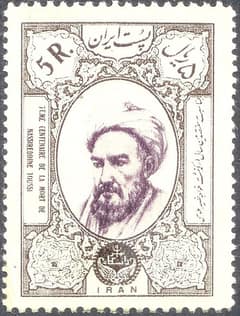
›Nasir al-Din Tusi1201–1274Order of the soul · Proportional and corrective equality · Justice laid down by a prophet-lawgiver
Justice is the most perfect virtue: in the soul it arises when wisdom, courage and temperance are in balance; between people it is equality and proportion in exchange and distribution. Equality is kept by three regulators, the divine law (the greatest nāmūs), the just ruler, and money, and the law that orders human association rests on a lawgiver who is divinely guided.
The account follows Miskawayh, who takes the three regulators and the equality of exchange from Aristotle's Nicomachean Ethics V, and al-Farabi for the city.
›Thomas Aquinasc. 1225–1274Rendering each their due · Proportional and corrective equality · Justice by nature
Justice is the habit by which one gives each their right (ius) with a constant and perpetual will. What is right is so either by nature or by human enactment, and positive law is just only as far as it derives from the natural law, the rational creature's share in the eternal law. Legal justice orders all virtues to the common good; particular justice is distributive, by proportion to standing, or commutative, by arithmetic equality in exchange.
Stated in the textSumma theologiae I-II (1271) and II-II (1271–1272)iustitia, ius, ius naturale, ius positivum, lex naturalis, iustitia legalis, iustitia distributiva, iustitia commutativaDraft — not yet reviewed
Not addressed. The Treatise on the Crafts discusses the place of craftsmen in society and compares social classes with the organs of the body, which suggests that each part should do its own work, but the summaries available do not show it giving an account of justice.
Not coded; the body–society comparison in the Treatise on the Crafts is not an account of justice.
Scholarly consensusDraft — not yet reviewed
If the treatise does call that order justice, `order-of-soul` would be the nearest stance.
›MSMulla Sadrac. 1572–1640Justice laid down by a prophet-lawgiver
Repeating Ibn Sina's argument, Sadra holds that people need one another and so need dealings ruled by justice, which they cannot settle among themselves; a prophet-lawgiver must give the law. Justice matters to him chiefly as part of the account of prophecy and of the soul's discipline on its way to perfection.
Scholarly consensusʿadl, sharīʿa, nabī, madanī bi-l-ṭabʿDraft — not yet reviewed
The coding rests on his reworking of Ibn Sina's argument for prophecy; Sadra adds no theory of justice of his own, and the coding should be checked against the texts before review.
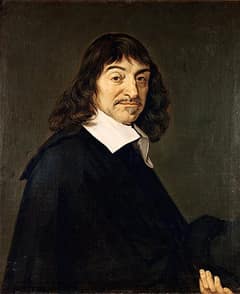
Not addressed. Descartes gives no account of what justice is. His provisional morality keeps to the laws and customs of his country, and commenting on Machiavelli to Elisabeth he remarks only that justice between sovereigns has other limits than between private persons.
Descartes leaves justice to law and to those who govern, and writes no account of it.
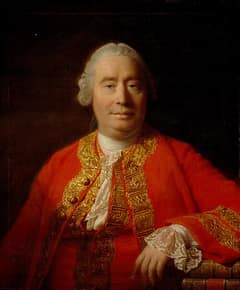
›David Hume1711–1776Convention for mutual advantage
Justice is an artificial virtue. Limited generosity and the scarcity and easy transfer of external goods make society unstable until people come, without any promise, to a convention to respect stable possession, from a shared sense of common interest. Self-interest is the original motive for establishing justice, and sympathy with the public interest is the source of the moral approval of it; public utility is the sole origin of justice. The rules are artificial but not arbitrary, and the common definition of justice as giving each their due wrongly assumes rights and property prior to it.
Stated in the textTreatise of Human Nature 3.2 (1740); Enquiry concerning the Principles of Morals III (1751)artificial virtue, convention, stability of possession, public utility, sympathyDraft — not yet reviewed
The convention is a shared sense of interest, explicitly not a promise (3.2.2.10). Hume calls the rules of justice laws of nature in the sense that they are inseparable from the species (3.2.1.19), which is not `natural-law`.
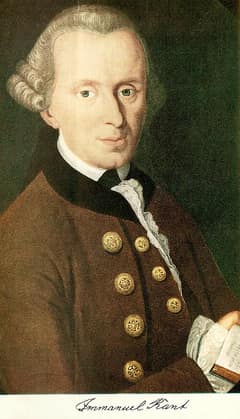
Right is the sum of conditions under which the choice of each can be united with the choice of everyone under a universal law of freedom. An action is right if it can coexist with everyone's freedom under such a law, so coercion that hinders a hindrance to freedom is just. The only innate right is freedom; a rightful condition, in which public justice protects, regulates exchange and distributes by law, is one we are obliged to enter.
Stated in the textDoctrine of Right (Metaphysics of Morals, 1797)Recht, allgemeines Prinzip des Rechts, Zwang, angeborenes Recht, öffentliche Gerechtigkeit, StrafgerechtigkeitDraft — not yet reviewed
Right concerns only external freedom and is kept apart from ethics; Kant's justice in punishment is retributive (the right of retaliation, 6:332), which the option does not record.
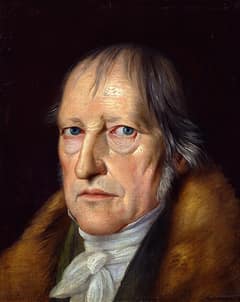
Right is any existence of the free will; the system of right is the realm of actualised freedom. Abstract right (property, contract, wrong), morality and ethical life are its stages, and justice is fully actual only in ethical life and the state, not in a limitation of each person's freedom by everyone else's. Punishment is the criminal's own right: it cancels the wrong and restores right.
Stated in the textPhilosophy of Right (1820)Recht, Dasein des freien Willens, abstraktes Recht, Sittlichkeit, Unrecht, StrafeDraft — not yet reviewed
Hegel rejects Kant's formula of right (§29 Remark) as merely limiting freedom; the option is defined broadly enough to hold both, but they differ on where right is fully realised.
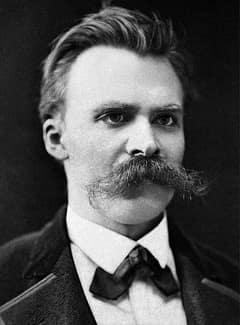
Own position. There is no right or wrong in itself; justice begins as exchange and settlement between powers of roughly equal strength, is maintained by the stronger against resentment, and in its highest form is the active, objective eye that gives equality to equals and inequality to unequals.
Nietzsche asks where justice comes from, not what it is in itself. It begins where neither side can win outright and both come to terms, so exchange is its original character; law is then imposed by the stronger to curb the reactive feelings, and only after law is there right and wrong. Justice at its height is not resentment but the active, noble power to judge fairly even one's injurer. The modern doctrine of equality is the end of justice.
Across the works. Human, All Too Human I.92 (1878) derives justice from exchange between near equals and from prudent self-preservation, close to the Epicurean compact; the Genealogy keeps the origin but adds law imposed by the stronger and justice as an active, noble power that ends in mercy (II.10–11).
Across the works. Twilight (Skirmishes 48) names the true speech of justice as equality to equals and inequality to unequals, the principle of proportion turned against modern equality.
Contested readingHuman, All Too Human I (1878); Genealogy II (1887); Twilight of the Idols (1888)Gerechtigkeit, Billigkeit, Tausch, Gläubiger und Schuldner, Ressentiment, Pathos der DistanzDraft — not yet reviewed
A genealogy of justice rather than a definition: `convention-of-advantage` fits the origin only, and `proportional-equality` only the first clause of its definition, without correction.
Not addressed. Husserl's ethics lectures build a formal axiology and practice, and the Kaizo articles call for a cultural renewal of communities under reason, but no work says what justice is or what grounds it.
Husserl writes about rational willing and the renewal of communities, not about justice.
Own position. Dikē, before any moral or legal sense of justice, is the jointure (Fug) of being, the order by which what is present abides in presencing, and adikia is what is out of joint.
Heidegger does not offer a theory of justice in the moral or juridical sense, which he takes to be derivative. Reading Anaximander and the Antigone chorus, he thinks dikē from being: it is the fitting order (Fug) that gives each being its while of presence, and the overwhelming order to which human violence-doing (technē) is exposed. Justice as a virtue or as a legal order belongs to the metaphysics he means to get behind.
Scholarly consensusIntroduction to Metaphysics (1935, published 1953); "Anaximander's Saying" (1946, in Holzwege 1950)Dikē, Fug, Un-Fug, Adikia, das Seiende, Anwesen, technēDraft — not yet reviewed
The mode could be `rejects`: Heidegger refuses the moral and juridical sense of the question and answers a different one, about being. It is coded `answers` with an own position because he says what dikē is. His lectures on justice (Gerechtigkeit) in Nietzsche (1939–1940) interpret Nietzsche, not his own view.
Hekmat. "What is justice, and on what principles does it rest?." Draft, awaiting review; last updated 20 October 2026. https://hekmat.local/questions/axi-justice/