What is the nature of values, and is their validity independent of human judgment?
ارزشها چه ماهیتی دارند و آیا اعتبار آنها مستقل از داوری انسان است؟
Whether values are found or made — grounded in being, in God, in reason, in sentiment, or in valuation — and whether they hold independently of what anyone judges.
Covers
value grounded in being or the Good · divine command · value from reason · value from sentiment · values as created or revalued · intrinsic and instrumental value
Not here
what makes an action right (axi.moral-basis)
Area
Theory of value · also Metaphysics, Moral philosophy, Aesthetics and philosophy of art
Goodness comes from a first principle, the Good, that lies beyond being and gives other things both their being and their goodness, so nothing is good because it is desired or judged good.
Good is being considered as desirable: each thing is good as far as it exists and is perfect, the first being is the highest good, and evil is a lack, not a nature.
What is good for a thing is fixed by its nature and the ends it tends toward, so goods are real but differ by kind, and the person of practical wisdom, not common opinion, is their measure.
Good and evil, just and unjust, have no standing before God's free will or command: things are good because God wills or commands them, not willed because they are good.
Value lies in, or is fixed by, the feelings of sentient beings, such as pleasure and pain or approval and disapproval, not in features of things that reason could find without them.
The source of value is the rational will, its self-given law or its realised freedom, so what is good holds for every rational being whatever their inclinations, feelings or opinions.
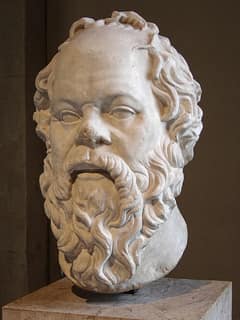
Socrates — The holy and the just are what they are whether or not gods or people approve of them; what they are is what inquiry seeks, and on such matters only the one who knows, not the many, is to be heeded.
Suhrawardi — Perfection and goodness follow light: a light is more perfect the more intense and unveiled it is, lower lights love and are mastered by higher ones, and darkness is only the absence of light.
Edmund Husserl — Values are objective correlates of valuing acts of feeling, given with their own kind of evidence and governed by a priori formal laws of value parallel to the laws of logic.
Rejects the question
Martin Heidegger — To ask whether values are found or made already treats beings as objects for a valuing subject; Heidegger counts both objective and created values as subjectivism and refuses value-thinking.
In order of birth. Open a row for the reading, its confidence and the passages. * contested reading.
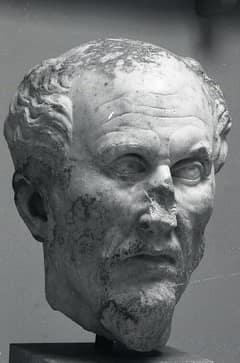
›Socratesc. 470–399 BCEOwn position
Own position. The holy and the just are what they are whether or not gods or people approve of them; what they are is what inquiry seeks, and on such matters only the one who knows, not the many, is to be heeded.
Socrates leads Euthyphro to agree that the holy is loved by the gods because it is holy, not holy because it is loved, so being approved cannot be what makes it holy. In the Crito he says that on the just, the noble and the good one must heed the one who knows and the truth itself, not the many. In the Gorgias everyone wants what is really good, not what merely seems best. What the good is, he does not claim to know.
Another reading. Euthyphro 5d and 6d–e already speak of one form (idea) by which all holy things are holy, so the dialogue can be read as an early version of the theory of Forms (R. E. Allen, Plato's "Euthyphro" and the Earlier Theory of Forms, 1970).
Scholarly consensusPlato, early dialogues (Euthyphro, Crito, Gorgias)to hosion, theophiles, to agathon, hoi polloi, ho epaiōnDraft — not yet reviewed
Coded on what Socrates says of the holy, the just and the good, not on "value". The early dialogues affirm that these do not depend on approval, but give no account of what grounds them; the Good beyond being is Plato's, so no shared option fits.
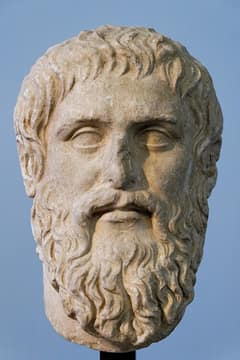
The Form of the Good is the greatest study: by it just things and everything else become useful and beneficial, and, like the sun, it gives the objects of knowledge their being while itself lying beyond being. People may settle for seeming just, but no one is content with a merely apparent good. Against the Protagoreans, the just and the advantageous are not whatever a city takes them to be: god, not man, is the measure. The Philebus catches the good through measure, beauty and truth.
Across the works. The Republic places the Good beyond being; the Philebus approaches it through measure, proportion, beauty and truth in a mixed life, without the image of the sun.
Scholarly consensusMiddle and late dialogues (Republic, Theaetetus, Philebus, Laws)hē tou agathou idea, epekeina tēs ousias, metron, to sumpheron, summetriaDraft — not yet reviewed
Whether "beyond ousia" puts the Good outside being or only above the other Forms in rank and power is disputed; on either reading the Good's goodness does not depend on anyone's judgment. Theaetetus 172a–b states the Protagorean view of the just and holy in order to examine it, not as Plato's own.
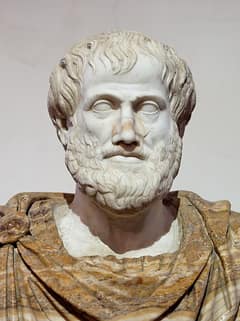
Aristotle denies that there is one separate Form of the Good: "good" is said in as many ways as "is", and differs by category and by kind. The good is what things aim at, and for a living thing it is set by its nature and characteristic activity. Wish is for the good, though each person wishes for what appears good to them; the good person sees truly in each case and is as it were the standard and measure. In the Metaphysics the first mover is desired because it is good, not good because desired.
Stated in the texttagathon, to phainomenon agathon, spoudaios, kanōn kai metron, telos, ergonDraft — not yet reviewed
Coded on the good (tagathon), not "value". Aristotle's measure is the good person's judgment, but that judgment is right because it sees what is good by nature, so the good is not made by it. Metaphysics 1072a29 is not held as text; # check: wording of the desire/good priority there.
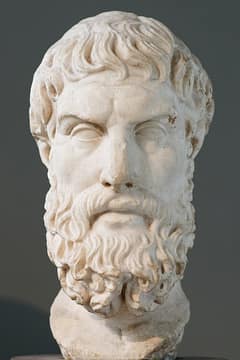
Pleasure is the first good, natural and native to us, and feeling is the rule by which every good is judged; the virtues are chosen for the pleasant life. Justice is nothing in itself but a compact of mutual advantage, the same in general for all but varying by place. Value is not a matter of opinion: desires bred by empty opinion are neither natural nor necessary, and they mislead.
Stated in the texthēdonē, pathos, kanōn, kenodoxia, sumpheronDraft — not yet reviewed
Feeling, not judgment, is the criterion: pleasure is good by nature and not by anyone's opinion, but there is no good apart from what is felt. Principal Doctrines are cited by Diogenes Laertius X section numbers (PD 29 at 149, PD 31–36 at 150–151).
The Good is the first principle, beyond being and intellect, from which all things have their being and toward which they all strive. Each thing's good is its proper activity and its turning toward what is above it. Things are not good because they are desired; they are desired because something of the Good is present in them, while the Good itself lacks nothing. Evil is matter, the absolute lack of measure and form.
Scholarly consensusto agathon, to hen, epekeina ousias, ephesis, sterēsisDraft — not yet reviewed
›Augustine of Hippo354–430Good convertible with being
Whatever is, is good as far as it is, because it is made by God, the highest and unchangeable good, who is good not by sharing in another good; evil is not a nature but a lack of good. Reason ranks things by their place in nature, living above lifeless and understanding above living, while need and pleasure price them otherwise, so that a horse may cost more than a slave; the order of nature, not that pricing, is the true one. The rules of wisdom, such as that the lesser is to be subordinated to the greater, are unchangeable and common to all who see them.
Scholarly consensussummum bonum, privatio boni, ordo naturae, ordo amoris, incommutabilis veritasDraft — not yet reviewed
Coded on the good (bonum). Augustine's own contrast between valuing by nature and pricing by use is the nearest he comes to the modern question, and he sides with the order of nature.
The First is the most perfect existence and is good in itself; each being below it has the perfection and good its rank in the order of existence allows. The human good is happiness, the soul's perfection in existence, which is the good sought for itself; other things are good or bad for a human being as they lead toward it or away from it.
Scholarly consensusal-khayr, al-kamāl, al-saʿāda, al-mawjūd al-awwalDraft — not yet reviewed
Coded on good (khayr) and perfection (kamāl); al-Farabi does not ask whether goodness depends on human judgment as such. # check: where in Virtuous City Ch. 1 the First is called good.
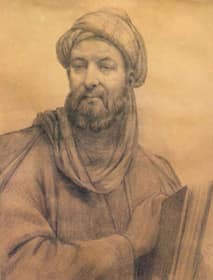
Good is what each thing desires, which is existence and the perfection of existence; evil has no essence and is a lack of existence or of a perfection. The Necessary Existent, whose existence lacks nothing, is pure good. Moral judgments such as "justice is fine" are not first principles of reason but widely accepted, praised opinions held from upbringing and common life; someone raised alone would not find them evident.
Two levels: goodness as existence and perfection holds whatever anyone judges, while the common moral appraisals of praise and blame rest on general acceptance, not demonstration. The stance codes the first; the second is the main reason this coding should be reviewed.
"Good" and "bad" said of acts mean only that they agree or disagree with an agent's purposes, so they vary between people; what is obligatory or forbidden is known only from the revealed Law, not from reason. Since nothing is bad relative to God, he does no wrong whatever he does, and he is under no obligation to do what is best for his creatures.
Scholarly consensusModeration in Belief (Ashʿarite kalām)ḥusn, qubḥ, wājib, sharʿ, gharaḍDraft — not yet reviewed
The Revival describes good character as the soul's health in largely Aristotelian terms (Book 22), which concerns virtue, not what grounds value. His fullest treatment of good and bad is in al-Mustaṣfā, not yet in works.yaml.
Against the Ashʿarites, Averroes holds that just and unjust are not made so by the revealed command alone: some things are just or unjust in themselves, and reason can know it, as the Law presupposes when it calls God just. Things have natures and ends, and God acts with wisdom, so the good of each thing follows its nature, not an unconstrained will.
Scholarly consensusal-ʿadl, al-jawr, ḥikma, ṭabīʿaDraft — not yet reviewed
Coded on just and unjust, good and bad; the anti-voluntarist point is explicit, the positive account less so. Convertible-with-being may also fit his commentaries on the Metaphysics.
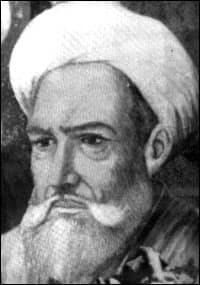
Own position. Perfection and goodness follow light: a light is more perfect the more intense and unveiled it is, lower lights love and are mastered by higher ones, and darkness is only the absence of light.
Suhrawardi grades all reality as light, from the Light of Lights down to the dim lights of souls; what is more intense in light is more perfect, and the lower is drawn to the higher by love while the higher dominates it. Darkness is no positive principle but the lack of light. In his Persian treatise on love, beauty is the perfection that love longs for.
Convertible-with-being does not fit, because Suhrawardi takes existence to be a mental notion, not something real in things; light does the work being does for Avicenna and Aquinas.
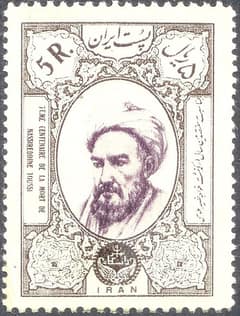
›Nasir al-Din Tusi1201–1274Good convertible with being
Existence is good and evil is a lack of existence or of a perfection; the Necessary Existent is pure good. In the Abstract he adds that good and evil in acts are known by reason and do not depend on God's command, so God does only what is good.
Scholarly consensusThe Commentary on the Pointers; the Abstract of Beliefkhayr, sharr, ʿadam, al-ḥusn wa-l-qubḥ al-ʿaqliyyānDraft — not yet reviewed
›Thomas Aquinasc. 1225–1274Good convertible with being · Natural ends
Good and being are the same in reality and differ only in concept: "good" adds desirability, and a thing is desirable as it is perfect, which it is as it actually exists. Everything is good by its own form and by likeness to God's goodness, its exemplar and end. What is good for each thing follows its nature, and the first precepts of natural law follow natural inclinations. To say that justice depends simply on God's will would be to say that God does not act by wisdom.
Stated in the textbonum, ens, appetibile, perfectio, convertuntur, inclinatio naturalisDraft — not yet reviewed
Not addressed. No surviving work discusses whether values are found or made. Ranking the crafts by their ends assumes an order of ends without saying what grounds it.
Not coded; the surviving works do not take up the nature of value.
›MSMulla Sadrac. 1572–1640Good convertible with being
Existence is pure good, and every good comes back to existence; evil is a lack of existence or of some perfection. Because existence comes in degrees of intensity, goodness, beauty and lovability rise with it, up to the Necessary Existent, which is pure existence and pure good.
God did not will things because he saw that they were good; they are good because he willed them, as all eternal truths depend on his free will as their efficient cause. For human beings, what to pursue is judged by reason, and beauty and pleasantness are relative to our judgment.
Stated in the textindifferentia, veritates aeternae, bonumDraft — not yet reviewed
The Sixth Replies speak of the goodness of what God creates, within the doctrine of created eternal truths; how far this reaches human moral value is not spelled out. # check: AT VII page for "good because he willed" (435–436).
Examine a vicious act as you will and you find only passions, motives and thoughts; the vice appears only when you turn to the feeling of disapproval it raises in you, so it lies in yourself, not in the object. Reason finds things as they are; taste gilds or stains them with colours borrowed from sentiment. These sentiments are not private whims: we correct them from steady and general points of view, and they rest on the common constitution of human nature.
Another reading. Moral qualities are projections of sentiment onto the world, and ordinary moral talk treats them as more objective than they are (Mackie, Hume's Moral Theory, 1980).
Another reading. Hume is a quasi-realist: projected sentiments earn moral talk of truth and objectivity without error (Blackburn, Ruling Passions, 1998).
Stated in the textsentiment, approbation, taste, general point of view, moral senseDraft — not yet reviewed
Hume compares virtue and vice to colours and sounds as understood by modern philosophy, not to fictions: the stance fits, but whether value is then independent of judgment is exactly what the readings dispute.
Only a good will is good without limitation. Ends we set from inclination have only relative worth, a price, while rational nature exists as an end in itself and has dignity, which admits no equivalent. The concept of the good is not settled before the moral law but determined by it, so value has its source in the law that reason gives itself.
Another reading. Realist reading: rational nature has an objective value that grounds the moral law (Wood, Kant's Ethical Thought, 1999).
Another reading. Constructivist reading: value is conferred by rational choice and constituted by the procedure of the categorical imperative (Korsgaard, The Sources of Normativity, 1996).
Scholarly consensusWert, Würde, Preis, Zweck an sich selbst, Autonomie, das GuteDraft — not yet reviewed
The stance holds on both readings; they differ on whether rational nature is found to be valuable or makes things valuable by willing, which is the second half of this question.
The good is freedom realised, the unity of the will's concept with the particular will, and the final end of the world. A conscience that makes its own conviction the measure of good is only formal, and at its extreme becomes evil. The good gains determinate content in the laws and institutions of ethical life, which hold in and for themselves, not because an individual approves of them.
Scholarly consensusdas Gute, Freiheit, Sittlichkeit, an und für sich, GewissenDraft — not yet reviewed
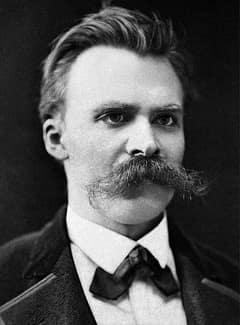
›Friedrich Nietzsche1844–1900Posited by valuation* (contested reading)
Nothing has value in itself, by its nature; whatever has value was given it, and moral judgments interpret phenomena rather than report moral facts. Values arise in the needs of particular types of life, as "good" first named the noble's sense of themselves, so the value of these values must be put in question. Genuine philosophers create values. Yet he ranks values by whether they serve ascending or declining life.
Another reading. Nietzsche is an anti-realist about value: there are no objective values, and his own evaluations are expressions of his taste (Leiter, Nietzsche on Morality, 2002).
Another reading. Will to power gives a standard of value that holds whatever anyone esteems, so Nietzsche is not a thoroughgoing anti-realist (Richardson, Nietzsche's System, 1996; Reginster, The Affirmation of Life, 2006).
Contested readingWerthe, Umwerthung aller Werthe, Werthschätzung, Pathos der Distanz, Wille zur MachtDraft — not yet reviewed
"Created" and "revalued" are his own words; the dispute is whether life or power is itself a measure beyond valuation. Twilight, "The Problem of Socrates" 2, says the value of life cannot be estimated.
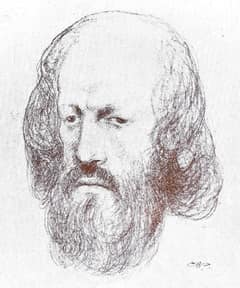
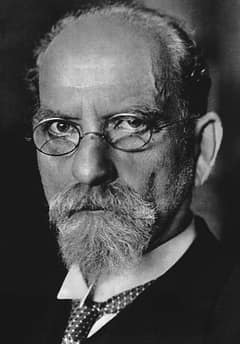
Own position. Values are objective correlates of valuing acts of feeling, given with their own kind of evidence and governed by a priori formal laws of value parallel to the laws of logic.
Feeling and willing are founded acts with objects of their own: in valuing we are directed to something as valuable, and these acts admit rightness and evidence as judgments do. A formal axiology states a priori laws that hold for any values, as formal logic does for any truths. Values are thus neither properties of bare things nor arbitrary attitudes; their validity is that of reason in the sphere of feeling.
Across the works. In the 1920s ethics of renewal and vocation, absolute values are disclosed in personal love and a calling, which the formal ranking of values cannot fully capture.
Scholarly consensusGöttingen ethics lectures (1908–1914); Ideas I (1913)Wert, Werten, Wertnehmen, formale Axiologie, axiologische Vernunft, fundierte AkteDraft — not yet reviewed
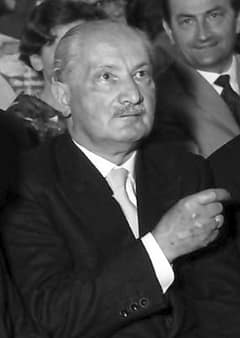
Rejects the question. To ask whether values are found or made already treats beings as objects for a valuing subject; Heidegger counts both objective and created values as subjectivism and refuses value-thinking.
Being and Time treats values as determinations attached to things whose ontological basis is left unclear, resting on mere presence. Later, to call something a value is to make it an object of human estimation and so to rob it of its worth; thinking against values does not preach that nothing matters but brings the truth of being before thought. Nietzsche's revaluation, which makes values conditions posited by will to power, completes this metaphysics rather than overcoming it.
Scholarly consensusBeing and Time (1927); "Nietzsche's Word 'God Is Dead'" (1943); Letter on Humanism (1946)Wert, Wertdenken, Subjektivismus, Wertsetzung, Lichtung des SeinsDraft — not yet reviewed
Hekmat. "What is the nature of values, and is their validity independent of human judgment?." Draft, awaiting review; last updated 20 October 2026. https://hekmat.local/questions/axi-value/