Beauty and artistic value are judged by a distinctive feeling or judgment, disinterested and claiming general agreement, not by knowledge or imitation.
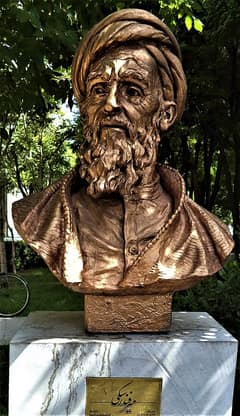
Mir Findiriski — Art in the broad sense (ṣināʿa) is any making by the rational and practical powers, and the arts are valued and ranked by their ends and their use to human life, the noblest being the one whose end is in itself.
In order of birth. Open a row for the reading, its confidence and the passages. * contested reading.
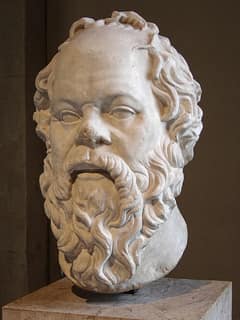
›Socratesc. 470–399 BCENot addressed
Not addressed. No layer gives a view on whether art and beauty lead toward truth or away from it; the Apology says only that poets lack knowledge of what they say.
Examining the poets, Socrates found that they could not explain their own poems and composed by nature and inspiration, like seers who say fine things without knowing them. This is a claim about poets' knowledge, not about the value of poetry or beauty. Xenophon's conversations with a painter and a sculptor (Memorabilia III.10) and on beauty as fitness for use (III.8) fit none of the options.
Another reading. If the Socrates of Republic II–III and X is counted, imitative poetry is suspect and must be controlled; most assign that critique to Plato.
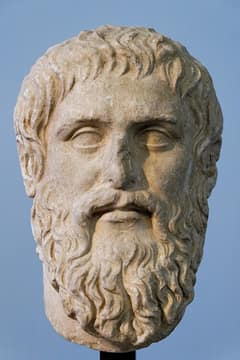
›Platoc. 428–348 BCESuspect imitation · Beauty as ascent
Imitative poetry and painting copy sensible things, which are themselves copies of Forms, so they stand at a third remove from the truth, and poetry feeds the passions it should help to dry up; the ideal city admits only hymns to the gods and praises of good men. Beauty is another matter: love of beautiful bodies, rightly led, rises step by step to the Beautiful itself, the highest object of contemplation.
Scholarly consensusRepublic II–III, X (middle; speaker Socrates); Symposium (middle; Diotima, reported by Socrates); Phaedrus (middle; Socrates)mimesis, mimetes, eidolon, phantasma, mania, to kalonDraft — not yet reviewed
"Art" here is imitative poetry and painting, not the modern fine arts; techne covers any craft. The Phaedrus praises inspired poetic madness (245a) even as the Republic banishes imitative poetry.
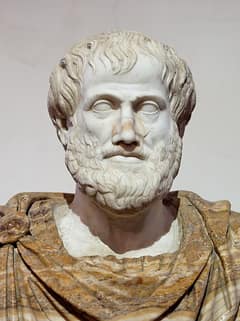
Imitation is natural to humans and a source of learning and pleasure. Tragedy, through pity and fear, brings about the catharsis of such emotions. Poetry is more philosophical than history, because it speaks of universals, of the kind of thing a certain kind of person would say or do.
Stated in the textPoetics 4, 6, 9mimesis, katharsis, eleos, phobos, mythos, katholouDraft — not yet reviewed
What catharsis means (purgation, purification or clarification) is disputed. The Poetics treats poetry as a techne of imitation, not as one of the modern fine arts.
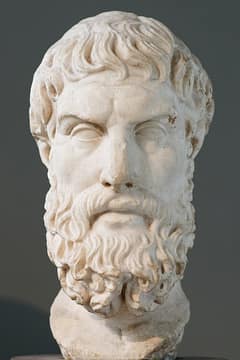
Not addressed. His surviving works do not discuss the value of art or beauty; reported remarks reject conventional literary education but fit none of the options.
Nothing in the letters or the Principal Doctrines concerns art or beauty. Diogenes Laertius quotes him urging a young pupil to steer clear of all conventional education, and reports that the wise man will talk correctly about music and poetry without composing poems.
Scholarly consensusDiogenes Laertius, Lives X.6, X.117–121Draft — not yet reviewed
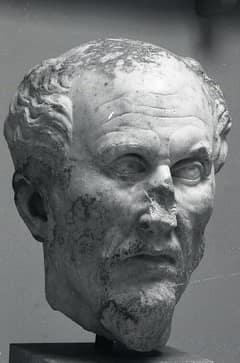
Bodily beauty is the shining of form through matter and calls the soul upward to the beauty of virtue, of Intellect and finally of the Good. The arts do not merely copy visible things but go back to the forming principles from which nature itself derives.
Stated in the textkallos, eidos, anagogeDraft — not yet reviewed
V.8.1 (Pheidias made his Zeus as Zeus would look if he chose to appear) answers Plato's charge that art is a copy of a copy, without any option for that rehabilitation.
›Augustine of Hippo354–430Beauty as ascent · Suspect imitation
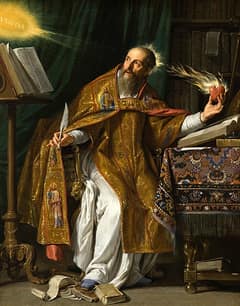
The beauty of creatures points beyond itself to the Beauty that made it, and should lead the soul up to God; but theatre and the beauties of human art can capture the soul with feigned passions and draw it away from its maker.
Scholarly consensuspulchritudo, spectacula, concupiscentia oculorumDraft — not yet reviewed
Poetry is one of the logical arts: its statements imitate things and move the soul by imaginative representation rather than by assent. Imitation also makes truths available to those who cannot grasp them by demonstration, which is what religion does.
Scholarly consensusmuḥākāt, takhyīl, al-aqāwīl al-shiʿriyyaDraft — not yet reviewed
›Ibn Sina980–1037Valuable imitation · Beauty as ascent
Poetry is imitative speech that moves the soul by imaginative assent rather than by demonstration, and is useful for that; beauty in its highest sense is the First's own perfection, which souls love and are drawn toward.
Scholarly consensustakhyīl, muḥākāt, jamāl, ʿishqDraft — not yet reviewed
Beauty is loved for its own sake, and inner beauty, perceived by the heart, is greater than outward beauty; since all beauty is God's, love of the beautiful leads to love of him. Listening to music and poetry is lawful and stirs whatever is in the heart, the love of God included.
Scholarly consensusRevival, Books 18 and 36jamāl, ḥusn, samāʿ, wajdDraft — not yet reviewed
Poetry belongs to logic: it imitates and represents things to the imagination, and its proper aim is to move people toward virtue by praising the good and blaming the bad. Poems that imitate vice are to be excluded from the virtuous city.
Scholarly consensustakhyīl, muḥākāt, madīḥ, hijāʾDraft — not yet reviewed
Reading the Poetics through Arabic poetry, he makes tragedy the art of praise and comedy the art of blame. The Republic commentary keeps Plato's censorship, which touches `suspect-imitation`.
In his Persian treatise on love, Beauty, Love and Sorrow are born of the first intellect's knowledge; love is the longing for beauty and, joined with sorrow, the way the soul is drawn back toward its origin.
Scholarly consensusḥusn, ʿishq, ḥuznDraft — not yet reviewed
Art as such is not discussed. His own symbolic tales teach through images, and the world of suspended images makes visions and imaginal forms real (Philosophy of Illumination, Part II); no option names that.
Poetry is imaginative speech: it works by imitation and moves the soul to accept or reject by the images it raises, not by proof. The logician treats this imaginative power as what makes speech poetic; metre and rhyme are what the prosodist adds.
Scholarly consensusshiʿr, kalām mukhayyal, takhyīl, muḥākātDraft — not yet reviewed
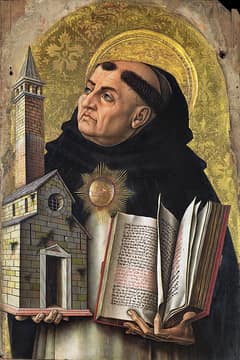
›Thomas Aquinasc. 1225–1274Beauty as ascent* (contested reading)
Beauty is what pleases when seen, through wholeness, proportion and clarity, and all created beauty shares in the divine beauty from which it comes; art is right reason in making things.
Another reading. Aquinas has no theory of art and beauty as such: his remarks on beauty are scattered, "art" means any craft, and beauty is not a distinct transcendental for him (Aertsen, 1991), so no codebook option applies.
Contested readingpulchrum, integritas, proportio, claritas, arsDraft — not yet reviewed
"Art" in the sense of the fine arts is anachronistic for him. The coding follows those who build a Thomist aesthetics: Maritain (Art and Scholasticism) and Eco (The Aesthetics of Thomas Aquinas).
Own position. Art in the broad sense (ṣināʿa) is any making by the rational and practical powers, and the arts are valued and ranked by their ends and their use to human life, the noblest being the one whose end is in itself.
The Treatise on the Crafts takes ṣināʿa to cover everything human reason and skill make, defines and divides it, and ranks the crafts by their aims, benefits and uses, and by how far each serves another or is an end in itself. It discusses the standing of craftsmen in society. Beauty is not its subject.
Scholarly consensusṣināʿa, ḥirfa, ghāya, manfaʿaDraft — not yet reviewed
The question's options concern fine art and beauty; Findiriski's subject is making in general and its value for society, which the question's scope includes. Whether the treatise belongs here at all is a judgment for review.
Every existent is beautiful and loved to the degree of its existence. Love of beautiful human forms, when chaste and found in refined souls, refines the soul and prepares it for intellectual love, and ultimately for the love of God.
Scholarly consensusʿishq, jamāl, ʿishq al-ẓurafāʾDraft — not yet reviewed
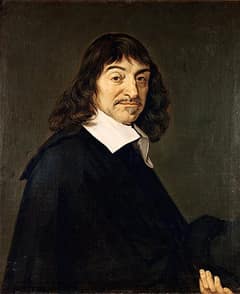
›René Descartes1596–1650Judgment of taste* (contested reading)
Beauty and pleasantness are not in the object alone but a relation between our judgment and the object; since judgments differ, nothing has a fixed measure of beauty. Music pleases and moves the passions through proportions suited to the senses.
Another reading. The view answers what beauty is, not what art and beauty are worth, and it makes beauty vary with each person's judgment, claiming no general agreement; on this reading no option fits and Descartes has no account of their value.
Contested readingCompendium of Music (1618) and letter to Mersenne (1630)le beau, l'agréable, proportioDraft — not yet reviewed
`taste` fits loosely: Descartes makes beauty relative to the judge and grounds musical pleasure in proportion, without the option's claim to general agreement.
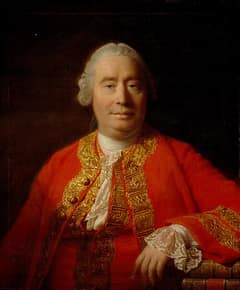
Beauty is not a quality in things but a feeling in the mind; still there is a standard of taste, found in the joint verdict of critics with delicacy, practice, comparison and freedom from prejudice.
Stated in the textstandard of taste, delicacy, true judgesDraft — not yet reviewed
That beauty is no quality in things is first presented as the view of a sceptical philosophy and then qualified by the standard of taste; Treatise 2.1.8 gives his own account of beauty as an order of parts fitted to please.
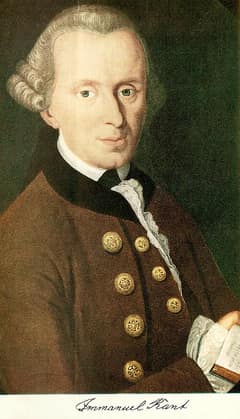
A judgment of beauty is based on a disinterested feeling of pleasure in the free play of imagination and understanding, yet claims everyone's agreement without a concept. Beauty is a symbol of morality, and fine art is the art of genius, which presents aesthetic ideas.
Stated in the textCritique of Judgment (1790)Geschmacksurteil, interesseloses Wohlgefallen, Genie, ästhetische IdeeDraft — not yet reviewed
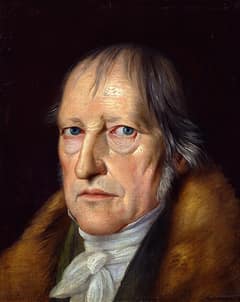
›G. W. F. Hegel1770–1831Art as disclosure of truth
Art is the first form of absolute spirit: it presents the absolute in sensuous shape, and with religion and philosophy it presents the truth. Because its sensuous form cannot fully express spirit, art passes over into religion. The lectures add that art in its highest vocation belongs to the past for modern spirit, which needs the form of thought.
Stated in the textEncyclopaedia (1830) for the textual claim; the end-of-art thesis is from Hotho's compiled edition of the Aesthetics lectures (lecture course; transcripts)absoluter Geist, Ideal, schöne KunstDraft — not yet reviewed
`textual` rests on the Encyclopaedia only. The Aesthetics is Hotho's compilation; Gethmann-Siefert's editions of the individual transcripts (1823 and later) made his interventions an open question. The end-of-art thesis is itself read in rival ways (Danto; Pippin).
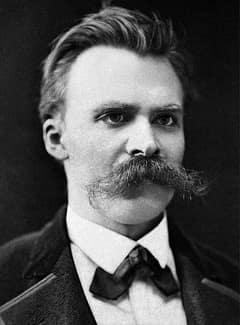
›Friedrich Nietzsche1844–1900Art as disclosure of truth* (contested reading)
In The Birth of Tragedy, Dionysian art, above all music and tragedy, discloses the primordial unity behind individuation, and existence is justified only as an aesthetic phenomenon. Later Nietzsche drops the metaphysics and values art as a stimulant to life and a good will to appearance.
Across the works. From Human, All Too Human onward art no longer reveals the truth of being; it is the great stimulant of life and a cult of the untrue that makes existence bearable (GS 107; TI Skirmishes 24). The 1886 "Attempt at a Self-Criticism" distances the book from its own metaphysics. No option fits this later view, which also rejects Kant's disinterestedness (GM III.6).
Contested readingBirth of Tragedy (1872)das Dionysische, das Apollinische, Stimulans des LebensDraft — not yet reviewed
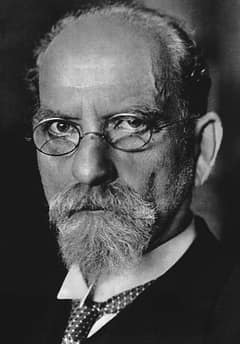
Not addressed. Husserl analyses image-consciousness and the neutrality of aesthetic contemplation, but never says what the value of art or beauty is.
An engraving is seen through a neutralised, imaginative consciousness that does not posit its figures as real, and a 1907 letter to Hofmannsthal compares the phenomenological attitude to the aesthetic one. These analyses answer how artworks are given, not what they are worth.
Scholarly consensusIdeas I (1913); letter to Hofmannsthal (1907); lectures on phantasy and image consciousness (1904/05, Hua XXIII)Draft — not yet reviewed
›Martin Heidegger1889–1976Art as disclosure of truth
The work of art opens up a world and sets it against the earth; in it the truth of beings sets itself to work. Art is a way truth happens, not an object of aesthetic experience or taste.
Stated in the textThe Origin of the Work of Art (1935–1936)Werk, Welt, Erde, ins-Werk-setzen der Wahrheit, ÄsthetikDraft — not yet reviewed
Hekmat. "How are beauty and art understood, and what value do they have?." Draft, awaiting review; last updated 20 October 2026. https://hekmat.local/questions/axi-art/