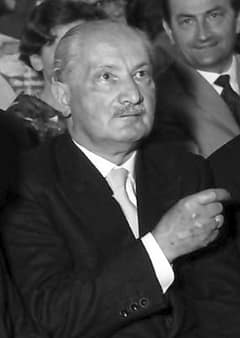
Martin Heidegger — After the war Heidegger treats every modern political form, democracy included, as an expression of technological will to mastery and denies that philosophy can supply a better order. Coded `rejects` rather than `abstains`: his doubt about democracy (1966) rests on the thesis that no political form as such answers the age, not on suspended judgment between forms; either mode is defensible.
In order of birth. Open a row for the reading, its confidence and the passages. * contested reading.
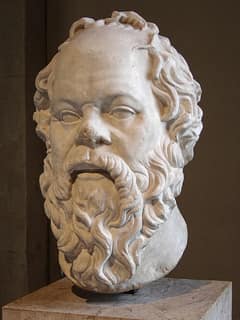
›Socratesc. 470–399 BCERule by the wise* (contested reading)
Socrates holds that in matters of right and wrong one should follow the one who knows, not the many, and Xenophon reports that he called rulers only those who know how to rule. He claims to practise the true political art by aiming at what is best, not what pleases. Yet he kept out of public life, served when his turn came, and refused to break the laws to save himself.
Another reading. The Apology stresses withdrawal: his divine sign kept him out of politics, and a just man who wants to survive must live as a private citizen (31c–32a).
Another reading. Kraut (1984, Socrates and the State) reads the expertise principle as a criticism of democratic practice that stops short of any constitutional proposal, and the Crito as leaving room for justified disobedience.
Contested readingPlato, early dialogues (Crito, Gorgias, Apology); Xenophon, Memorabilia I.2 and III.9politike techne, ho epistamenos, idioteueinDraft — not yet reviewed
Socrates never describes a best constitution; the code records the principle that those who know should rule. `withdrawal` is defined in Epicurean terms that do not fit his respect for the laws (Crito 50a–54d).
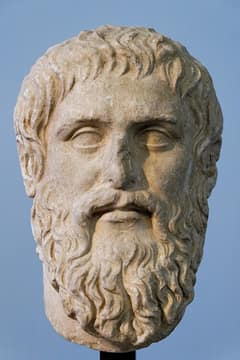
Cities will have no rest from evils until philosophers rule or rulers become philosophers, because only those who know the Good can order the city for the good of all. Justice in the city, as in the soul, is each class doing its own work: rulers ruling, auxiliaries guarding, producers producing.
Across the works. The late Laws designs a second-best city ruled by law rather than by philosophers, whose constitution must mix monarchy and democracy (693d–e, 739a–e).
Scholarly consensusRepublic (middle; speaker Socrates); Laws III–V (late; the Athenian Stranger)philosophos basileus, dikaiosyne, kallipolis, ta hautou pratteinDraft — not yet reviewed
›Aristotle384–322 BCEAristocracy of virtue* (contested reading)
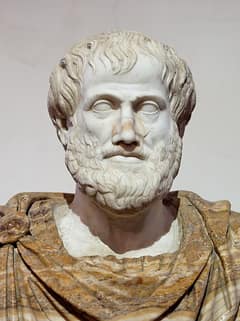
The city exists for the sake of living well, and constitutions are correct when rulers aim at the common good. The best constitution simply (Politics VII–VIII) is an aristocracy of virtue: only those with the leisure and education for virtue are citizens, and they serve as soldiers when young and deliberate and judge when older, since practical wisdom comes with age. For most actual cities the best practicable order is a polity, a mixture of oligarchy and democracy resting on a large middle class and the rule of law.
Another reading. The polity of Politics IV, which mixes oligarchy and democracy on a strong middle class, is Aristotle's considered answer, since the best constitution of VII–VIII depends on conditions one can only pray for.
Contested readingPolitics I, III, IV (best practicable); VII–VIII (best simply)polis, politeia, aristokratia, zoon politikon, to koinon sympheron, mesoi, kat' euchenDraft — not yet reviewed
Coded for the best simply, as the codebook asks, and only the first clause of "rule by the wise" fits: the rulers are the practically wise (phronimoi), not philosophers; citizens rule in turn by age rather than as a fixed class; and justice is proportional equality, not each part doing its own work. The mixed polity is the best practicable constitution.
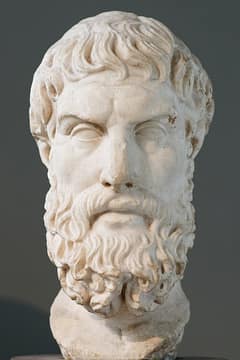
Security from other people is a natural good, but the surest security is a quiet private life withdrawn from the crowd, once a tolerable degree of protection is in place. Fame and power sought for safety often fail to give it. Diogenes Laertius reports that the wise man will not take part in politics.
Stated in the textPrincipal Doctrines 6–7, 14; Diogenes Laertius on the wise man (Lives X.117–121)asphaleia, hesychia, ekchoresis ek ton pollonDraft — not yet reviewed
Political order is valued for the security it gives; justice is a compact for mutual advantage (Principal Doctrines 31–38), and laws are just only while they serve it.
Not addressed. No layer states a view on the best order. The Enneads treat civic life only as the setting of the civic virtues (I.2). Porphyry (Life 12) reports a project, not a view: Plotinus asked Gallienus to refound a ruined Campanian city as Platonopolis, whose people would live under Plato's Laws; the emperor was willing, but courtiers blocked it out of jealousy or spite. The report says nothing on why that order, itself second-best in the Laws, would be best, so it is noted here, not coded.
Plotinus wrote nothing on the best political order; civic life matters to him only as the setting of the lower, civic virtues.
Another reading. O'Meara, Platonopolis (2003), reconstructs a Neoplatonic political philosophy from the civic virtues (I.2) and the Platonopolis project: political life is a first stage in assimilation to god, so "no political theory" understates what Plotinus implies.
Two loves make two cities, love of self to the contempt of God and love of God to the contempt of self; the earthly order secures a peace the heavenly city uses on its pilgrimage, but true justice exists in no earthly state.
Stated in the textcivitas Dei, civitas terrena, pax, duo amoresDraft — not yet reviewed
The virtuous city is ruled by a first ruler who has perfected his intellect to the point of conjunction with the Active Intellect and receives revelation through his imagination, so that he is philosopher, lawgiver and prophet at once; its parts are ordered under him as the body's organs under the heart.
The best practicable order is rule by a successor who keeps the first ruler's law, or by a group who together have his qualities. The lawgiver is a prophet as well as a philosopher, which reworks Plato's philosopher-king.
The best city is founded by a prophet who gives it law, and ruled after him by a successor distinguished by practical wisdom and knowledge of the law; justice is each class doing its work.
Scholarly consensusnabī, sunna, khalīfa, sharīʿaDraft — not yet reviewed
Worldly order matters as a means: religion needs security of life and livelihood, which needs an obeyed ruler. The legitimate order is the caliphate (imāma) under the revealed Law, backed by the sultan's power.
Another reading. He answers the question within the revealed Law: the best order is the caliphate sustained by the sultan, which no option names, and his accommodation of sultanic power is pragmatic rather than a view of politics as secondary (Lambton, State and Government in Medieval Islam, 1981; Hillenbrand, "Islamic Orthodoxy or Realpolitik?", 1988).
Contested readingModeration in Belief, Treatise IV; Revival, Book 1imāma, sulṭān, sharīʿa, niẓām al-dīn, niẓām al-dunyāDraft — not yet reviewed
Following Plato, the best city is ruled by the philosopher, who is also king, lawgiver and imam; each class does its own work, and women can share the guardians' tasks, ruling included. The cities of his own time are degenerate regimes.
The commentary paraphrases Plato's Republic, so how far it states his own view is a question of register; he applies it to Andalusian regimes in his own voice.
›Suhrawardi1154–1191Rule by the wise* (contested reading)
The world is never without a sage versed in both experience and discursive philosophy, and such a sage is God's true vicegerent. When he holds power the age is full of light; when he is hidden, darkness prevails.
Another reading. Corbin (En Islam iranien II, 1971) reads the sage as the hidden spiritual pole of the world, whose rule need not be visible or political; on that reading the passage names no political order.
Contested readingkhalīfat Allāh, al-ḥakīm al-mutaʾallih, riʾāsaDraft — not yet reviewed
The coding follows Ziai ("The Source and Nature of Authority: A Study of al-Suhrawardi's Illuminationist Political Doctrine", in Butterworth, ed., The Political Aspects of Islamic Philosophy, 1992), who reads the passage as a political doctrine. The sage-ruler is defined by mystical experience joined to philosophy, not by philosophy alone.
›Nasir al-Din Tusi1201–1274Rule by the wise* (contested reading)
People are political by nature and need a regulation of their association. The best regulation is by a law from a divinely guided lawgiver and by a ruler who is king in truth because of his wisdom; Discourse III describes the virtuous city and its ruler in al-Farabi's terms.
Another reading. In the Abstract of Belief the imam's authority rests on God's designation and on his infallibility, which divine grace requires, not on wisdom; no shared stance captures that ground.
Contested readingThe Nasirean Ethics; the Abstract of Beliefsiyāsat, malik ʿalā l-ḥaqīqa, ṣāḥib-i nāmūs, madīna-yi fāḍilaDraft — not yet reviewed
The Ethics was first written for the Isma'ili governor of Quhistan, and its preface was rewritten after the Mongol conquest; the ruler of Discourse III fits either patron.
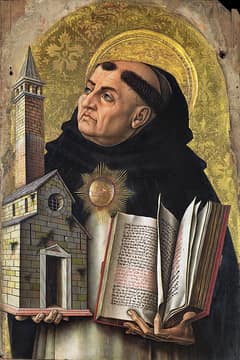
The best ordering of a city joins kingship, aristocracy and democracy: one rules by virtue, a few govern under him, and all can choose and be chosen, as in the law Moses gave.
Another reading. On Kingship I argues that rule by one is best simply, with tyranny guarded against; taken as his considered view, the mixed regime of the Summa is a safeguard on kingship, not the ideal.
Contested readingregimen mixtum, bonum commune, lexDraft — not yet reviewed
The codebook has no monarchy option. The mixed-constitution reading is Blythe's (Ideal Government and the Mixed Constitution in the Middle Ages, 1992). On Kingship was completed by Ptolemy of Lucca; Aquinas' part ends early in Book II (numbering varies), so Book I, cited here, is his.
Human beings need a law and a lawgiver; the prophet gives the law, and the head of the virtuous city must unite knowledge, intellect and the qualities al-Farabi lists for the first ruler.
Scholarly consensusnabī, sharīʿa, al-madīna al-fāḍila, imāmDraft — not yet reviewed
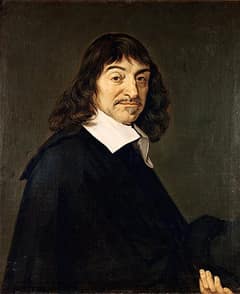
Not addressed. Descartes offers no political theory and says that reforming states is not the business of private persons but of those God has set over peoples. His comments on Machiavelli's Prince in letters to Elisabeth (September 1646) concern a prince's conduct, not the best order.
Descartes leaves the order of the state to sovereigns and writes nothing on what the best order is.
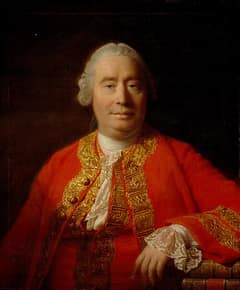
Asked to design the best commonwealth, Hume proposes a large republic of county representatives, senators and magistrates balancing one another under law; but all government rests on opinion, and established forms should not be overturned for an ideal.
Another reading. The essay itself warns against trying experiments on established governments and offers its plan for speculation; read with "Of the First Principles of Government" (all government rests on opinion), Hume names no best order simply.
Contested readingopinion, convention, perfect commonwealth, balanceDraft — not yet reviewed
`mixed-constitution` fits only loosely: the perfect commonwealth is a republic with no hereditary single ruler, balancing representatives, senate and magistrates.
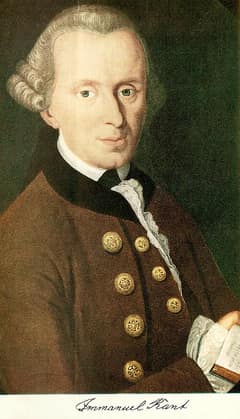
The legitimate constitution is a republic: laws that free and equal citizens could give themselves, separation of powers and representation. Its authority rests on right, the condition under which each person's freedom can coexist with everyone's, and it points to a federation of free states.
Stated in the textToward Perpetual Peace (1795); Doctrine of Right (1797)Republik, Recht, ursprünglicher VertragDraft — not yet reviewed
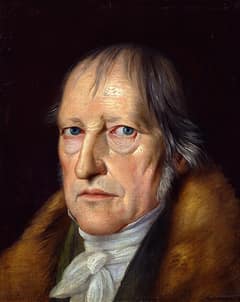
The state is the actuality of the ethical Idea, the rational in and for itself, in which individual freedom and the universal are reconciled. Its rational form is a constitutional monarchy with a division of powers.
Stated in the textPhilosophy of Right (1820)Staat, Wirklichkeit der sittlichen Idee, konstitutionelle MonarchieDraft — not yet reviewed
The reception is divided: the Prussian-apologist reading (Haym, 1857; Popper, 1945) against liberal readings (Avineri, 1972; Wood). Ilting, editing the lecture transcripts, argued that the 1820 text was trimmed in the climate of the Carlsbad Decrees (1819).
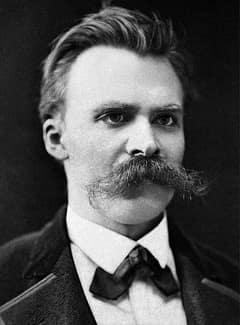
›Friedrich Nietzsche1844–1900Rule by the wise* (contested reading)
Every enhancement of the human type has been the work of an aristocratic society that believes in order of rank; genuine philosophers are commanders and legislators of values. Nietzsche praises the caste order of the Law of Manu, in which the most spiritual are highest, and Zarathustra calls the modern state the coldest of monsters.
Another reading. Kaufmann's apolitical reading: Nietzsche's concern is the solitary individual's self-cultivation against the state and the herd, not a political order.
Contested readingZarathustra I (1883); Beyond Good and Evil (1886); The Antichrist (1888)Rangordnung, Pathos der Distanz, große Politik, der neue GötzeDraft — not yet reviewed
The primary coding follows the aristocratic-politics camp against Kaufmann (Detwiler, Nietzsche and the Politics of Aristocratic Radicalism, 1990). Codebook gap: order of rank and "aristocratic radicalism" (Brandes' phrase, which Nietzsche accepted in a letter to Brandes of 2 December 1887) have no option of their own. `philosopher-rule` fits only the spiritual hierarchy of BGE 211 and Antichrist 57, not Plato's rule of knowledge of the Good.
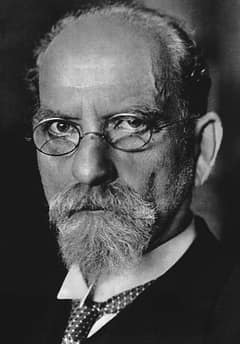
Not addressed. Husserl describes communities of persons and calls for a cultural renewal led by philosophy, but never says what the best political order is.
Higher-order communities and cultures are constituted intersubjectively, and the Crisis casts philosophers as working on behalf of humanity's self-understanding. He proposes no form of government.
›Martin Heidegger1889–1976Rejects the question* (contested reading)
Rejects the question. After the war Heidegger treats every modern political form, democracy included, as an expression of technological will to mastery and denies that philosophy can supply a better order. Coded `rejects` rather than `abstains`: his doubt about democracy (1966) rests on the thesis that no political form as such answers the age, not on suspended judgment between forms; either mode is defensible.
Nationalism and internationalism alike are forms of metaphysical subjectivism, and the essence of technology, not any regime, rules the present age. Heidegger names no best order, and in the 1966 Spiegel interview (published 1976) said he was not convinced that democracy is the system suited to the technological age.
Across the works. Heidegger was elected rector of Freiburg University on 21 April 1933, joined the NSDAP on 1 May 1933, gave the Rectoral Address on 27 May 1933 (GA 16:107–117), and resigned the rectorate in April 1934; he remained a party member until 1945. His appeal to students of 3 November 1933 (GA 16) presents the Führer as the German reality and its law. No option describes this. A dedicated, sourced treatment should include the 1935 lecture course Introduction to Metaphysics (GA 40) and the Black Notebooks (GA 94–96, published 2014).
Another reading. Pöggeler ("Den Führer führen?", 1985) reads the Rectoral Address, which ends by quoting Plato's Republic, as an aspiration for philosophy to lead the leaders.
Contested readingLetter on Humanism (1946); "The Question Concerning Technology" (1953); Spiegel interview (1966, published 1976)Gestell, Subjektivismus, polisDraft — not yet reviewed
Hekmat. "How are political power and the legitimacy of government justified?." Draft, awaiting review; last updated 20 October 2026. https://hekmat.local/questions/axi-legitimacy/