Compare
Epistemology
Sources of knowledgeNot addressedReason aloneExperience, completed by intellectExperienceReason alone · Illumination from a higher intellectIllumination from a higher intellectExperience, completed by intellect · Illumination from a higher intellectIllumination from a higher intellectIllumination from a higher intellectExperience, completed by intellectIllumination from a higher intellectIllumination from a higher intellect · Experience, completed by intellectExperience, completed by intellectNot addressedIllumination from a higher intellectReason aloneExperienceExperience structured by the mindRejects the questionPerspectivalIntuition of what is givenPre-theoretical understandingNot addressedReason aloneExperience, completed by intellectExperienceReason alone · Illumination from a higher intellectIllumination from a higher intellectExperience, completed by intellect · Illumination from a higher intellectIllumination from a higher intellectIllumination from a higher intellectExperience, completed by intellectIllumination from a higher intellectIllumination from a higher intellect · Experience, completed by intellectExperience, completed by intellectNot addressedIllumination from a higher intellectReason aloneExperienceExperience structured by the mindRejects the questionPerspectivalIntuition of what is givenPre-theoretical understanding
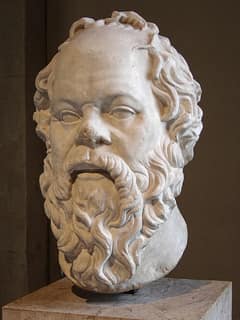
Socrates. No surviving layer gives Socrates a theory of where knowledge comes from; he disclaims wisdom rather than explaining its origin. The Socrates of the early dialogues examines whether others know, and finds that neither they nor he know what virtue or piety is, but he never says what the ultimate source of knowledge would be. Aristotle reports that Socrates confined his inquiries to ethics and the search for definitions. The theory of recollection, which would answer the question, appears first in the Meno and is usually credited to Plato.
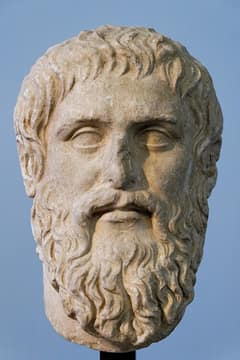
Plato. The senses report things that change and that both are and are not what they are called, so they cannot supply stable knowledge. Knowledge is the soul's grasp of the Forms, which it recovers by recollection when perception reminds it; perception occasions the recovery but is not its source. A true belief becomes knowledge only when reason ties it down by working out the explanation (aitias logismos).
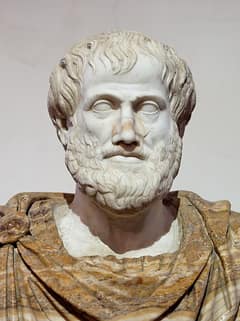
Aristotle. All knowledge starts from perception. Repeated perceptions leave memories, many memories of the same thing make up experience, and from experience the universal comes to rest in the soul as the starting point of art and science. Intellect (nous) then grasps the first principles that induction has made familiar, so the stability of knowledge comes from universals that are present in particulars and are drawn out of them.
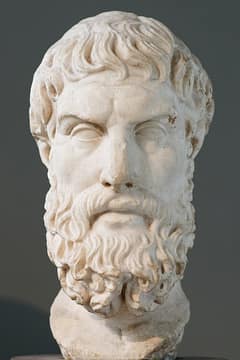
Epicurus. Sensations and feelings are the standards to which every opinion must be referred, and reason reaches what cannot be seen, such as atoms and void, only by inference from what the senses make evident. To reject sensation is to lose any standard at all, even for judging which beliefs are false.
Plotinus. Knowledge is stable because its objects are the Forms, which are the very content of Intellect; a part of our soul never descends and always thinks there, and we know by turning inward to it. Discursive reason judges by imprints it receives from Intellect above, while sense perception is only a messenger reporting from below.
Augustine of Hippo. Unchanging truths cannot come from the changing senses or from a human teacher, whose words only prompt us to look; we see them in an inner light, Christ the Truth dwelling in the mind, as the eye sees by the sun.
al-Farabi. The material intellect begins as a disposition to receive the forms of things, which reach it from sensation through imagination. It becomes actual only when the Active Intellect acts on it, as light makes colours actually visible and the eye actually seeing; the first intelligibles, common to all, arise in it this way.
Ibn Sina. Perception, imagination and reflection prepare the soul, but the universal form is received from the Active Intellect, which emanates intelligibles onto a soul made ready for them, as the sun's light lets the eye see.
al-Ghazali. Sense and reason give knowledge in their domains, but the highest knowledge, of God and the soul's states, comes as light that God casts into the heart once it is cleansed. It reaches the Sufis by tasting (dhawq) and the prophets by revelation, beyond what the intellect reaches by learning.
Ibn Rushd. Knowledge begins with sensation and imagination. The agent intellect, a separate substance, acts on the forms held in imagination as light acts on colours, making them actually intelligible, and the material intellect receives them.
Suhrawardi. The soul knows by presence. It knows itself because it is a light manifest to itself, and it knows other things when they are present to it with nothing veiling them, or when the higher lights shine on it and it witnesses them. The highest knowledge comes from this illumination and witnessing, prepared by ascetic practice, not from definitions or abstracted forms.
Nasir al-Din Tusi. Tusi follows Ibn Sina: the senses and imagination prepare the soul, the intellect abstracts and composes, and the intelligible forms come to a prepared soul from the Active Intellect. His Commentary keeps both halves of the account, the soul's work on what the senses give and the reception from above.
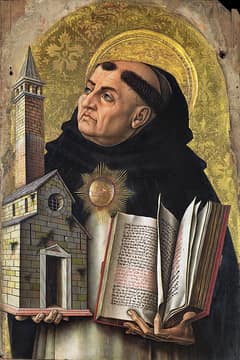
Thomas Aquinas. All our knowledge begins in the senses, and the agent intellect abstracts universal natures from the images that perception and imagination supply; in this life we understand only by turning to those images.
Mir Findiriski. No surviving work gives an account of how knowledge is gained. The ode speaks of a ladder of knowledge by which the soul climbs to the origin of forms and says outward understanding cannot reach it, which bears on the question but does not say what the sources of knowledge are. Not coded; the ode's ladder of knowledge is an image, not an account of knowing.
Mulla Sadra. Knowing is a mode of existence. Sense and imagination are the soul's own productions, not imprints, and the soul rises through them by substantial motion until it can unite with the active intellect and witness the intelligible forms. Intellectual knowledge comes from that union with a higher intellect, which experience only prepares.
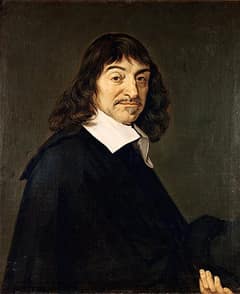
René Descartes. Even bodies are known not by the senses or imagination but by the mind's inspection alone, as the wax shows; the senses give confused information useful for life, and knowledge rests on clear and distinct perceptions of the intellect.
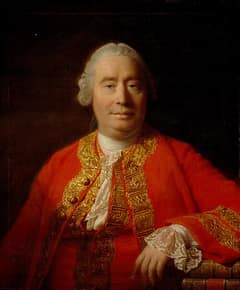
David Hume. Every idea is copied from an earlier impression of sense or reflection, so the mind's materials all come from experience; reason only compares ideas or infers from what experience has shown.
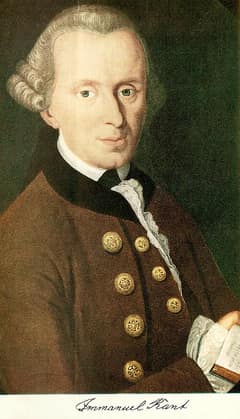
Immanuel Kant. All knowledge begins with experience, but not all of it arises from experience: the senses supply the matter, while space, time and the categories are forms the knowing subject brings to it. Intuitions without concepts are blind and concepts without intuitions are empty, so knowledge needs both.
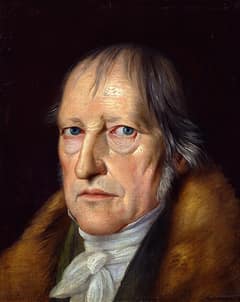
G. W. F. Hegel. The question assumes that knowledge has a source or instrument that could be examined before knowing; Hegel holds that knowing can only prove itself in its own development, so truth is a result, not an origin. To examine the faculty of knowledge before using it treats cognition as an instrument or medium that distorts what it grasps, and is like wanting to swim before going into the water. Consciousness tests itself as it goes, and knowledge is the outcome of that self-correcting movement, which begins with sensuous immediacy but is not founded on it.
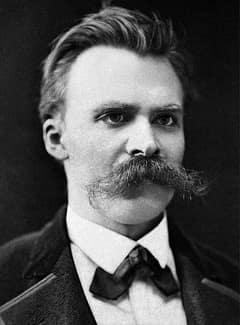
Friedrich Nietzsche. There is only a perspectival seeing and knowing: every claim to knowledge is an interpretation shaped by the drives, needs and history of the knower. The more perspectives we bring to bear on a thing, the more complete our "objectivity" becomes, but there is no view from nowhere.
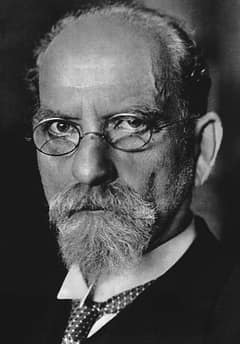
Edmund Husserl. Every originary giving intuition, sensory or eidetic, is a legitimate source of knowledge: whatever presents itself in intuition in person is to be accepted as it gives itself, within the limits in which it gives itself. Even categorial forms and essences can be seen, not only inferred.
Martin Heidegger. Knowing is a founded mode of being-in-the-world: before any theory, Dasein already understands itself, its world and the being of what it deals with, and explicit interpretation and assertion develop that prior understanding. Theoretical observation arises when practical dealings break down or are held back.
Epistemic justificationAn account of whyAn account of whyDemonstration from first principlesEvidence of what is given · Borne out by experienceKnowledge by presence or identityA light from a higher source · Trustworthy testimony or revelationDemonstration from first principlesDemonstration from first principlesDemonstration from first principles · A light from a higher sourceDemonstration from first principlesKnowledge by presence or identityDemonstration from first principlesDemonstration from first principles · Trustworthy testimony or revelationNot addressedKnowledge by presence or identity · Demonstration from first principlesEvidence of what is givenNature, custom or life, not reasons · Borne out by experienceOwn positionOwn positionNature, custom or life, not reasonsEvidence of what is givenRejects the questionAn account of whyAn account of whyDemonstration from first principlesEvidence of what is given · Borne out by experienceKnowledge by presence or identityA light from a higher source · Trustworthy testimony or revelationDemonstration from first principlesDemonstration from first principlesDemonstration from first principles · A light from a higher sourceDemonstration from first principlesKnowledge by presence or identityDemonstration from first principlesDemonstration from first principles · Trustworthy testimony or revelationNot addressedKnowledge by presence or identity · Demonstration from first principlesEvidence of what is givenNature, custom or life, not reasons · Borne out by experienceOwn positionOwn positionNature, custom or life, not reasonsEvidence of what is givenRejects the question
Socrates. Socrates disclaims knowledge of the most important things, yet he holds some theses firmly, and what entitles him to them is that they have survived examination: he follows only the argument that seems best when he reflects, and what has been shown stays fastened by reasons "of steel and adamant" until someone undoes them. An expertise must be able to give an account of the nature and cause of what it deals with; a knack that cannot is no art.
Plato. True opinion can guide as well as knowledge, but it does not stay; it becomes knowledge, and stable, when it is tied down by reasoning out its cause. One who knows can give an account of what he knows, and in the Republic the dialectician gives an account of each thing's essence and does away with hypotheses until he reaches an unhypothetical first principle, the Good, where the whole chain is confirmed. The Theaetetus tests "true opinion with an account" in three senses and rejects each, ending without a definition.
Aristotle. To know something scientifically is to know its cause, that it is the cause, and that the thing cannot be otherwise; such knowledge is reached by demonstration from premises that are true, primary, immediate, better known than and prior to the conclusion, and explanatory of it. Not everything can be demonstrated, or the regress would be infinite, and demonstration in a circle proves nothing; the first principles are grasped by intellect (nous), made familiar by induction from perception. In ethics, where demonstration fails, a view is established when the puzzles are solved and the most authoritative reputable opinions are left standing.
Epicurus. Every opinion must be referred to standards that need no proof, or proofs would run on untested without end: the clear meaning of words, sensations and feelings, which are always true as reports. Error enters only when opinion adds something, and an opinion is true if what is evident confirms it or does not contradict it, false if it is not confirmed or is contradicted. To reject all sensations leaves no standard even for judging what is false.
Plotinus. If Intellect knew its objects through impressions received from outside, it could never be sure it had them and would have only images; so true Intellect must be its objects, and its knowledge is certain because knower and known are one. Truth there agrees not with something else but with itself. Discursive reasoning and sense depend on this, and the One beyond Intellect is reached by a presence higher than knowledge.
Augustine of Hippo. Against the Academics, some things are known beyond doubt: that I exist, live and understand, and truths of number and logic. Words and teachers only prompt; we judge what is true by consulting the truth that presides within the mind, an inner light from God. Much else we rightly hold on the testimony of others, and he refuses to deny that this is knowledge; believing on authority comes before understanding and leads to it.
al-Farabi. Assent (taṣdīq) comes in grades, and only certainty is knowledge in the full sense: believing that something is so, that it cannot be otherwise, and that this belief cannot be otherwise. Necessary certainty comes from demonstration whose premises go back to first intelligibles that the mind has without learning. Dialectic, rhetoric and poetics produce lesser assent, suited to those who cannot follow demonstration.
Ibn Sina. Certain knowledge comes by demonstration, and demonstration rests on premises of determinate kinds: primary propositions the intellect affirms by itself, observations, experiential propositions, and some others, each with its own warrant. Experience (tajriba) yields universal premises only when it is joined with a hidden syllogism showing that the regularity is not by chance. The middle terms of demonstration can be found by intuition (ḥads), a contact with the Active Intellect.
al-Ghazali. Certain knowledge is that in which the known is disclosed so that no doubt remains with it, not even the possibility of error, and no miracle against it could shake it. Testing his beliefs by this standard he lost trust in the senses and then in the necessary truths of reason, and regained it not by an ordered proof but by a light God cast into his breast. He keeps the philosophers' logic and judges their metaphysics by its own standard of demonstration, which it fails; above reason, tasting (dhawq) gives the Sufis what learning cannot.
Ibn Rushd. The Law commands reflection on beings, and the most perfect reflection is by demonstration, which gives certain knowledge from true premises; demonstrative truth cannot contradict scripture rightly read. People differ by nature in how they come to assent: some by demonstration, some by dialectical and some by rhetorical arguments, and scripture speaks to all three. Only demonstrative assent is knowledge in the strict sense, and only the demonstrative class may interpret.
Suhrawardi. Definitions cannot give the essence of a thing, since they define by what is no better known, so knowledge cannot rest on definitions as the Peripatetics hold. The self knows itself by being a light manifest to itself, without any representing form, and things are known when they are present to it with no veil, or when the higher lights are witnessed. Suhrawardi says he first had his doctrine by tasting and only afterwards sought proofs for it, so that proofs, though required, are secondary to witnessing.
Nasir al-Din Tusi. Knowledge in the full sense is certainty reached by demonstration from primary, necessary premises. The Foundation of Inference sorts premises by their warrant, primary, observed, experiential, widely accepted and the rest, and so by which art (demonstration, dialectic, rhetoric, poetics) can use them.
Thomas Aquinas. The intellect assents in different ways. It is moved by the object itself either at once, in understanding first principles, or through them, in science, which is demonstrated knowledge of conclusions; when the object does not move it enough, it gives opinion, or, moved by the will, the firm assent of faith. Faith is certain because it rests on God's authority, not on seeing, and sacred doctrine is a science whose principles are known by a higher science, God's own. Argument from human authority is the weakest, from revealed authority the strongest.
Mir Findiriski. No surviving work discusses what justifies a belief. Not coded; the surviving works do not take up justification.
Mulla Sadra. Knowing is a mode of existence: the soul knows by becoming one with the intelligible form, and its knowledge of itself and of what it produces is by presence, not by representation. Demonstration still has full authority in its domain, and Sadra holds that demonstration, unveiling (kashf) and the Quran cannot disagree, so a claim is secure when demonstrated and most secure when also witnessed.
René Descartes. Whatever I perceive very clearly and distinctly is true, and I err only when the will affirms beyond what the intellect perceives in this way. A clear and distinct perception compels assent while I attend to it, but a conclusion I merely remember having demonstrated can be doubted until I know that a God who is no deceiver exists; so the certainty and truth of all knowledge depends on knowing God, and an atheist geometer has no true science. Firm conviction that nothing could shake is all we can ask for, even if it might seem false to an angel.
David Hume. Relations of ideas are known by intuition or demonstration. All reasoning about matters of fact beyond memory and the senses rests on cause and effect, and that inference is not founded on any argument but on custom, the great guide of life; nature has determined us to judge as it has to breathe, and no system can defend the understanding or the senses. Within that given practice there is still a standard: the wise man proportions his belief to the evidence, from proof down to probability, weighing opposite experiments.
Immanuel Kant. Kant distinguishes opining, believing and knowing as grades of holding-to-be-true: opinion is insufficient both subjectively and objectively, belief is subjectively sufficient only, knowledge both. A conviction differs from a mere persuasion by resting on grounds valid for everyone, and its outward touchstone is that it can be communicated and found valid by every human reason. For the a priori concepts and principles themselves the question is one of right (quid juris), answered by a deduction that shows experience is possible only through them.
G. W. F. Hegel. To examine the faculty of knowing before knowing is like learning to swim without going into the water, and it treats cognition as an instrument that stands between us and the absolute. Consciousness supplies its own standard and compares its knowledge with it, so the examination is the movement of knowing itself. The true is the whole, essentially a result, and philosophy is a circle that returns into itself, so its beginning is justified only at its end.
Friedrich Nietzsche. Our basic beliefs, that there are enduring things, equal things, substances, free will, were errors that proved useful, and their strength comes from their age and their being conditions of life, not from their truth; the falseness of a judgment is no objection to it. But life is no argument: being needed does not make a belief true. Against this Nietzsche sets an intellectual conscience that demands reasons for and against, and an "objectivity" that consists in commanding many perspectives and affects, not in a view from nowhere.
Edmund Husserl. Every originary giving intuition is a legitimate source of cognition: what presents itself in person is to be accepted as it gives itself, within the limits in which it gives itself. Evidence is the experience of the agreement between what is meant and what is given, and a rational positing is justified by such fulfilling intuition, immediately or through mediation. Genuine science must go back to evidences, and philosophy to apodictic ones, whose non-being is inconceivable.
Martin Heidegger. The question takes knowing to be a subject's holding beliefs that need grounds; Being and Time treats knowing as a founded mode of being-in-the-world and holds that the demand for such proofs comes from a worldless subject, so justification of beliefs cannot be the basic question. The scandal of philosophy is not that a proof of the external world is lacking but that such proofs are expected again and again. When an assertion is borne out, what is shown is not an agreement between a mental content and a thing but the entity itself showing itself just as the assertion uncovered it; and that is possible only because Dasein is already disclosing, already in the truth. Correctness, and with it every warrant for statements, rests on a prior openness that is not itself justified.
Innate knowledgeNot addressedInnate knowledgeNo innate contentsNo innate contentsInnate knowledgeInnate knowledgeNo innate contentsNo innate contentsNo innate contentsNo innate contentsNo innate contentsNo innate contentsNo innate contentsNot addressedNo innate contentsInnate knowledgeNo innate contentsA priori structures, not contentsRejects the questionA priori structures, not contentsRejects the questionRejects the questionNot addressedInnate knowledgeNo innate contentsNo innate contentsInnate knowledgeInnate knowledgeNo innate contentsNo innate contentsNo innate contentsNo innate contentsNo innate contentsNo innate contentsNo innate contentsNot addressedNo innate contentsInnate knowledgeNo innate contentsA priori structures, not contentsRejects the questionA priori structures, not contentsRejects the questionRejects the question
Socrates. The early dialogues say nothing about knowledge present in the soul before experience; the doctrine first appears in the Meno. In the early dialogues Socrates searches for definitions by questioning, without explaining how the answers could already be in the questioner. The Meno meets this puzzle with recollection, the soul having always possessed the truth, and that dialogue marks the point where most readers see Plato's own theory begin.
Plato. Learning is recollection. Questioned step by step, an untaught slave recovers geometrical truths from within himself, and we judge sensible equals deficient only because we already know Equality itself. The soul therefore has knowledge that it did not get from perception in this life; experience only prompts it to recover what it has.
Aristotle. We are not born with knowledge of first principles: it would be absurd to possess the most precise knowledge without noticing it. We are born only with a capacity to acquire it, through perception and induction. Before it thinks, the intellect is nothing actual, like a writing tablet on which nothing is yet written.
Epicurus. Words and concepts must have a clear primary meaning to which inquiry can refer, and that meaning comes from preconceptions, general notions stored up from repeated perceptions. Language itself began in natural responses to feelings and impressions. Nothing in Epicurus' own writings posits knowledge present before experience.
Plotinus. The soul already has the intelligibles within it, since its highest part remains in Intellect; we fail to notice them because our attention is turned to the senses, and learning is a turning back to what we possess.
Augustine of Hippo. Memory holds the truths of number and the liberal disciplines, which did not enter through the senses but were already there, hidden, until learning drew them out.
al-Farabi. The human intellect starts as a mere disposition. The first intelligibles, such as that the whole is greater than the part, come to it from the Active Intellect without study and without our knowing how, but they are not present from birth.
Ibn Sina. The human intellect begins as pure potentiality, a material intellect with no forms of its own, and acquires intelligibles step by step; even the first principles come to it without learning but are not stored in it from birth.
al-Ghazali. The intellect is first a natural disposition (gharīza) by which humans can receive theoretical knowledge; necessary truths, such as that two exceed one, appear in the child at the age of discernment, and the rest is acquired by experience and learning.
Ibn Rushd. The material intellect has no form of its own; it is pure capacity to receive the forms of material things, which it receives only through imagination and sense.
Suhrawardi. The soul has no stock of ideas. It is a light aware of itself as soon as it exists, and that self-awareness is its very being, not something learned; everything else it comes to know by the presence of things to it or by illumination from the lights above it.
Nasir al-Din Tusi. The human intellect starts as a material intellect, a bare potency for intelligibles, and passes through the intellect in habit and in act to the acquired intellect; the first principles come to it without learning but are not there from birth.
Thomas Aquinas. The human intellect is at first like a blank tablet, with no innate ideas; but it has a natural light and a natural disposition by which first principles are known at once when their terms are grasped.
Mir Findiriski. No surviving work discusses innate knowledge or principles. Not coded; the surviving works do not take up innate knowledge.
Mulla Sadra. The soul comes to be as a bodily form with no knowledge, a material intellect in potency to every intelligible, and becomes an intellect in act only through its substantial motion and its union with what it comes to know.
René Descartes. Some ideas, such as those of God, of the mind, of extension and of the eternal truths, are innate; they are present in the mind as a faculty or disposition, as some families are disposed to certain illnesses, and experience only occasions our thinking of them.
David Hume. No idea is innate if that means present before experience; if "innate" only means original and not copied, then impressions are innate and ideas are not, so the dispute dissolves into a question of words.
Immanuel Kant. The forms of intuition and the pure concepts of the understanding lie ready in the mind before any experience, but they give knowledge of no particular object until sensation supplies a content. Kant calls them "originally acquired" rather than innate, and rejects implanted ideas.
G. W. F. Hegel. The contrast between innate and acquired knowledge rests on separating immediacy from mediation; Hegel argues that what seems immediately present in the mind is itself the result of mediation. Knowledge that appears immediate, such as the faith of the immediate-knowing school or the old innate ideas, depends on education and development; immediacy and mediation are inseparable moments. So the question whether knowledge is inborn or acquired is wrongly posed.
Friedrich Nietzsche. The intellect inherited from the species a set of useful errors, such as enduring things, equal things and cause and effect, which now precede and shape every individual's experience. These forms are conditions of life, not knowledge: Kant's synthetic a priori judgments must be believed, though they may be false.
Edmund Husserl. Innateness is a psychological, natural-scientific notion; the a priori is an ideal law grasped in eidetic intuition, valid whatever the make-up of any real mind. Logical and essential laws are not facts about how human minds happen to work, so the question of whether they are inborn or learned confuses validity with psychological genesis. A priori truths are seen in eidetic intuition, not found stored in the mind.
Martin Heidegger. The a priori is the "earlier" of Being, which Dasein always already understands, not content stored in a mind before experience; the innate–acquired contrast presupposes a worldless subject. Dasein lives in a vague, average understanding of Being before any explicit ontology, and this understanding belongs to its way of being, not to a faculty or a store of ideas. Heidegger criticises the concepts of soul, subject and consciousness on which the old question rests.
TruthNot addressedTruth as a feature of being · CorrespondenceCorrespondenceCorrespondenceTruth as a feature of beingTruth as a feature of beingCorrespondence · Truth as a feature of beingCorrespondence · Truth as a feature of beingTruth as a feature of beingCorrespondenceNot addressedCorrespondenceCorrespondence · Truth as a feature of beingNot addressedCorrespondence · Truth as a feature of beingCorrespondenceCorrespondenceCorrespondenceThe true is the wholeRejects the questionCorrespondenceUnconcealmentNot addressedTruth as a feature of being · CorrespondenceCorrespondenceCorrespondenceTruth as a feature of beingTruth as a feature of beingCorrespondence · Truth as a feature of beingCorrespondence · Truth as a feature of beingTruth as a feature of beingCorrespondenceNot addressedCorrespondenceCorrespondence · Truth as a feature of beingNot addressedCorrespondence · Truth as a feature of beingCorrespondenceCorrespondenceCorrespondenceThe true is the wholeRejects the questionCorrespondenceUnconcealment
Socrates. No account of what truth is survives in any layer of the testimony. Socrates asks what piety, courage or justice is, and tests answers for consistency, but he does not ask what truth itself is or what makes a statement true. Aristotle reports that he dealt with ethics, not with nature or first principles.
Plato. Truth belongs first to what fully is: the Form of the Good gives the objects of knowledge their truth and the knower the power to know, and what is more real is more true. Where Plato analyses speech, a true statement says of things that are that they are as they are, and a false one says what is other than what is. The two senses sit side by side; he never unifies them into a single theory.
Aristotle. To say of what is that it is, and of what is not that it is not, is true. Truth and falsity belong to thought and statement, which combine or divide as things are combined or divided. Things are not pale because we truly think them so; our thought is true because they are.
Epicurus. Presentations are true in that they are real effects of real things; images in dreams and pictures would not resemble anything if there were not actual things of that kind. Falsehood belongs to opinion: an opinion is true when it is confirmed or not contradicted by the evidence, and false when it is not confirmed or is contradicted.
Plotinus. Truth in the full sense is not the agreement of a thought with something outside it but Intellect's identity with the beings it thinks; it agrees with nothing but itself. Statements of discursive reason are true only derivatively.
Augustine of Hippo. Truth is not produced by our minds but stands above them, unchanging and common to all who reason; that Truth is God, and true statements and true things are true by sharing in it.
al-Farabi. A judgment is true when what is in the soul is as the thing is outside it; "existent" is said in one sense of what is true. Truth is also said of things according to their existence, and most of all of the First, whose existence is the most perfect.
Ibn Sina. A statement is true when it corresponds to how the thing is, but "true" is said first of existence itself, and most of all of the Necessary Existent, whose existence is permanent.
al-Ghazali. God is the Real (al-Ḥaqq): he alone exists through himself, and everything else, taken in itself, is unreal and is real only through him. Truth belongs first to that being and to the light by which things are disclosed.
Ibn Rushd. A judgment is true when it agrees with what is outside the soul. Truth is one: what is demonstrated cannot conflict with what the Law teaches, since one truth cannot contradict another; each confirms the other.
Suhrawardi. No account of what truth is, of statements or of things, is found in the works cited. The nearest thesis, that light is what is manifest in itself and makes other things manifest, answers what is real, not what truth is. Not coded. Suhrawardi's theory of light as self-manifestation bears on truth only indirectly.
Nasir al-Din Tusi. A proposition is speech that can be true or false, and it is true when it agrees with how things are in themselves (nafs al-amr).
Thomas Aquinas. Truth is the adequation of intellect and thing, found properly in the judging intellect; things too are called true by their conformity to the divine intellect that conceived them.
Mir Findiriski. No surviving work discusses what truth is. Not coded; the surviving works do not take up truth.
Mulla Sadra. A statement is true when it matches how things are in themselves (nafs al-amr), but "the true" is said first of existence, and most of all of God, the Real, whose existence is pure and unmixed.
René Descartes. Truth is the conformity of thought with its object, a notion too clear to define; a judgment errs when it takes an idea to resemble or conform to something outside the mind that it does not.
David Hume. Truth is agreement either with the real relations of ideas or with real existence and matter of fact; what cannot so agree, such as passions and actions, cannot be true or false.
Immanuel Kant. Kant grants the nominal definition of truth as the agreement of cognition with its object, and asks instead for a criterion. Empirical truth is possible because the a priori conditions of experience are also the conditions of its objects ("transcendental truth").
G. W. F. Hegel. The true is the whole: truth is the agreement of an object with its concept, reached only in the developed system, where each part has its place. A single statement can be correct, agreeing with its object, without being true in this sense.
Friedrich Nietzsche. In the late texts Nietzsche replaces the question of what truth is with the question of what the will to truth is worth; truth as agreement with a world in itself is a fiction. Once the "true world" is abolished, the idea of truth as correspondence to things as they are in themselves goes with it. The unconditional will to truth turns out to be a moral faith whose value must be questioned.
Edmund Husserl. Truth is the identity between what is meant in an empty intention and what is given in the intuition that fulfils it; evidence is the experience of that agreement. This adequation is an act of identification, not a comparison of a picture with a thing outside consciousness.
Martin Heidegger. A statement is true because it uncovers the being as it is; that presupposes that Dasein is already in the truth, in an openness where beings can show themselves. Truth in the primary sense is unconcealment (aletheia), and correctness is derivative.
Certainty, doubt and the limits of knowledgeProfessed ignoranceYesYesYesYesYesYesYesYesYesYesYesYesNot addressedYesYesScepticalYes, within limitsYesFallibilistYesRejects the questionProfessed ignoranceYesYesYesYesYesYesYesYesYesYesYesYesNot addressedYesYesScepticalYes, within limitsYesFallibilistYesRejects the question
Socrates. Socrates says that he knows nothing fine and good, and that his only advantage is not thinking he knows what he does not. He reads the oracle as saying that human wisdom is worth little. Yet he also claims a few moral certainties, such as that doing wrong is evil and shameful, and holds that examining oneself and others is the best thing a human being can do.
Plato. Plato's question is less whether certainty is possible than how knowledge differs from opinion. In Republic V knowledge is an infallible power set over what is, and opinion a fallible power set over what both is and is not; the dialectician who reaches the Good can give an account that survives every refutation. Fallibility belongs to opinion, not to knowledge as such, though the Socrates of the Republic disclaims having that knowledge of the Good himself (506b–e).
Aristotle. Scientific knowledge (episteme) is of what cannot be otherwise, reached by demonstration from first principles that are true, primary and immediate; those principles are grasped by nous and are not themselves demonstrated. The principle of non-contradiction is the firmest of all and cannot be doubted coherently. But each subject admits only its own degree of precision: ethics and politics hold only for the most part.
Epicurus. What the senses and the mind directly grasp is always true; error arises only when opinion adds something that is afterwards not confirmed or is contradicted. Certainty is therefore available wherever there is clear evidence, and the sceptic who rejects sensation undermines his own judgments. About distant phenomena such as eclipses, where the evidence allows several causes, Epicurus accepts all the consistent explanations rather than claiming to know which is true.
Plotinus. Questioning stops in Intellect, whose knowledge is infallible because it is identical with its objects and needs no premise or proof from outside. The soul reaches this certainty by rising to Intellect, though the One beyond Intellect is beyond knowledge altogether.
Augustine of Hippo. The Academic sceptics are wrong that nothing can be known: I know that I exist, live and understand, since even if I am deceived I must exist to be deceived, and truths of number and of logic are equally beyond doubt.
al-Farabi. Certainty is attainable: demonstration from necessary first premises yields certain knowledge, the highest of the kinds of assent, which dialectic, rhetoric and poetics only approach.
Ibn Sina. Certain knowledge is attainable: the first notions (existent, thing, necessary) and the first principles are known in themselves, and demonstrations from them yield certainty; whoever denies the principle of contradiction has to be made to feel its force.
al-Ghazali. Certainty is knowledge in which no doubt remains and none is possible, so firm that a miracle against it would not shake it. After doubting the senses and the first principles of reason themselves, he regained trust in the principles not by argument but by a light from God.
Ibn Rushd. Demonstration, the most perfect kind of syllogism, yields certain knowledge from true and necessary premises; those capable of it reach certainty, while others assent through dialectic or rhetoric.
Suhrawardi. Certainty is attainable. Suhrawardi says he first reached his doctrine by tasting and only then sought proofs for it, so that if the proofs were set aside no doubter could make him doubt it. What is known by presence leaves no gap between knower and known in which error could arise.
Nasir al-Din Tusi. Certainty is attainable: demonstration from primary premises gives knowledge that cannot be otherwise, and his logic separates it from the lesser assent that dialectic, rhetoric and poetry produce.
Thomas Aquinas. Questioning stops at first principles known in themselves, such as that the same thing cannot be affirmed and denied together; the intellect is not deceived about these, and demonstration from them yields science.
Mir Findiriski. No surviving work discusses the reach or limits of certain knowledge. The ode's line that al-Farabi and Ibn Sina could not grasp its teaching sets a limit to outward understanding, not to knowledge as such. Not coded; the ode limits outward understanding but gives no account of certainty.
Mulla Sadra. Certain knowledge is attainable, by demonstration and, more fully, by unveiling, in which the knower is present to what is known; Sadra holds that demonstration, unveiling and the Quran cannot disagree.
René Descartes. Doubt stops at my own existence, which is true whenever I think of it, even if an all-powerful deceiver tries to mislead me; from there, a God who is no deceiver guarantees whatever I clearly and distinctly perceive.
David Hume. Reason cannot justify our belief in causes, in the external world or in a lasting self; we hold these beliefs from custom and nature, which are too strong for scepticism to dislodge, and a mitigated scepticism keeps inquiry within common life.
Immanuel Kant. Mathematics, the principles of natural science and the a priori conditions of experience are known with apodictic certainty, but only for objects of possible experience. When reason tries to know what lies beyond experience (the soul, the world as a whole, God) it falls into illusion.
G. W. F. Hegel. Certainty that has not been tested is not yet truth; the Phenomenology is a scepticism that carries itself through to the end, in which each form of consciousness discovers that its certainty does not match its truth. At its end, absolute knowing, certainty and truth coincide.
Friedrich Nietzsche. Immediate certainty is a contradiction in terms, and convictions endanger truth more than lies do. Nietzsche keeps a rigorous, experimental knowing that is always provisional and never unconditional.
Edmund Husserl. Philosophy must begin from apodictic evidence, and the ego's own experiencing is given with an indubitability that the existence of the world lacks. Adequate evidence of physical things, by contrast, is never complete and remains an idea in the Kantian sense.
Martin Heidegger. Certainty is the modern, Cartesian form of truth, the self-assurance of a representing subject; the demand for it presupposes a worldless subject that must prove there is a world. What is scandalous in philosophy is not that a proof of the external world is still missing but that such proofs are expected at all, since Dasein is already in a world. In modernity truth becomes the certainty of representation, and Heidegger treats that shift as a fate of metaphysics, not as a standard to meet.
Axiology
The highest goodFlourishing through virtueFlourishing through virtueFlourishing through virtueTranquillity and freedom from painContemplationUnion with GodContemplationContemplationUnion with GodContemplationContemplationContemplationUnion with GodNot addressedContemplationFlourishing through virtueRejects the questionVirtue crowned by happinessContemplationSelf-overcomingFlourishing through virtueRejects the questionFlourishing through virtueFlourishing through virtueFlourishing through virtueTranquillity and freedom from painContemplationUnion with GodContemplationContemplationUnion with GodContemplationContemplationContemplationUnion with GodNot addressedContemplationFlourishing through virtueRejects the questionVirtue crowned by happinessContemplationSelf-overcomingFlourishing through virtueRejects the question
Socrates. What matters is not living but living well, and living well is the same as living justly. The good person is happy and the unjust person wretched, so doing wrong is worse than suffering it. Care for the soul's excellence comes before care for body, wealth or reputation.
Plato. Happiness lies in a just soul, in which reason rules spirit and appetite with their agreement. Virtue is the soul's health and injustice its disease, so the just person is happier than the unjust whatever else befalls him, and justice is good both in itself and for what comes of it.
Aristotle. The highest good is eudaimonia, which is complete and self-sufficient. The function argument shows it to be activity of the soul in accordance with virtue, and in the best and most complete virtue, over a complete life. Book X then ranks the contemplative life first and the life of practical virtue second.
Epicurus. The goal of every action is to be free from pain in the body and disturbance in the soul; once that is reached, nothing further is lacking. Pleasure in this sense is the beginning and end of the blessed life, and its limit is the removal of all pain. It is not the pleasure of the profligate but a calm state reached by sober reasoning and simple living.
Plotinus. Well-being belongs to the life of intellect, which the wise person can have whatever befalls the body; its summit is the soul's union with the One, reachable briefly in this life.
Augustine of Hippo. The heart is restless until it rests in God; the supreme good is eternal life with God, joy in the Truth, which no virtue or good fortune in this life can secure.
al-Farabi. Happiness is the soul's perfection in existence to the point where it needs no matter, joining the separate substances; it is the good sought for itself. Begun in this life through the theoretical, deliberative and moral virtues and the practical arts, it is completed after death.
Ibn Sina. The soul's perfection is to become an intellectual world mirroring the whole order of existence, joined to the Active Intellect; its pleasure, begun in this life, is complete after death.
al-Ghazali. The highest good is love of God and, in the hereafter, the vision of him, the greatest of all pleasures; in this life it is anticipated in the knowledge and intimacy of those who love him.
Ibn Rushd. The ultimate human end is theoretical perfection, completed by conjunction (ittiṣāl) with the agent intellect, in which the human knows the separate intellect; it is reached, if at all, in this life.
Suhrawardi. The soul's good is to free itself from the darkness of the body and return to the world of lights, witnessing them and taking joy in their illumination. Sages who have stripped themselves of the body reach this in part in this life, in experiences of light, and fully after death.
Nasir al-Din Tusi. Happiness is the perfection of the rational soul. Its higher power perfects itself in knowledge of the true order of existence and its practical power in ordering the soul and its acts, and the highest rank is reached by one whose knowledge and acts both become wholly turned toward God.
Thomas Aquinas. No created good satisfies the will; perfect happiness is the vision of God's essence, possible only after this life, while the contemplative life gives an imperfect happiness here.
Mir Findiriski. The Treatise on the Crafts ranks crafts by their ends and puts highest the one whose end is in itself, but the summaries available do not say which craft or life that is, and no other work states the highest good. Not coded; the ranking of crafts implies a highest end that the available summaries do not name.
Mulla Sadra. The soul's perfection is to become an intellectual world matching the order of existence, united with the intelligibles. The philosopher's four journeys run from creation to God, in God, from God back to creation, and in creation with God. The ascent begins in this life and is completed after death.
René Descartes. The supreme good is a firm and constant will to do what one judges best, which is virtue and the one thing fully in our power; the contentment that follows from it is happiness.
David Hume. There is no single highest good for all people; happiness depends on how a person's passions and temper suit their pursuits, and no philosophy can prescribe one object for everyone. Hume denies that philosophy can name one highest good: what makes a life happy varies with temper and taste, though virtue, peace of mind and good company commonly serve best.
Immanuel Kant. The only thing good without qualification is a good will, the supreme good. The complete good is virtue together with happiness in proportion to it, which a rational being must hope for but cannot bring about by its own powers.
G. W. F. Hegel. The good is the unity of the concept of the will with the particular will: freedom realised, the final end of the world, within which individual welfare is a moment. The highest activity of spirit is absolute spirit knowing itself in art, religion and philosophy, and the Encyclopaedia closes with Aristotle on thought thinking itself.
Friedrich Nietzsche. Life is what must always overcome itself, and the highest value is the creation of new values, a task for higher types rather than a good for all. A good common to everyone is a contradiction, since what is common has little value, and peoples have had a thousand goals, not one.
Edmund Husserl. The best possible life is one of absolute self-responsibility, in which a person examines and justifies every goal by reason and lives from a vocation they recognise as their own; the satisfaction of such a life is the true happiness open to a human being.
Martin Heidegger. Thinking in terms of goods and values is subjectivism: to call something a value is to make it an object of human estimation, which Heidegger counts as part of the metaphysics to be overcome. Heidegger refuses value-thinking, including the highest values, because it reduces what is to what counts for a valuing subject; Nietzsche's revaluation is its completion, not its overcoming. Authenticity in Being and Time is not offered as a moral ideal.
The basis of moralityKnowledge of the goodKnowledge of the good · VirtueVirtuePleasureVirtueOrdered loveVirtueVirtueVirtue · Ordered loveVirtueNot addressedVirtueNatural law · VirtueNot addressedNot addressedVirtueMoral sentimentDutyEthical lifeNo unconditional foundationDutyRejects the questionKnowledge of the goodKnowledge of the good · VirtueVirtuePleasureVirtueOrdered loveVirtueVirtueVirtue · Ordered loveVirtueNot addressedVirtueNatural law · VirtueNot addressedNot addressedVirtueMoral sentimentDutyEthical lifeNo unconditional foundationDutyRejects the question
Socrates. Right action follows from knowing what is good and bad: everyone pursues what they think good, and wrongdoing comes from false belief, not from being overcome. Doing wrong harms the soul of the wrongdoer, so one must never do wrong, not even in return. Rightness is not made by the gods' approval: the gods love the holy because it is holy.
Plato. An action is right when it comes from, and preserves, a soul ordered by reason, and that order depends on knowledge of the Good, the greatest study, which makes just things and everything else useful. Plato thus reverses the usual order of explanation: just actions are defined by the condition of soul they produce and preserve, not the just soul by its actions.
Aristotle. Right action is what a person of practical wisdom would determine. Virtue is a settled state concerned with choice, lying in a mean relative to us, and there is no rule that fixes the mean in advance. Acting well also requires acting knowingly, by choice, for the sake of the noble, and from a firm character.
Epicurus. Pleasure is the first good and the starting point of every choice and avoidance, but not every pleasure is to be chosen: pleasures and pains must be measured against each other over a whole life. The virtues are inseparable from the pleasant life and valued as means to it. Justice is a compact not to harm or be harmed, binding only where it serves mutual advantage.
Plotinus. Right action comes from virtue, whose aim is to become like god: civic virtues measure the passions, and higher, purificatory virtues free the soul from the body and turn it to Intellect.
Augustine of Hippo. An action is good when love is rightly ordered: God is to be enjoyed for his own sake and all else used or loved in relation to him, so virtue itself is the order of love.
al-Farabi. Good actions are those in the mean, as determined by the practically wise; the virtues are settled states acquired by repeating such actions, and the ruler and the law habituate citizens to them.
Ibn Sina. Right action keeps to the mean set by practical wisdom, through temperance, courage and wisdom whose sum is justice; the prophet's law gives that mean to people who cannot reach it by reason.
al-Ghazali. Good character is a settled state of the soul from which good acts flow easily, a balance of its powers under reason and the Law; an act's worth before God depends on the intention behind it, and its highest form is love of God.
Ibn Rushd. Right action is that of the virtues of character, settled by habituation under law and governed by practical wisdom; the Law gives everyone the practical virtues and right beliefs suited to them.
Suhrawardi. He gives no account of what makes an action right. Ethics appears as ascetic discipline and detachment that prepare the soul for illumination, which answers how one comes to know, not what rightness is. Not coded; ascetic practice in Suhrawardi serves knowledge and the soul's return, not a theory of right action.
Nasir al-Din Tusi. A good act comes from a settled good character, and a good character keeps the mean set by practical wisdom among the powers of the soul: wisdom, courage and temperance, with justice as their sum.
Thomas Aquinas. Actions are right when they accord with reason: the first precept, to do good and avoid evil, unfolds into precepts following our natural inclinations, a share in God's eternal law, and the virtues, guided by prudence, make us act on them.
Mir Findiriski. No surviving work discusses what makes an action right. Not coded; the surviving works do not take up the basis of morality.
Mulla Sadra. Sadra gives no account of what makes an action right. Ethics appears as purification of the soul and obedience to revealed law, serving the soul's perfection in knowledge and existence. Not coded; for Sadra practice serves the soul's ascent, and he does not ask what makes an act right.
René Descartes. An action is right when it comes from the resolution to follow what reason judges best, even where the judgment proves mistaken; generosity, the esteem of oneself as the free master of one's will, is the key to all virtues.
David Hume. Reason cannot tell virtue from vice; we call a character virtuous because contemplating it gives a peculiar feeling of approval, and the virtues are the traits useful or agreeable to their possessor or to others.
Immanuel Kant. An action has moral worth only if done from duty, and it is right if its maxim could be willed as a universal law. The categorical imperative is a law reason gives itself, not one derived from happiness, feeling or the divine will.
G. W. F. Hegel. Kant's moral law is an empty formalism: the test of non-contradiction can justify any content. Duties have determinate content only in the institutions of a rational community, family, civil society and the state, in which individuals recognise their own freedom.
Friedrich Nietzsche. Moral values have no unconditional foundation: they arose from the needs and ressentiment of particular types of people and serve particular forms of life. The value of these values must itself be questioned and, where it harms life, revalued.
Edmund Husserl. Ethics rests on a formal axiology and practics with a priori laws, parallel to formal logic. Its highest law, which Husserl calls a categorical imperative, is to do the best among what is attainable in one's whole practical sphere.
Martin Heidegger. Ethics as a discipline belongs to the metaphysical division of philosophy; Heidegger holds that thinking the truth of Being is a more original "ethics", dwelling (ethos), and gives no criterion of right action. Asked when he would write an ethics, Heidegger answers that ethos means abode, and that thinking which thinks the truth of Being as the human abode is already original ethics. Conscience and guilt in Being and Time are existential structures prior to any morality.
Virtue and knowledgeYesKnowledge plus habituationKnowledge plus habituationNot addressedKnowledge plus habituationKnowledge is not enoughKnowledge plus habituationKnowledge plus habituationKnowledge plus habituationKnowledge plus habituationNot addressedKnowledge plus habituationKnowledge plus habituationNot addressedKnowledge plus habituationKnowledge plus habituationNot knowledgeNot knowledgeKnowledge plus habituationNot knowledgeNot addressedNot addressedYesKnowledge plus habituationKnowledge plus habituationNot addressedKnowledge plus habituationKnowledge is not enoughKnowledge plus habituationKnowledge plus habituationKnowledge plus habituationKnowledge plus habituationNot addressedKnowledge plus habituationKnowledge plus habituationNot addressedKnowledge plus habituationKnowledge plus habituationNot knowledgeNot knowledgeKnowledge plus habituationNot knowledgeNot addressedNot addressed
Socrates. Virtue is a kind of knowledge or wisdom, and no one who knows what is best will act otherwise. What the many call being overcome by pleasure is really ignorance about the relative size of goods and evils. Plato, Xenophon and Aristotle agree in attributing this intellectualism to Socrates, which makes it the best-attested of his doctrines.
Plato. In the Republic the soul has parts that can conflict, so knowing what is best does not by itself ensure acting on it: appetite can drag a person against his reasoning, and spirit and appetite must be trained by music, gymnastics and habit to follow reason. Virtue is reason's wisdom together with the agreement of the trained lower parts.
Aristotle. Character virtue is not knowledge: it comes from habituation, as we become just by doing just acts. Practical wisdom is needed to complete it, but knowing the good does not guarantee acting on it. Against Socrates, weakness of will (akrasia) is real; yet Aristotle's analysis concedes that it is not knowledge in the full sense that passion overcomes.
Epicurus. The letters make the virtues instrumental to pleasure and derive them from prudence, but never ask whether knowing the best is enough to do it. Prudence, sober reasoning about the grounds of every choice, is the greatest good, and all the other virtues spring from it, since one cannot live pleasantly without living prudently, honourably and justly. Epicurus does not discuss acting against one's knowledge, and his frequent call to practise the doctrines day and night may imply that knowing them is not by itself enough.
Plotinus. At the civic level virtue is a trained measure of desire guided by reason, so one can fail through the passions; at the higher level wisdom is the contemplation of what Intellect contains.
Augustine of Hippo. Augustine knew the good and still could not will it: the will is divided against itself and bound by habit, so knowledge does not make it good, and only grace heals it.
al-Farabi. Theoretical virtues are produced by instruction, but moral virtues and practical arts by habituation; the ruler forms citizens by both, persuading some and compelling others.
Ibn Sina. Theoretical knowledge alone does not perfect the soul: it must also acquire, by habit, a disposition of the mean that keeps it from being ruled by bodily inclinations.
al-Ghazali. Character can be changed: good traits are acquired by practice and discipline of the soul until they become second nature. Knowledge produces a state of the heart, and the state produces action; knowledge alone is not enough.
Ibn Rushd. Theoretical virtue comes by instruction, and the virtues of character by habituation from youth; the many are brought to virtue by persuasion and those who resist by compulsion.
Suhrawardi. He does not ask whether knowing the good is enough to do it. The nearby thesis runs the other way: discursive knowledge without ascetic practice cannot reach the highest knowledge. Not coded; for Suhrawardi practice is a condition of knowledge, not knowledge a condition of virtue.
Nasir al-Din Tusi. Character is a disposition of the soul from which acts come without deliberation. Some of it is natural, but all of it can be changed by habit and training, so knowing the good is not enough; ethics is the art of acquiring good dispositions and curing bad ones.
Thomas Aquinas. Virtue needs prudence and also moral virtues formed by habit in the appetite; one can know what is good and fail through passion, as the incontinent person does.
Mir Findiriski. No surviving work discusses virtue and its relation to knowledge. Not coded; the surviving works do not take up virtue.
Mulla Sadra. Knowledge is the soul's perfection, but acts repeated become settled traits that enter the soul's very substance; without purification knowledge does not take hold, and the soul's traits shape the body it is given after death.
René Descartes. Virtue lies in the will's firm resolution, helped by knowledge of the good, and the passions can be retrained by habit so that even weak souls can master them.
David Hume. Knowledge can never move us to act on its own, because reason is the slave of the passions; virtue lies in passions and character that win approval, not in knowing.
Immanuel Kant. Virtue is the strength of a person's maxims in fulfilling duty, a strength of will against inclination, not a kind of knowledge and not a mere habit. Ordinary moral cognition already knows what duty demands; failure comes from frailty or a corrupted will, not from ignorance.
G. W. F. Hegel. In ethical life virtue is mainly rectitude, the individual's conformity to the duties of their station, which custom makes a second nature. It requires knowing the ethical order as one's own, but also habituation.
Friedrich Nietzsche. Socrates' equation of reason, virtue and happiness was a symptom of decadence: virtue that has to prove itself by reasons is already in decline. Healthy virtue is instinct, one's own invention and need, not knowledge.
Edmund Husserl. No layer asks whether virtue is knowledge or whether one can know the good and fail to do it. Husserl's practical writings treat valuing and willing as founded on, but distinct from, cognitive acts, and describe a life of rational self-responsibility; they do not take up the Socratic question.
Martin Heidegger. Heidegger does not ask whether virtue is knowledge; his readings of Aristotle's practical wisdom (phronesis) answer a question about Dasein's self-understanding. In the 1924–25 lectures on Plato's Sophist Heidegger reads phronesis as Dasein's insight into its own situation, close to conscience, but he does not take a position on akrasia or the Socratic thesis.
JusticeOwn positionOrder of the soul · Justice by natureProportional and corrective equality · Justice by natureConvention for mutual advantageOrder of the soulRendering each their due · Order of the soul · Justice by natureProportional and corrective equalityJustice laid down by a prophet-lawgiver · Order of the soulOrder of the soul · Justice laid down by a prophet-lawgiverOrder of the soul · Justice by natureNot addressedOrder of the soul · Proportional and corrective equality · Justice laid down by a prophet-lawgiverRendering each their due · Proportional and corrective equality · Justice by natureNot addressedJustice laid down by a prophet-lawgiverNot addressedConvention for mutual advantageRight as realised freedomRight as realised freedomOwn positionNot addressedOwn positionOwn positionOrder of the soul · Justice by natureProportional and corrective equality · Justice by natureConvention for mutual advantageOrder of the soulRendering each their due · Order of the soul · Justice by natureProportional and corrective equalityJustice laid down by a prophet-lawgiver · Order of the soulOrder of the soul · Justice laid down by a prophet-lawgiverOrder of the soul · Justice by natureNot addressedOrder of the soul · Proportional and corrective equality · Justice laid down by a prophet-lawgiverRendering each their due · Proportional and corrective equality · Justice by natureNot addressedJustice laid down by a prophet-lawgiverNot addressedConvention for mutual advantageRight as realised freedomRight as realised freedomOwn positionNot addressedOwn position
Socrates. The Socrates of the early dialogues never reaches a definition of justice, but he holds firm principles about it. The part of us that justice benefits and injustice ruins matters more than the body; doing wrong is the greatest evil and worse than suffering it; and since the good cannot harm, it is never just to harm anyone, so wrong may not be returned for wrong. In the Crito the same principle binds him to keep his agreement with the laws.
Plato. Against the view that justice is a compact the weak make because they cannot do wrong with impunity, the Republic finds justice in each part doing its own work: in the city each class keeps to its task, and in the soul reason rules with spirit as its ally over appetite. Justice in the true sense is this inner order, a health of the soul set by nature; just actions are those that produce and preserve it. Late in life Plato states political justice as proportional equality, the judgment of Zeus that gives more to the greater and less to the lesser according to nature.
Aristotle. "Just" has two senses: the lawful, which is the whole of virtue as exercised towards others, and the equal or fair, which is a particular virtue. Particular justice distributes common goods in proportion to worth (geometrical proportion) and corrects private transactions by restoring arithmetic equality between gain and loss, the judge acting as a mean. Political justice holds between free and equal citizens under law and is partly natural, partly conventional; equity corrects the law where its generality fails.
Epicurus. There is no justice in itself: justice is an agreement, made among those able to make one, neither to harm nor be harmed. What the needs of living together show to be useful is just, so justice is the same for all in general but varies with place and circumstance, and a law that stops being useful stops being just. Injustice is bad only for its consequence, the fear of being found out.
Plotinus. Plotinus takes over Plato's definition: civic justice is each part of the soul doing its own work in ruling and being ruled. Above it stands a purified justice, the soul's own activity turned towards Intellect, and in Intellect justice is simply its own work without parts to order. The order of the universe is also just, since providence assigns souls the lives their former deeds deserve.
Augustine of Hippo. Justice is the virtue that gives each their due, and it begins with what is due to God: only a soul that serves God rules the body rightly, and only then does reason rightly rule the vices. Where that order is missing, in a person or a people, there is no true justice, and a kingdom without justice is a great band of robbers. Behind human law stands the eternal law, by which it is just that all things be perfectly ordered, and a law that is not just is not a law.
al-Farabi. Justice lies first in dividing the goods the citizens share, such as security, wealth and honour, among them according to their worth, and then in preserving that division, restoring to each what is taken without right. Justice is also said more generally of any virtue exercised towards another. He reports and rejects the view of the ignorant cities that justice by nature is conquest, or that it is only a pact the weak keep out of fear.
Ibn Sina. Human beings cannot live alone; their partnership needs exchange, and exchange needs a law (sunna) and justice. These cannot be left to people, each of whom judges just what is to his own advantage, so they must be laid down by a human lawgiver whom God distinguishes, the prophet. In the soul, temperance, courage and practical wisdom are the chief virtues, and their sum is justice.
al-Ghazali. In the soul, justice is the virtue by which anger and appetite are kept under the direction of wisdom and the Law, the balance from which good character flows. What is just or unjust in acts, however, is not known by reason apart from revelation: obligation and prohibition come from the Law. Injustice is disposing of what belongs to another, so nothing God does can be unjust, since everything is His.
Ibn Rushd. Following Plato, justice in the city is each class doing its own work and in the soul each part doing what it should, under wisdom. Against the Ashʿarites, who hold that acts are just or unjust only because God commands or forbids them, he argues that justice and injustice are such in themselves, so that God's justice is intelligible to us.
Suhrawardi. No held work gives an account of what justice is or what grounds it. The Philosophy of Illumination speaks of the sage as God's vicegerent (a question for axi.legitimacy), and the ethical counsel of the Persian treatises concerns detachment and purification. Suhrawardi writes nothing on justice as such; his practical teaching serves the soul's return to the light.
Nasir al-Din Tusi. Justice is the most perfect virtue: in the soul it arises when wisdom, courage and temperance are in balance; between people it is equality and proportion in exchange and distribution. Equality is kept by three regulators, the divine law (the greatest nāmūs), the just ruler, and money, and the law that orders human association rests on a lawgiver who is divinely guided.
Thomas Aquinas. Justice is the habit by which one gives each their right (ius) with a constant and perpetual will. What is right is so either by nature or by human enactment, and positive law is just only as far as it derives from the natural law, the rational creature's share in the eternal law. Legal justice orders all virtues to the common good; particular justice is distributive, by proportion to standing, or commutative, by arithmetic equality in exchange.
Mir Findiriski. The Treatise on the Crafts discusses the place of craftsmen in society and compares social classes with the organs of the body, which suggests that each part should do its own work, but the summaries available do not show it giving an account of justice. Not coded; the body–society comparison in the Treatise on the Crafts is not an account of justice.
Mulla Sadra. Repeating Ibn Sina's argument, Sadra holds that people need one another and so need dealings ruled by justice, which they cannot settle among themselves; a prophet-lawgiver must give the law. Justice matters to him chiefly as part of the account of prophecy and of the soul's discipline on its way to perfection.
René Descartes. Descartes gives no account of what justice is. His provisional morality keeps to the laws and customs of his country, and commenting on Machiavelli to Elisabeth he remarks only that justice between sovereigns has other limits than between private persons. Descartes leaves justice to law and to those who govern, and writes no account of it.
David Hume. Justice is an artificial virtue. Limited generosity and the scarcity and easy transfer of external goods make society unstable until people come, without any promise, to a convention to respect stable possession, from a shared sense of common interest. Self-interest is the original motive for establishing justice, and sympathy with the public interest is the source of the moral approval of it; public utility is the sole origin of justice. The rules are artificial but not arbitrary, and the common definition of justice as giving each their due wrongly assumes rights and property prior to it.
Immanuel Kant. Right is the sum of conditions under which the choice of each can be united with the choice of everyone under a universal law of freedom. An action is right if it can coexist with everyone's freedom under such a law, so coercion that hinders a hindrance to freedom is just. The only innate right is freedom; a rightful condition, in which public justice protects, regulates exchange and distributes by law, is one we are obliged to enter.
G. W. F. Hegel. Right is any existence of the free will; the system of right is the realm of actualised freedom. Abstract right (property, contract, wrong), morality and ethical life are its stages, and justice is fully actual only in ethical life and the state, not in a limitation of each person's freedom by everyone else's. Punishment is the criminal's own right: it cancels the wrong and restores right.
Friedrich Nietzsche. Nietzsche asks where justice comes from, not what it is in itself. It begins where neither side can win outright and both come to terms, so exchange is its original character; law is then imposed by the stronger to curb the reactive feelings, and only after law is there right and wrong. Justice at its height is not resentment but the active, noble power to judge fairly even one's injurer. The modern doctrine of equality is the end of justice.
Edmund Husserl. Husserl's ethics lectures build a formal axiology and practice, and the Kaizo articles call for a cultural renewal of communities under reason, but no work says what justice is or what grounds it. Husserl writes about rational willing and the renewal of communities, not about justice.
Martin Heidegger. Heidegger does not offer a theory of justice in the moral or juridical sense, which he takes to be derivative. Reading Anaximander and the Antigone chorus, he thinks dikē from being: it is the fitting order (Fug) that gives each being its while of presence, and the overwhelming order to which human violence-doing (technē) is exposed. Justice as a virtue or as a legal order belongs to the metaphysics he means to get behind.
The state and legitimacyRule by the wiseRule by the wiseAristocracy of virtueWithdrawalNot addressedTwo citiesRule by the wiseRule by the wiseTwo citiesRule by the wiseRule by the wiseRule by the wiseMixed constitutionNot addressedRule by the wiseNot addressedMixed constitutionThe rational stateThe rational stateRule by the wiseNot addressedRejects the questionRule by the wiseRule by the wiseAristocracy of virtueWithdrawalNot addressedTwo citiesRule by the wiseRule by the wiseTwo citiesRule by the wiseRule by the wiseRule by the wiseMixed constitutionNot addressedRule by the wiseNot addressedMixed constitutionThe rational stateThe rational stateRule by the wiseNot addressedRejects the question
Socrates. Socrates holds that in matters of right and wrong one should follow the one who knows, not the many, and Xenophon reports that he called rulers only those who know how to rule. He claims to practise the true political art by aiming at what is best, not what pleases. Yet he kept out of public life, served when his turn came, and refused to break the laws to save himself.
Plato. Cities will have no rest from evils until philosophers rule or rulers become philosophers, because only those who know the Good can order the city for the good of all. Justice in the city, as in the soul, is each class doing its own work: rulers ruling, auxiliaries guarding, producers producing.
Aristotle. The city exists for the sake of living well, and constitutions are correct when rulers aim at the common good. The best constitution simply (Politics VII–VIII) is an aristocracy of virtue: only those with the leisure and education for virtue are citizens, and they serve as soldiers when young and deliberate and judge when older, since practical wisdom comes with age. For most actual cities the best practicable order is a polity, a mixture of oligarchy and democracy resting on a large middle class and the rule of law.
Epicurus. Security from other people is a natural good, but the surest security is a quiet private life withdrawn from the crowd, once a tolerable degree of protection is in place. Fame and power sought for safety often fail to give it. Diogenes Laertius reports that the wise man will not take part in politics.
Plotinus. No layer states a view on the best order. The Enneads treat civic life only as the setting of the civic virtues (I.2). Porphyry (Life 12) reports a project, not a view: Plotinus asked Gallienus to refound a ruined Campanian city as Platonopolis, whose people would live under Plato's Laws; the emperor was willing, but courtiers blocked it out of jealousy or spite. The report says nothing on why that order, itself second-best in the Laws, would be best, so it is noted here, not coded. Plotinus wrote nothing on the best political order; civic life matters to him only as the setting of the lower, civic virtues.
Augustine of Hippo. Two loves make two cities, love of self to the contempt of God and love of God to the contempt of self; the earthly order secures a peace the heavenly city uses on its pilgrimage, but true justice exists in no earthly state.
al-Farabi. The virtuous city is ruled by a first ruler who has perfected his intellect to the point of conjunction with the Active Intellect and receives revelation through his imagination, so that he is philosopher, lawgiver and prophet at once; its parts are ordered under him as the body's organs under the heart.
Ibn Sina. The best city is founded by a prophet who gives it law, and ruled after him by a successor distinguished by practical wisdom and knowledge of the law; justice is each class doing its work.
al-Ghazali. Worldly order matters as a means: religion needs security of life and livelihood, which needs an obeyed ruler. The legitimate order is the caliphate (imāma) under the revealed Law, backed by the sultan's power.
Ibn Rushd. Following Plato, the best city is ruled by the philosopher, who is also king, lawgiver and imam; each class does its own work, and women can share the guardians' tasks, ruling included. The cities of his own time are degenerate regimes.
Suhrawardi. The world is never without a sage versed in both experience and discursive philosophy, and such a sage is God's true vicegerent. When he holds power the age is full of light; when he is hidden, darkness prevails.
Nasir al-Din Tusi. People are political by nature and need a regulation of their association. The best regulation is by a law from a divinely guided lawgiver and by a ruler who is king in truth because of his wisdom; Discourse III describes the virtuous city and its ruler in al-Farabi's terms.
Thomas Aquinas. The best ordering of a city joins kingship, aristocracy and democracy: one rules by virtue, a few govern under him, and all can choose and be chosen, as in the law Moses gave.
Mir Findiriski. No surviving work discusses who should rule or why rule is legitimate. Not coded; the surviving works do not take up political authority.
Mulla Sadra. Human beings need a law and a lawgiver; the prophet gives the law, and the head of the virtuous city must unite knowledge, intellect and the qualities al-Farabi lists for the first ruler.
René Descartes. Descartes offers no political theory and says that reforming states is not the business of private persons but of those God has set over peoples. His comments on Machiavelli's Prince in letters to Elisabeth (September 1646) concern a prince's conduct, not the best order. Descartes leaves the order of the state to sovereigns and writes nothing on what the best order is.
David Hume. Asked to design the best commonwealth, Hume proposes a large republic of county representatives, senators and magistrates balancing one another under law; but all government rests on opinion, and established forms should not be overturned for an ideal.
Immanuel Kant. The legitimate constitution is a republic: laws that free and equal citizens could give themselves, separation of powers and representation. Its authority rests on right, the condition under which each person's freedom can coexist with everyone's, and it points to a federation of free states.
G. W. F. Hegel. The state is the actuality of the ethical Idea, the rational in and for itself, in which individual freedom and the universal are reconciled. Its rational form is a constitutional monarchy with a division of powers.
Friedrich Nietzsche. Every enhancement of the human type has been the work of an aristocratic society that believes in order of rank; genuine philosophers are commanders and legislators of values. Nietzsche praises the caste order of the Law of Manu, in which the most spiritual are highest, and Zarathustra calls the modern state the coldest of monsters.
Edmund Husserl. Husserl describes communities of persons and calls for a cultural renewal led by philosophy, but never says what the best political order is. Higher-order communities and cultures are constituted intersubjectively, and the Crisis casts philosophers as working on behalf of humanity's self-understanding. He proposes no form of government.
Martin Heidegger. After the war Heidegger treats every modern political form, democracy included, as an expression of technological will to mastery and denies that philosophy can supply a better order. Coded `rejects` rather than `abstains`: his doubt about democracy (1966) rests on the thesis that no political form as such answers the age, not on suspended judgment between forms; either mode is defensible. Nationalism and internationalism alike are forms of metaphysical subjectivism, and the essence of technology, not any regime, rules the present age. Heidegger names no best order, and in the 1966 Spiegel interview (published 1976) said he was not convinced that democracy is the system suited to the technological age.
Beauty and artNot addressedSuspect imitation · Beauty as ascentValuable imitationNot addressedBeauty as ascentBeauty as ascent · Suspect imitationValuable imitationValuable imitation · Beauty as ascentBeauty as ascentValuable imitationBeauty as ascentValuable imitationBeauty as ascentOwn positionBeauty as ascentJudgment of tasteJudgment of tasteJudgment of tasteArt as disclosure of truthArt as disclosure of truthNot addressedArt as disclosure of truthNot addressedSuspect imitation · Beauty as ascentValuable imitationNot addressedBeauty as ascentBeauty as ascent · Suspect imitationValuable imitationValuable imitation · Beauty as ascentBeauty as ascentValuable imitationBeauty as ascentValuable imitationBeauty as ascentOwn positionBeauty as ascentJudgment of tasteJudgment of tasteJudgment of tasteArt as disclosure of truthArt as disclosure of truthNot addressedArt as disclosure of truth
Socrates. No layer gives a view on whether art and beauty lead toward truth or away from it; the Apology says only that poets lack knowledge of what they say. Examining the poets, Socrates found that they could not explain their own poems and composed by nature and inspiration, like seers who say fine things without knowing them. This is a claim about poets' knowledge, not about the value of poetry or beauty. Xenophon's conversations with a painter and a sculptor (Memorabilia III.10) and on beauty as fitness for use (III.8) fit none of the options.
Plato. Imitative poetry and painting copy sensible things, which are themselves copies of Forms, so they stand at a third remove from the truth, and poetry feeds the passions it should help to dry up; the ideal city admits only hymns to the gods and praises of good men. Beauty is another matter: love of beautiful bodies, rightly led, rises step by step to the Beautiful itself, the highest object of contemplation.
Aristotle. Imitation is natural to humans and a source of learning and pleasure. Tragedy, through pity and fear, brings about the catharsis of such emotions. Poetry is more philosophical than history, because it speaks of universals, of the kind of thing a certain kind of person would say or do.
Epicurus. His surviving works do not discuss the value of art or beauty; reported remarks reject conventional literary education but fit none of the options. Nothing in the letters or the Principal Doctrines concerns art or beauty. Diogenes Laertius quotes him urging a young pupil to steer clear of all conventional education, and reports that the wise man will talk correctly about music and poetry without composing poems.
Plotinus. Bodily beauty is the shining of form through matter and calls the soul upward to the beauty of virtue, of Intellect and finally of the Good. The arts do not merely copy visible things but go back to the forming principles from which nature itself derives.
Augustine of Hippo. The beauty of creatures points beyond itself to the Beauty that made it, and should lead the soul up to God; but theatre and the beauties of human art can capture the soul with feigned passions and draw it away from its maker.
al-Farabi. Poetry is one of the logical arts: its statements imitate things and move the soul by imaginative representation rather than by assent. Imitation also makes truths available to those who cannot grasp them by demonstration, which is what religion does.
Ibn Sina. Poetry is imitative speech that moves the soul by imaginative assent rather than by demonstration, and is useful for that; beauty in its highest sense is the First's own perfection, which souls love and are drawn toward.
al-Ghazali. Beauty is loved for its own sake, and inner beauty, perceived by the heart, is greater than outward beauty; since all beauty is God's, love of the beautiful leads to love of him. Listening to music and poetry is lawful and stirs whatever is in the heart, the love of God included.
Ibn Rushd. Poetry belongs to logic: it imitates and represents things to the imagination, and its proper aim is to move people toward virtue by praising the good and blaming the bad. Poems that imitate vice are to be excluded from the virtuous city.
Suhrawardi. In his Persian treatise on love, Beauty, Love and Sorrow are born of the first intellect's knowledge; love is the longing for beauty and, joined with sorrow, the way the soul is drawn back toward its origin.
Nasir al-Din Tusi. Poetry is imaginative speech: it works by imitation and moves the soul to accept or reject by the images it raises, not by proof. The logician treats this imaginative power as what makes speech poetic; metre and rhyme are what the prosodist adds.
Thomas Aquinas. Beauty is what pleases when seen, through wholeness, proportion and clarity, and all created beauty shares in the divine beauty from which it comes; art is right reason in making things.
Mir Findiriski. The Treatise on the Crafts takes ṣināʿa to cover everything human reason and skill make, defines and divides it, and ranks the crafts by their aims, benefits and uses, and by how far each serves another or is an end in itself. It discusses the standing of craftsmen in society. Beauty is not its subject.
Mulla Sadra. Every existent is beautiful and loved to the degree of its existence. Love of beautiful human forms, when chaste and found in refined souls, refines the soul and prepares it for intellectual love, and ultimately for the love of God.
René Descartes. Beauty and pleasantness are not in the object alone but a relation between our judgment and the object; since judgments differ, nothing has a fixed measure of beauty. Music pleases and moves the passions through proportions suited to the senses.
David Hume. Beauty is not a quality in things but a feeling in the mind; still there is a standard of taste, found in the joint verdict of critics with delicacy, practice, comparison and freedom from prejudice.
Immanuel Kant. A judgment of beauty is based on a disinterested feeling of pleasure in the free play of imagination and understanding, yet claims everyone's agreement without a concept. Beauty is a symbol of morality, and fine art is the art of genius, which presents aesthetic ideas.
G. W. F. Hegel. Art is the first form of absolute spirit: it presents the absolute in sensuous shape, and with religion and philosophy it presents the truth. Because its sensuous form cannot fully express spirit, art passes over into religion. The lectures add that art in its highest vocation belongs to the past for modern spirit, which needs the form of thought.
Friedrich Nietzsche. In The Birth of Tragedy, Dionysian art, above all music and tragedy, discloses the primordial unity behind individuation, and existence is justified only as an aesthetic phenomenon. Later Nietzsche drops the metaphysics and values art as a stimulant to life and a good will to appearance.
Edmund Husserl. Husserl analyses image-consciousness and the neutrality of aesthetic contemplation, but never says what the value of art or beauty is. An engraving is seen through a neutralised, imaginative consciousness that does not posit its figures as real, and a 1907 letter to Hofmannsthal compares the phenomenological attitude to the aesthetic one. These analyses answer how artworks are given, not what they are worth.
Martin Heidegger. The work of art opens up a world and sets it against the earth; in it the truth of beings sets itself to work. Art is a way truth happens, not an object of aesthetic experience or taste.
The nature of valueOwn positionThe Good beyond beingNatural endsGrounded in feelingThe Good beyond beingGood convertible with beingGood convertible with beingGood convertible with beingDivine willNatural endsOwn positionGood convertible with beingGood convertible with being · Natural endsNot addressedGood convertible with beingDivine willGrounded in feelingRational willRational willPosited by valuationOwn positionRejects the questionOwn positionThe Good beyond beingNatural endsGrounded in feelingThe Good beyond beingGood convertible with beingGood convertible with beingGood convertible with beingDivine willNatural endsOwn positionGood convertible with beingGood convertible with being · Natural endsNot addressedGood convertible with beingDivine willGrounded in feelingRational willRational willPosited by valuationOwn positionRejects the question
Socrates. Socrates leads Euthyphro to agree that the holy is loved by the gods because it is holy, not holy because it is loved, so being approved cannot be what makes it holy. In the Crito he says that on the just, the noble and the good one must heed the one who knows and the truth itself, not the many. In the Gorgias everyone wants what is really good, not what merely seems best. What the good is, he does not claim to know.
Plato. The Form of the Good is the greatest study: by it just things and everything else become useful and beneficial, and, like the sun, it gives the objects of knowledge their being while itself lying beyond being. People may settle for seeming just, but no one is content with a merely apparent good. Against the Protagoreans, the just and the advantageous are not whatever a city takes them to be: god, not man, is the measure. The Philebus catches the good through measure, beauty and truth.
Aristotle. Aristotle denies that there is one separate Form of the Good: "good" is said in as many ways as "is", and differs by category and by kind. The good is what things aim at, and for a living thing it is set by its nature and characteristic activity. Wish is for the good, though each person wishes for what appears good to them; the good person sees truly in each case and is as it were the standard and measure. In the Metaphysics the first mover is desired because it is good, not good because desired.
Epicurus. Pleasure is the first good, natural and native to us, and feeling is the rule by which every good is judged; the virtues are chosen for the pleasant life. Justice is nothing in itself but a compact of mutual advantage, the same in general for all but varying by place. Value is not a matter of opinion: desires bred by empty opinion are neither natural nor necessary, and they mislead.
Plotinus. The Good is the first principle, beyond being and intellect, from which all things have their being and toward which they all strive. Each thing's good is its proper activity and its turning toward what is above it. Things are not good because they are desired; they are desired because something of the Good is present in them, while the Good itself lacks nothing. Evil is matter, the absolute lack of measure and form.
Augustine of Hippo. Whatever is, is good as far as it is, because it is made by God, the highest and unchangeable good, who is good not by sharing in another good; evil is not a nature but a lack of good. Reason ranks things by their place in nature, living above lifeless and understanding above living, while need and pleasure price them otherwise, so that a horse may cost more than a slave; the order of nature, not that pricing, is the true one. The rules of wisdom, such as that the lesser is to be subordinated to the greater, are unchangeable and common to all who see them.
al-Farabi. The First is the most perfect existence and is good in itself; each being below it has the perfection and good its rank in the order of existence allows. The human good is happiness, the soul's perfection in existence, which is the good sought for itself; other things are good or bad for a human being as they lead toward it or away from it.
Ibn Sina. Good is what each thing desires, which is existence and the perfection of existence; evil has no essence and is a lack of existence or of a perfection. The Necessary Existent, whose existence lacks nothing, is pure good. Moral judgments such as "justice is fine" are not first principles of reason but widely accepted, praised opinions held from upbringing and common life; someone raised alone would not find them evident.
al-Ghazali. "Good" and "bad" said of acts mean only that they agree or disagree with an agent's purposes, so they vary between people; what is obligatory or forbidden is known only from the revealed Law, not from reason. Since nothing is bad relative to God, he does no wrong whatever he does, and he is under no obligation to do what is best for his creatures.
Ibn Rushd. Against the Ashʿarites, Averroes holds that just and unjust are not made so by the revealed command alone: some things are just or unjust in themselves, and reason can know it, as the Law presupposes when it calls God just. Things have natures and ends, and God acts with wisdom, so the good of each thing follows its nature, not an unconstrained will.
Suhrawardi. Suhrawardi grades all reality as light, from the Light of Lights down to the dim lights of souls; what is more intense in light is more perfect, and the lower is drawn to the higher by love while the higher dominates it. Darkness is no positive principle but the lack of light. In his Persian treatise on love, beauty is the perfection that love longs for.
Nasir al-Din Tusi. Existence is good and evil is a lack of existence or of a perfection; the Necessary Existent is pure good. In the Abstract he adds that good and evil in acts are known by reason and do not depend on God's command, so God does only what is good.
Thomas Aquinas. Good and being are the same in reality and differ only in concept: "good" adds desirability, and a thing is desirable as it is perfect, which it is as it actually exists. Everything is good by its own form and by likeness to God's goodness, its exemplar and end. What is good for each thing follows its nature, and the first precepts of natural law follow natural inclinations. To say that justice depends simply on God's will would be to say that God does not act by wisdom.
Mir Findiriski. No surviving work discusses whether values are found or made. Ranking the crafts by their ends assumes an order of ends without saying what grounds it. Not coded; the surviving works do not take up the nature of value.
Mulla Sadra. Existence is pure good, and every good comes back to existence; evil is a lack of existence or of some perfection. Because existence comes in degrees of intensity, goodness, beauty and lovability rise with it, up to the Necessary Existent, which is pure existence and pure good.
René Descartes. God did not will things because he saw that they were good; they are good because he willed them, as all eternal truths depend on his free will as their efficient cause. For human beings, what to pursue is judged by reason, and beauty and pleasantness are relative to our judgment.
David Hume. Examine a vicious act as you will and you find only passions, motives and thoughts; the vice appears only when you turn to the feeling of disapproval it raises in you, so it lies in yourself, not in the object. Reason finds things as they are; taste gilds or stains them with colours borrowed from sentiment. These sentiments are not private whims: we correct them from steady and general points of view, and they rest on the common constitution of human nature.
Immanuel Kant. Only a good will is good without limitation. Ends we set from inclination have only relative worth, a price, while rational nature exists as an end in itself and has dignity, which admits no equivalent. The concept of the good is not settled before the moral law but determined by it, so value has its source in the law that reason gives itself.
G. W. F. Hegel. The good is freedom realised, the unity of the will's concept with the particular will, and the final end of the world. A conscience that makes its own conviction the measure of good is only formal, and at its extreme becomes evil. The good gains determinate content in the laws and institutions of ethical life, which hold in and for themselves, not because an individual approves of them.
Friedrich Nietzsche. Nothing has value in itself, by its nature; whatever has value was given it, and moral judgments interpret phenomena rather than report moral facts. Values arise in the needs of particular types of life, as "good" first named the noble's sense of themselves, so the value of these values must be put in question. Genuine philosophers create values. Yet he ranks values by whether they serve ascending or declining life.
Edmund Husserl. Feeling and willing are founded acts with objects of their own: in valuing we are directed to something as valuable, and these acts admit rightness and evidence as judgments do. A formal axiology states a priori laws that hold for any values, as formal logic does for any truths. Values are thus neither properties of bare things nor arbitrary attitudes; their validity is that of reason in the sphere of feeling.
Martin Heidegger. To ask whether values are found or made already treats beings as objects for a valuing subject; Heidegger counts both objective and created values as subjectivism and refuses value-thinking. Being and Time treats values as determinations attached to things whose ontological basis is left unclear, resting on mere presence. Later, to call something a value is to make it an object of human estimation and so to rob it of its worth; thinking against values does not preach that nothing matters but brings the truth of being before thought. Nietzsche's revaluation, which makes values conditions posited by will to power, completes this metaphysics rather than overcoming it.
No questions in this group.